
Blog
Yoga and Relaxation Techniques for Anxiety Treatment

Author:
Medical Writer
Saya Des Marais

Medical Reviewer:
Dr. Russell A. Barkley, Ph.D
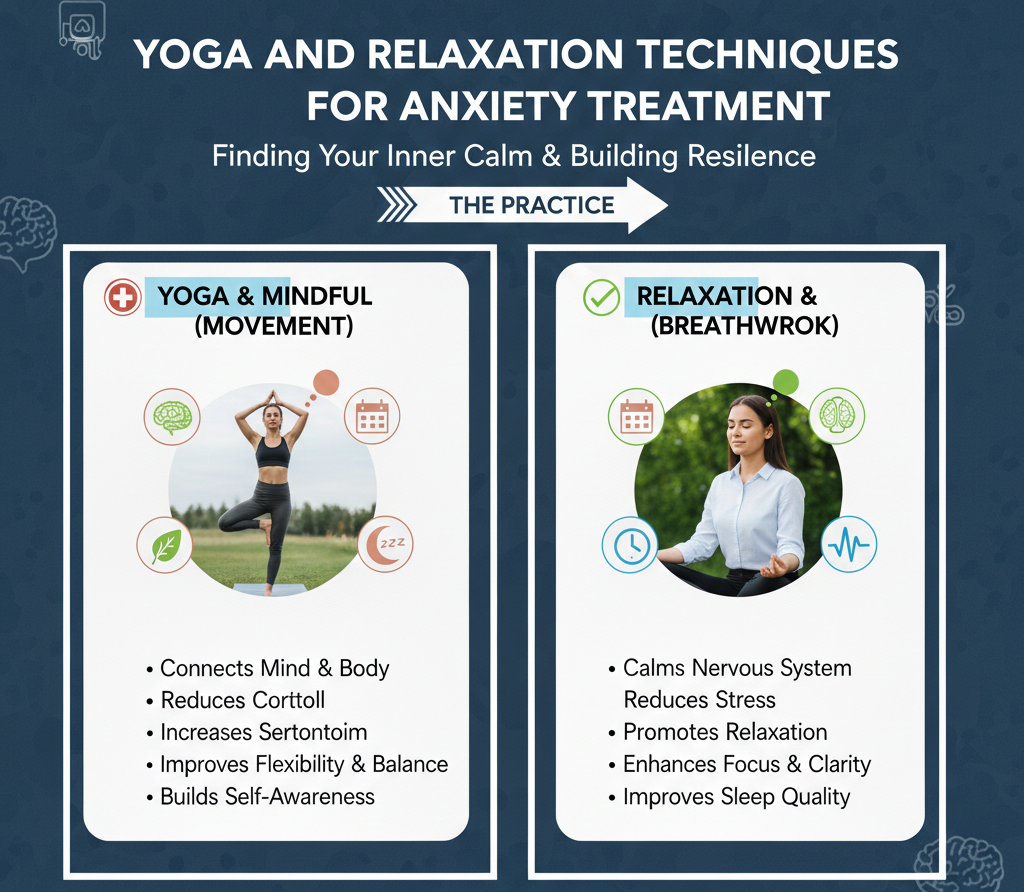
Anxiety disorders affect millions of individuals worldwide, often causing persistent worry, muscle tension, sleep disturbances, and difficulty concentrating. While therapy and medication are effective treatment options, many people benefit from incorporating natural stress-reduction practices into their routine. Among these, yoga and relaxation techniques have gained strong recognition for their ability to calm the mind and regulate the nervous system.
Yoga is more than physical stretching. It combines movement, breath control, and mindfulness to promote balance between the body and mind. When practiced consistently, yoga and relaxation exercises can significantly reduce anxiety symptoms and improve overall mental health.
In this article, we explore how yoga supports anxiety treatment, the science behind relaxation techniques, and practical methods you can start using today.
Understanding Anxiety and the Stress Response
Anxiety activates the body’s “fight or flight” response. This survival mechanism releases stress hormones like cortisol and adrenaline, preparing the body to respond to perceived threats.
When this response becomes chronic, individuals may experience:
-
Rapid heartbeat
-
Shallow breathing
-
Muscle tension
-
Irritability
-
Fatigue
-
Difficulty sleeping
Yoga and relaxation techniques directly target this stress response by activating the parasympathetic nervous system — the body’s “rest and digest” system. This shift helps lower heart rate, relax muscles, and restore emotional balance.
How Yoga Helps Reduce Anxiety
Yoga addresses anxiety on multiple levels: physical, emotional, and neurological.
1. Regulates Breathing
Anxiety often causes rapid, shallow breathing. Yogic breathing techniques (pranayama) encourage slow, controlled breathing patterns that calm the nervous system.
Deep breathing increases oxygen flow and signals the brain that it is safe to relax. Over time, this reduces overall anxiety sensitivity.
2. Releases Physical Tension
Chronic stress leads to tight muscles, particularly in the shoulders, neck, and jaw. Gentle yoga postures stretch and release this tension, helping the body exit its stress state.
3. Enhances Mindfulness
Yoga emphasizes awareness of the present moment. This focus reduces rumination and excessive worry about future events — a core feature of anxiety disorders.
4. Balances Stress Hormones
Studies show regular yoga practice lowers cortisol levels. Reduced cortisol supports better mood stability and improved stress resilience.
Effective Yoga Styles for Anxiety Relief
Different yoga styles offer unique benefits. For anxiety management, slower and more restorative forms are often most helpful.
Hatha Yoga
A gentle practice focusing on basic postures and breathing. Suitable for beginners and those seeking relaxation.
Restorative Yoga
Uses props such as blankets and bolsters to support the body in restful poses. Ideal for deep relaxation.
Yin Yoga
Involves holding poses for extended periods to release tension and promote mindfulness.
Gentle Flow (Slow Vinyasa)
Combines movement with breath at a slower pace to reduce stress without overstimulation.
The key is choosing a style that feels calming rather than physically intense.
Breathing Techniques (Pranayama) for Anxiety
Breathing exercises are central to yoga practice and highly effective for anxiety treatment.
1. Diaphragmatic Breathing
-
Inhale deeply through the nose, expanding the abdomen.
-
Exhale slowly through the mouth.
-
Repeat for 5–10 minutes.
This technique lowers heart rate and promotes relaxation.
2. Alternate Nostril Breathing (Nadi Shodhana)
-
Close one nostril and inhale through the other.
-
Switch sides and exhale.
-
Continue alternating for several minutes.
This practice balances the nervous system and improves focus.
3. 4-7-8 Breathing
-
Inhale for 4 seconds.
-
Hold for 7 seconds.
-
Exhale for 8 seconds.
This method is particularly helpful before bedtime.
Relaxation Techniques That Complement Yoga
In addition to yoga postures and breathing, several relaxation practices enhance anxiety treatment.
Progressive Muscle Relaxation (PMR)
This technique involves tightening and then releasing different muscle groups. It improves awareness of tension and promotes physical relaxation.
Guided Imagery
Visualizing calming environments — such as a beach or forest — helps shift attention away from worry.
Body Scan Meditation
Systematically focusing on each part of the body encourages mindfulness and reduces emotional reactivity.
Mindfulness Meditation
Sitting quietly and observing thoughts without judgment builds mental resilience and reduces rumination.
Yoga and Sleep Improvement
Sleep disturbances are common in anxiety disorders. Yoga can significantly improve sleep quality by:
-
Reducing muscle tension
-
Lowering nighttime cortisol
-
Slowing racing thoughts
-
Encouraging consistent bedtime routines
Gentle stretching and breathing exercises before sleep help prepare the body for rest.
Combining Yoga with Traditional Anxiety Treatments
Yoga and relaxation techniques are powerful supportive tools, but they are not replacements for professional care when anxiety is moderate to severe.
Comprehensive treatment may include:
-
Cognitive Behavioral Therapy (CBT)
-
Medication prescribed by a healthcare provider
-
Stress management training
-
Lifestyle adjustments
When combined with therapy or medication, yoga can enhance treatment outcomes by improving emotional regulation and reducing baseline stress levels.
Creating a Simple At-Home Routine
Starting yoga for anxiety does not require expensive equipment or advanced training. A simple 15–20 minute routine can provide meaningful benefits.
Sample Routine:
-
5 minutes deep breathing
-
Gentle neck and shoulder stretches
-
Child’s Pose (Balasana) for relaxation
-
Cat-Cow stretches to release spinal tension
-
Seated forward fold for calming
-
5 minutes lying relaxation (Savasana)
Consistency is more important than duration. Even short daily sessions can reduce anxiety symptoms over time.
Long-Term Benefits of Yoga for Anxiety
With regular practice, individuals often experience:
-
Reduced frequency of anxious thoughts
-
Improved emotional control
-
Greater physical flexibility
-
Enhanced self-awareness
-
Increased resilience to stress
-
Better sleep patterns
Yoga teaches the body how to return to calm more quickly after stress exposure.
Safety Considerations
While yoga is generally safe, individuals with medical conditions or injuries should consult a healthcare provider before beginning a new physical routine.
Additionally, those with trauma-related anxiety may initially feel uncomfortable during certain mindfulness exercises. Working with a trained instructor or therapist can provide guidance and support.
When to Seek Professional Help
Yoga and relaxation techniques are valuable tools, but professional help is recommended if:
-
Anxiety interferes with daily functioning
-
Panic attacks occur frequently
-
Sleep problems persist
-
There are symptoms of depression
-
Thoughts of self-harm arise
Licensed mental health professionals can provide structured treatment plans tailored to individual needs.
Final Thoughts
Yoga and relaxation techniques offer a natural, accessible way to support anxiety treatment. By calming the nervous system, reducing muscle tension, and encouraging mindful awareness, these practices address both the physical and emotional components of anxiety.
While not a standalone cure for severe anxiety disorders, yoga can significantly enhance overall treatment outcomes when combined with professional care and healthy lifestyle habits.
At USA Pharmas, we believe in a balanced approach to mental wellness—one that integrates medical guidance with practical self-care strategies. Incorporating yoga and relaxation techniques into your routine can be a powerful step toward long-term emotional stability and improved quality of life.
FAQs
Is guilt a symptom of depression?
Yes, excessive or guilt is listed as a core symptom of Major Depressive Disorder in the DSM-5.
Can guilt cause depression?
While guilt alone doesn’t cause depression, chronic guilt can contribute to its development and worsen existing symptoms.
How do I stop feeling guilty when depressed?
Working with a therapist, practicing self-compassion, and potentially using medication can help manage guilt associated with depression.

Contact us
Have questions? Reach out and we’ll get back to you shortly.
Content
Guilt and Depression at a Glance
How Guilt and Depression Interact
Coping When You’re
Depressed and Feeling Guilty
Evidence-Based Treatments
When to Seek Help
How Loved Ones Can Help
FAQs