
Blog
Xanax vs Valium – Key Differences Explained

Author:
Medical Writer
Saya Des Marais

Medical Reviewer:
Dr. Russell A. Barkley, Ph.D
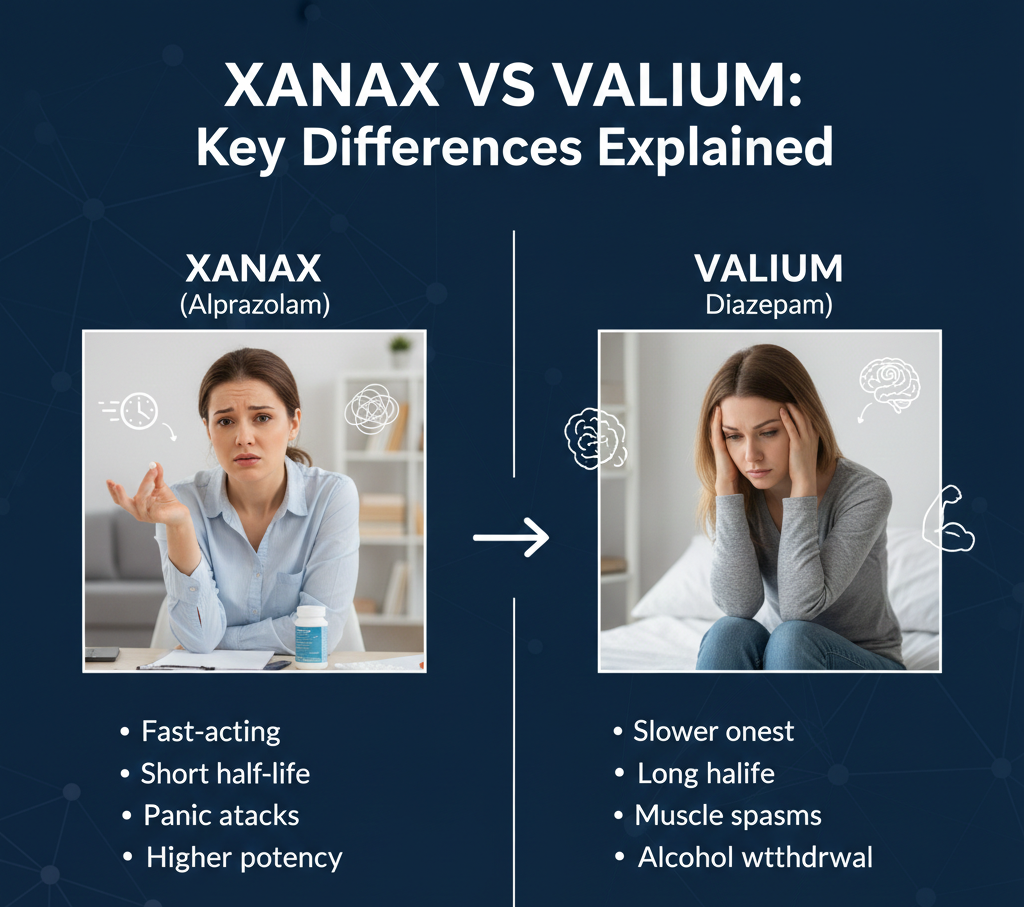
Xanax and Valium are two of the most commonly prescribed medications for anxiety and related conditions. Both belong to a class of drugs known as benzodiazepines, which work by calming the central nervous system. Despite their similarities, Xanax and Valium differ significantly in how quickly they work, how long their effects last, and how they are typically used in medical treatment.
Understanding the key differences between Xanax and Valium can help patients make informed decisions in collaboration with healthcare providers. This article explores how each medication works, their medical uses, potential side effects, and safety considerations.
What Are Benzodiazepines?
Benzodiazepines are prescription medications that enhance the effects of gamma-aminobutyric acid (GABA), a neurotransmitter that reduces brain activity. By increasing GABA activity, these drugs promote relaxation, reduce anxiety, and calm muscle tension.
Benzodiazepines are commonly prescribed for:
-
Anxiety disorders
-
Panic attacks
-
Muscle spasms
-
Seizure disorders
-
Alcohol withdrawal
-
Short-term insomnia
Xanax and Valium are among the most well-known medications in this category.
What Is Xanax?
Xanax is the brand name for alprazolam. It is primarily prescribed for anxiety disorders and panic disorder.
How Xanax Works
Xanax acts quickly on the brain, producing a calming effect within a short time after ingestion. Because of its rapid onset, it is often used for acute anxiety episodes or panic attacks.
Common Medical Uses of Xanax
-
Generalized Anxiety Disorder (GAD)
-
Panic Disorder
-
Short-term management of severe anxiety symptoms
Xanax is typically prescribed for short-term or intermittent use due to its potency and fast action.
What Is Valium?
Valium is the brand name for diazepam. It has a broader range of medical uses compared to Xanax.
How Valium Works
Valium has a slower onset of action but remains active in the body for a much longer time. It produces sustained calming and muscle-relaxing effects.
Common Medical Uses of Valium
-
Anxiety disorders
-
Muscle spasms
-
Seizure disorders
-
Alcohol withdrawal symptoms
-
Pre-procedural sedation
Because of its long duration, Valium is sometimes preferred for conditions requiring prolonged symptom control.
Key Differences Between Xanax and Valium
1) Onset of Action
-
Xanax: Works quickly, often within 30 to 60 minutes
-
Valium: Slower onset, typically within 1 to 2 hours
Xanax is often chosen for sudden anxiety or panic symptoms.
2) Duration of Effects
-
Xanax: Short-acting; effects last several hours
-
Valium: Long-acting; effects can last many hours or longer
Valium remains in the body longer due to active metabolites.
3) Strength and Potency
Xanax is considered more potent on a per-milligram basis. Smaller doses produce strong effects, which can increase the risk of side effects if not carefully monitored.
Valium is less potent but longer-lasting, offering smoother symptom control over time.
4) Medical Applications
-
Xanax: Primarily anxiety and panic disorders
-
Valium: Anxiety, muscle spasms, seizures, and alcohol withdrawal
Valium’s versatility makes it useful for a wider range of conditions.
5) Risk of Tolerance and Dependence
Both medications carry a risk of tolerance and dependence when used long-term.
-
Xanax’s rapid action may increase the risk of misuse
-
Valium’s long half-life may lead to accumulation in the body
For this reason, both are usually prescribed for short-term use under medical supervision.
6) Withdrawal Considerations
Stopping benzodiazepines abruptly can cause withdrawal symptoms such as anxiety, insomnia, irritability, and tremors.
Because Valium leaves the body more slowly, withdrawal symptoms may be less intense compared to Xanax, but they can still occur.
Side Effects of Xanax and Valium
Common Side Effects
-
Drowsiness
-
Dizziness
-
Fatigue
-
Confusion
-
Impaired coordination
Less Common but Serious Side Effects
-
Memory problems
-
Slowed breathing
-
Mood changes
Side effects are more likely when doses are high or combined with alcohol or other sedatives.
Safety Considerations
Use in Older Adults
Older adults are more sensitive to benzodiazepines and may experience increased risk of falls, confusion, and sedation.
Drug Interactions
Both medications can interact with other drugs that depress the central nervous system, increasing the risk of respiratory depression.
Long-Term Use Risks
Long-term benzodiazepine use is associated with tolerance, dependence, and cognitive effects. Doctors generally recommend the lowest effective dose for the shortest duration.
Choosing Between Xanax and Valium
The choice between Xanax and Valium depends on:
-
Type and severity of anxiety
-
Need for rapid relief versus long-lasting control
-
Medical history
-
Risk factors for dependence
A healthcare provider evaluates these factors to determine the most appropriate treatment.
Alternatives to Benzodiazepines
Because of the risks associated with long-term use, doctors may recommend alternatives such as:
-
Cognitive Behavioral Therapy (CBT)
-
Antidepressant medications
-
Lifestyle changes and stress-management techniques
These approaches often provide safer long-term anxiety management.
When to Talk to a Doctor
You should consult a healthcare professional if:
-
Anxiety symptoms persist or worsen
-
Medication effectiveness decreases
-
Side effects become problematic
-
You feel the urge to increase dosage
Never change or stop benzodiazepine medication without medical guidance.
Conclusion
Xanax and Valium are both effective benzodiazepines used to treat anxiety, but they differ in onset, duration, potency, and clinical applications. Xanax works quickly and is often used for acute anxiety, while Valium lasts longer and is used for a wider range of conditions.
Understanding these differences allows patients to have informed discussions with their healthcare providers and choose safe, effective treatment options. When used responsibly and under medical supervision, both medications can play a role in managing anxiety symptoms.
FAQs
Is guilt a symptom of depression?
Yes, excessive or guilt is listed as a core symptom of Major Depressive Disorder in the DSM-5.
Can guilt cause depression?
While guilt alone doesn’t cause depression, chronic guilt can contribute to its development and worsen existing symptoms.
How do I stop feeling guilty when depressed?
Working with a therapist, practicing self-compassion, and potentially using medication can help manage guilt associated with depression.

Contact us
Have questions? Reach out and we’ll get back to you shortly.
Content
Guilt and Depression at a Glance
How Guilt and Depression Interact
Coping When You’re
Depressed and Feeling Guilty
Evidence-Based Treatments
When to Seek Help
How Loved Ones Can Help
FAQs