Blog
When to Seek Emergency Help for Medication Reactions

Author:
Medical Writer
Saya Des Marais

Medical Reviewer:
Dr. Russell A. Barkley, Ph.D
Medications play a crucial role in managing health conditions, relieving symptoms, and improving quality of life. While most prescription and over-the-counter medicines are safe when used correctly, some people may experience reactions ranging from mild discomfort to serious, life-threatening emergencies.
Understanding the difference between normal side effects and dangerous medication reactions is essential for protecting your health. Many individuals delay seeking help because they assume symptoms will pass or they’re unsure if the reaction is serious. Unfortunately, this hesitation can lead to complications or even medical emergencies.
This article explains the types of medication reactions, warning signs that require immediate medical attention, and practical steps to take if you or someone else experiences a severe drug reaction.
Understanding Medication Reactions
A medication reaction is any unwanted or unexpected response to a drug. These reactions may occur due to allergies, drug interactions, incorrect dosing, or individual sensitivity to certain substances.
Types of Medication Reactions
1. Mild Side Effects
Common reactions like mild nausea, headaches, or drowsiness are often temporary and manageable. These symptoms usually do not require emergency care but should be discussed with your doctor if they persist.
2. Adverse Drug Reactions (ADRs)
These are harmful or unexpected effects that occur even when medications are taken correctly. Some ADRs may become serious depending on the individual’s health condition and the medication involved.
3. Allergic Reactions
Drug allergies happen when the immune system mistakenly identifies a medication as harmful. Symptoms can vary from mild rashes to severe anaphylaxis, which requires immediate emergency treatment.
4. Overdose or Toxicity
Taking too much medication—intentionally or accidentally—can lead to poisoning or organ damage. Overdoses often require urgent medical intervention.
Common Symptoms That May Signal a Serious Reaction
Recognizing early warning signs can help prevent complications. While not every unusual symptom is an emergency, certain reactions should never be ignored.
Severe Allergic Reaction (Anaphylaxis)
-
Difficulty breathing or shortness of breath
-
Swelling of the face, lips, throat, or tongue
-
Rapid heartbeat
-
Severe dizziness or fainting
-
Hives or widespread rash
Anaphylaxis is a medical emergency and requires immediate treatment, usually with emergency medication and hospital care.
Breathing or Chest Symptoms
-
Wheezing or choking sensation
-
Severe chest pain
-
Blue or pale skin
-
Sudden confusion or inability to speak clearly
These symptoms may indicate a serious allergic reaction, heart issue, or respiratory distress caused by medication.
Neurological Symptoms
-
Seizures or convulsions
-
Loss of consciousness
-
Sudden severe headache
-
Extreme confusion or hallucinations
Such symptoms may result from medication toxicity or interactions and require urgent evaluation.
Severe Skin Reactions
-
Blistering or peeling skin
-
Painful rash with fever
-
Swelling accompanied by burning sensation
Certain rare drug reactions affecting the skin can become life-threatening and require immediate hospital care.
Signs of Overdose
-
Extreme drowsiness or inability to stay awake
-
Vomiting or severe stomach pain
-
Slow or irregular breathing
-
Unusual agitation or restlessness
-
Loss of coordination
If an overdose is suspected, seek emergency help immediately rather than waiting for symptoms to worsen.
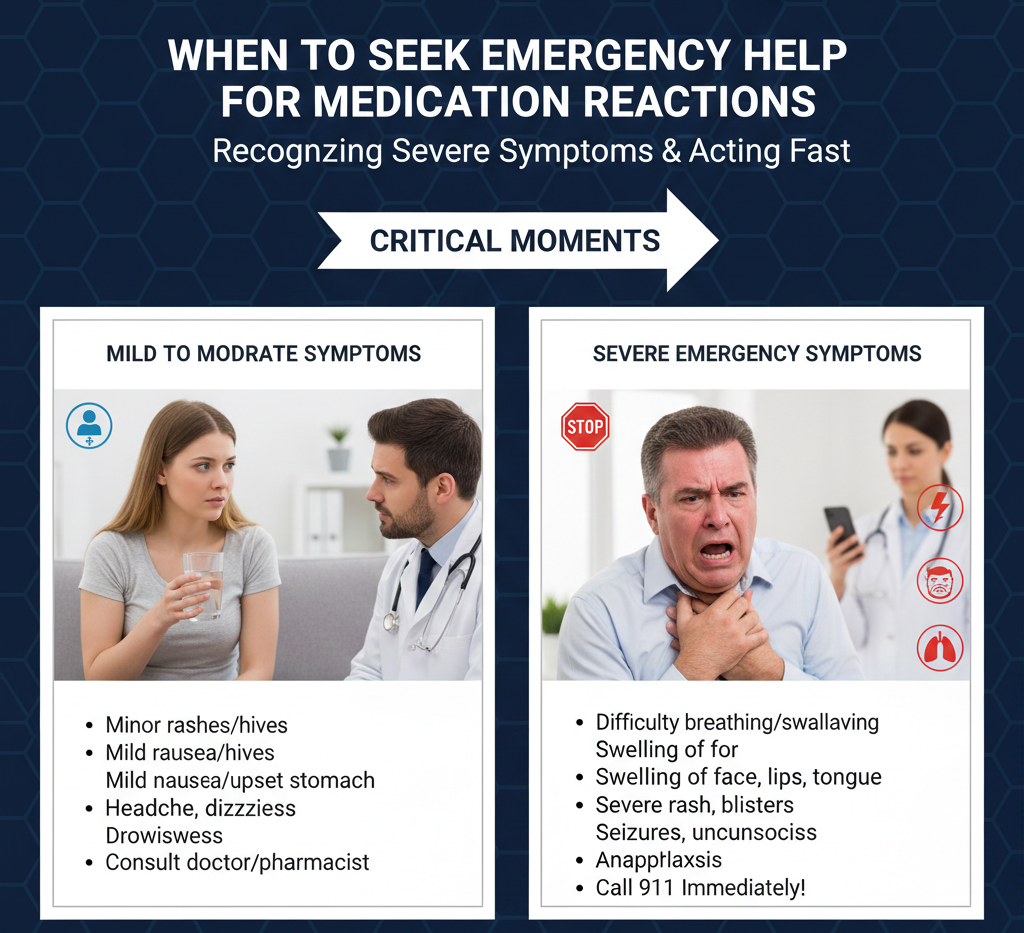
When You Should Seek Emergency Help Immediately
Call emergency services or go to the nearest emergency department if you experience:
-
Difficulty breathing or swallowing
-
Sudden swelling of the throat or face
-
Severe chest pain
-
Loss of consciousness
-
Seizures
-
Symptoms of overdose or poisoning
-
Severe allergic reactions or anaphylaxis
Time is critical during severe medication reactions. Acting quickly can prevent serious complications or long-term harm.
When to Contact Your Doctor Instead of Emergency Services
Not all reactions require urgent care. You may contact your healthcare provider for guidance if you experience:
-
Mild nausea or digestive upset
-
Slight dizziness or fatigue
-
Minor rash without swelling or breathing issues
-
Headaches or mild insomnia
However, if symptoms worsen or new severe symptoms appear, seek emergency care without delay.
Who Is at Higher Risk of Serious Medication Reactions?
Some individuals may have a higher risk of experiencing dangerous drug reactions:
-
Older adults taking multiple medications
-
People with chronic illnesses
-
Individuals with known allergies
-
Patients using high-dose or strong medications
-
Those with liver or kidney disease
-
Individuals who mix medications with alcohol or recreational substances
Regular medical reviews and open communication with healthcare providers help reduce these risks.
What to Do During a Suspected Medication Emergency
-
Call Emergency Services Immediately
Don’t wait for symptoms to improve if severe reactions are present. -
Provide Clear Information
Share the medication name, dosage, time taken, and symptoms experienced. -
Avoid Giving Additional Medication
Unless instructed by a medical professional, avoid giving more drugs. -
Keep the Person Comfortable and Safe
If unconscious but breathing, place them on their side to prevent choking. -
Bring Medication Packaging to the Hospital
This helps medical professionals identify the substance involved quickly.
How to Reduce the Risk of Medication Emergencies
Prevention is always better than treatment. Here are practical tips to lower your risk:
-
Follow prescribed dosages carefully
-
Avoid sharing medications with others
-
Inform doctors about allergies and medical history
-
Keep an updated list of all medications and supplements
-
Avoid mixing alcohol with prescription drugs unless approved
-
Store medications safely and away from children
Routine medication reviews with a healthcare professional can help identify potential interactions or unnecessary prescriptions.
The Role of Medication Education
Patients who understand their medications are more likely to recognize warning signs early. Before starting a new prescription, ask your healthcare provider:
-
What are the common side effects?
-
Which symptoms require emergency care?
-
Are there any dangerous drug interactions?
-
What should I do if I miss a dose?
Being informed empowers you to make safer decisions and respond quickly in case of a reaction.
Conclusion
Medication reactions can range from mild inconveniences to serious medical emergencies. While most side effects are manageable, certain symptoms—such as breathing difficulties, severe swelling, seizures, or signs of overdose—require immediate emergency attention.
Recognizing the warning signs, knowing when to seek urgent help, and understanding how to prevent dangerous drug interactions can significantly improve safety. Always follow medical advice, communicate openly with healthcare providers, and never hesitate to seek emergency care if symptoms appear severe or life-threatening.
Your health and safety should always come first. When in doubt, it’s better to act quickly and get professional medical assistance rather than risk serious complications.
FAQs
Is guilt a symptom of depression?
Yes, excessive or guilt is listed as a core symptom of Major Depressive Disorder in the DSM-5.
Can guilt cause depression?
While guilt alone doesn’t cause depression, chronic guilt can contribute to its development and worsen existing symptoms.
How do I stop feeling guilty when depressed?
Working with a therapist, practicing self-compassion, and potentially using medication can help manage guilt associated with depression.

Contact us
Have questions? Reach out and we’ll get back to you shortly.
Content
Guilt and Depression at a Glance
How Guilt and Depression Interact
Coping When You’re
Depressed and Feeling Guilty
Evidence-Based Treatments
When to Seek Help
How Loved Ones Can Help
FAQs