
Blog
Understanding Panic Attacks and How to Manage Them

Author:
Medical Writer
Saya Des Marais

Medical Reviewer:
Dr. Russell A. Barkley, Ph.D
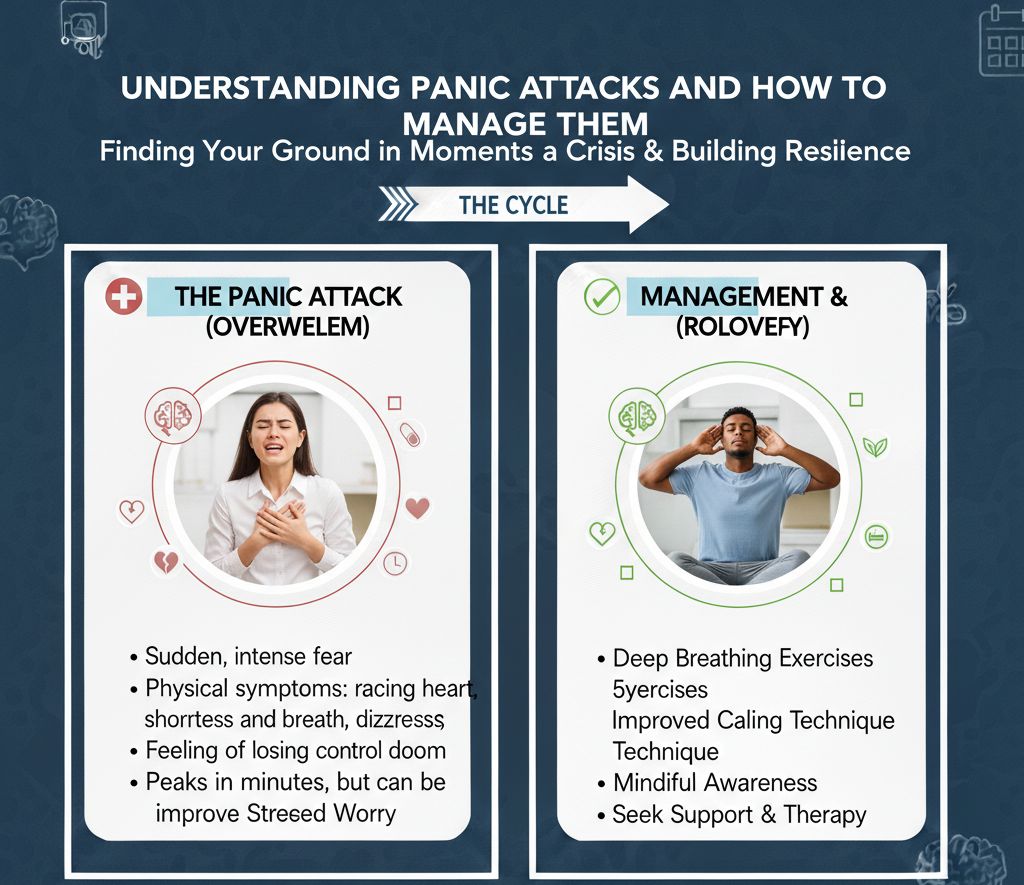
Panic attacks can be frightening and overwhelming experiences. Many people describe them as sudden waves of intense fear accompanied by powerful physical symptoms such as a racing heart, shortness of breath, dizziness, or chest tightness.
For someone experiencing a panic attack for the first time, it can feel like a medical emergency. Some individuals even fear they are having a heart attack. Understanding what panic attacks are — and learning how to manage them — can reduce fear and improve long-term anxiety control.
What Is a Panic Attack?
A panic attack is a sudden surge of intense fear or discomfort that peaks within minutes. It can occur unexpectedly or be triggered by certain situations.
During a panic attack, the body’s fight-or-flight response activates even when there is no immediate danger. This survival mechanism prepares the body to respond to threats, but in panic disorder or anxiety disorders, it may activate inappropriately.
Panic attacks can occur as part of:
-
Panic disorder
-
Generalized anxiety disorder (GAD)
-
Social anxiety disorder
-
Post-traumatic stress disorder (PTSD)
-
High stress situations
Common Symptoms of a Panic Attack
Symptoms can vary but often include:
-
Rapid or pounding heartbeat
-
Shortness of breath
-
Chest pain or discomfort
-
Sweating
-
Trembling or shaking
-
Dizziness or lightheadedness
-
Nausea
-
Chills or hot flashes
-
Tingling sensations
-
Fear of losing control
-
Fear of dying
Symptoms typically peak within 10–20 minutes but may leave a person feeling exhausted afterward.
Why Panic Attacks Feel So Intense
The body reacts as if it is in danger. Adrenaline floods the system, increasing heart rate and breathing speed. Blood is redirected to large muscles to prepare for action.
Because these physical changes are powerful, they can reinforce fear. The individual may misinterpret normal bodily responses as catastrophic (for example, believing a fast heartbeat signals a heart attack), which further intensifies the panic.
This cycle of fear → physical symptoms → more fear can escalate quickly.
Panic Attack vs. Anxiety Attack
While the terms are sometimes used interchangeably, panic attacks are more sudden and intense. They often reach peak intensity within minutes.
Anxiety typically builds gradually in response to stressors and may last longer but is generally less intense than a panic episode.
Common Triggers of Panic Attacks
Panic attacks can be triggered by:
-
High stress
-
Traumatic memories
-
Caffeine overuse
-
Sleep deprivation
-
Major life transitions
-
Health concerns
-
Crowded or confined spaces
However, some panic attacks occur without a clear trigger. These unexpected episodes can increase fear of future attacks.
The Fear of Future Attacks
After experiencing a panic attack, some individuals develop anticipatory anxiety — constant worry about when the next episode will occur.
This fear may lead to avoidance behaviors, such as avoiding crowded places, driving, or social situations. Over time, avoidance can limit daily functioning and reduce quality of life.
When panic attacks become frequent and persistent, it may indicate panic disorder.
How to Manage a Panic Attack in the Moment
Although panic attacks feel overwhelming, they are not life-threatening. Learning coping strategies can reduce severity and duration.
1. Focus on Breathing
Slow, controlled breathing helps counteract hyperventilation.
Try this technique:
-
Inhale slowly through your nose for 4 seconds
-
Hold for 4 seconds
-
Exhale slowly for 6 seconds
-
Repeat for several minutes
This helps calm the nervous system.
2. Grounding Techniques
Grounding helps redirect attention away from fear.
One simple method is the 5-4-3-2-1 technique:
-
Name 5 things you see
-
4 things you feel
-
3 things you hear
-
2 things you smell
-
1 thing you taste
This anchors your mind in the present moment.
3. Remind Yourself It Will Pass
Repeating statements such as “This is temporary” or “I am safe” can interrupt catastrophic thinking.
Panic attacks are intense but time-limited.
4. Relax Muscle Tension
Progressive muscle relaxation — tensing and releasing muscle groups — can reduce physical tension.
Long-Term Strategies to Reduce Panic Attacks
Managing panic attacks often requires consistent lifestyle and psychological strategies.
Cognitive Behavioral Therapy (CBT)
CBT is one of the most effective treatments for panic disorder. It helps individuals:
-
Identify distorted thought patterns
-
Challenge catastrophic beliefs
-
Gradually face feared situations
Exposure therapy — a component of CBT — teaches the brain that feared sensations are not dangerous.
Medication Options
For some individuals, medication may help reduce panic frequency and intensity. Common options include:
-
Selective serotonin reuptake inhibitors (SSRIs)
-
Serotonin-norepinephrine reuptake inhibitors (SNRIs)
-
Short-term anti-anxiety medications (when appropriate)
Medication decisions should always be made with a licensed healthcare provider.
Lifestyle Adjustments
Certain habits can reduce panic vulnerability:
-
Limiting caffeine
-
Prioritizing sleep
-
Exercising regularly
-
Maintaining balanced nutrition
-
Managing stress through relaxation techniques
Consistency is key.
When to Seek Professional Help
If panic attacks are frequent, intense, or interfering with daily life, professional support is important.
Seek medical evaluation if you experience:
-
Chest pain with unusual symptoms
-
First-time severe panic symptoms
-
Frequent avoidance behaviors
-
Significant impairment in work or relationships
Early treatment improves long-term outcomes.
Breaking the Panic Cycle
Recovery involves retraining the brain’s threat detection system. By gradually facing feared sensations and situations, the nervous system learns that these experiences are uncomfortable but not dangerous.
With proper treatment and support, many individuals experience significant improvement.
Supporting Someone with Panic Attacks
If a loved one experiences panic attacks:
-
Stay calm
-
Encourage slow breathing
-
Avoid dismissing their feelings
-
Offer reassurance
-
Encourage professional support if needed
Understanding and patience can make a meaningful difference.
Final Thoughts
Panic attacks can feel terrifying, but they are manageable and treatable. Understanding what is happening in the body reduces fear and empowers individuals to take control.
Through breathing techniques, grounding strategies, therapy, lifestyle changes, and — when appropriate — medication, panic attacks can become less frequent and less intense over time.
If you or someone you know struggles with panic symptoms, seeking guidance from a qualified healthcare provider can be an important step toward recovery. With proper support, it is possible to regain confidence and improve overall quality of life.
FAQs
Is guilt a symptom of depression?
Yes, excessive or guilt is listed as a core symptom of Major Depressive Disorder in the DSM-5.
Can guilt cause depression?
While guilt alone doesn’t cause depression, chronic guilt can contribute to its development and worsen existing symptoms.
How do I stop feeling guilty when depressed?
Working with a therapist, practicing self-compassion, and potentially using medication can help manage guilt associated with depression.

Contact us
Have questions? Reach out and we’ll get back to you shortly.
Content
Guilt and Depression at a Glance
How Guilt and Depression Interact
Coping When You’re
Depressed and Feeling Guilty
Evidence-Based Treatments
When to Seek Help
How Loved Ones Can Help
FAQs