
Blog
The Science Behind Anxiety Disorders Explained

Author:
Medical Writer
Saya Des Marais

Medical Reviewer:
Dr. Russell A. Barkley, Ph.D
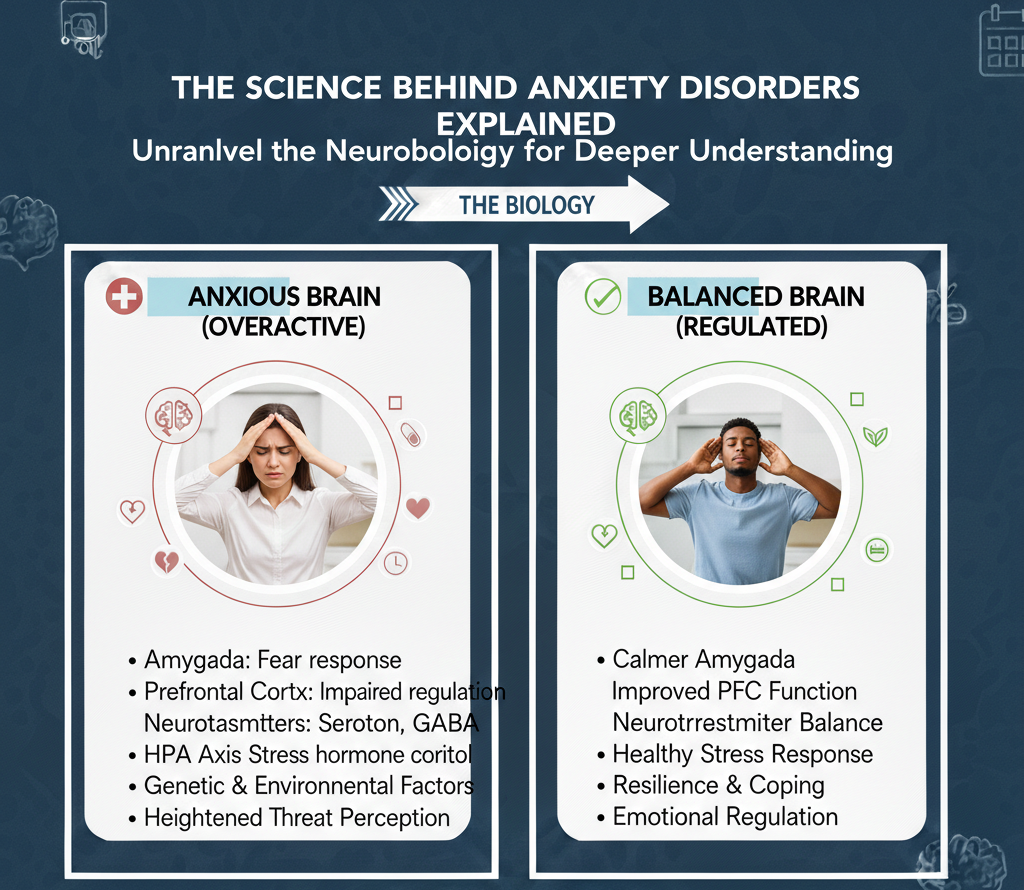
Anxiety is a natural human emotion. It helps us stay alert, avoid danger, and prepare for challenges. However, when anxiety becomes excessive, persistent, and difficult to control, it may develop into an anxiety disorder.
Anxiety disorders are among the most common mental health conditions worldwide. To better understand how they develop and how they can be treated, it’s important to explore the science behind them — including brain chemistry, genetics, stress hormones, and environmental factors.
What Is an Anxiety Disorder?
An anxiety disorder involves excessive fear or worry that interferes with daily functioning. Unlike temporary stress, clinical anxiety persists over time and may not always have a clear cause.
Common types include:
-
Generalized Anxiety Disorder (GAD)
-
Panic Disorder
-
Social Anxiety Disorder
-
Specific Phobias
-
Post-Traumatic Stress Disorder (PTSD)
Each type has unique features, but they share similar underlying biological and psychological mechanisms.
The Brain’s Role in Anxiety
Anxiety begins in the brain. Several key brain regions are involved in processing fear and stress.
The Amygdala
The amygdala is responsible for detecting threats and triggering the fear response. In individuals with anxiety disorders, the amygdala may be overactive.
When the amygdala senses danger — real or perceived — it sends signals that activate the body’s fight-or-flight response.
The Prefrontal Cortex
The prefrontal cortex helps regulate emotional responses and make rational decisions. It acts as a “brake system” for fear signals.
In anxiety disorders, this regulatory function may be less effective, allowing fear responses to become amplified.
The Hippocampus
The hippocampus is involved in memory and contextual processing. It helps distinguish between real danger and safe situations.
Chronic stress can affect the hippocampus, potentially contributing to persistent anxiety.
Neurotransmitters and Brain Chemistry
Brain chemicals called neurotransmitters play a major role in anxiety regulation.
Serotonin
Serotonin influences mood, sleep, and emotional stability. Low serotonin levels are associated with anxiety and depression. Many anti-anxiety medications target serotonin pathways.
GABA (Gamma-Aminobutyric Acid)
GABA is an inhibitory neurotransmitter that calms brain activity. Reduced GABA function may contribute to excessive nervous system stimulation.
Norepinephrine
Norepinephrine is involved in alertness and stress responses. High levels may increase heart rate and arousal, contributing to anxiety symptoms.
Imbalances in these neurotransmitters can heighten fear responses and make it harder for the brain to regulate stress.
The Stress Response System
When the brain perceives a threat, it activates the hypothalamic-pituitary-adrenal (HPA) axis. This leads to the release of cortisol and adrenaline.
These hormones:
-
Increase heart rate
-
Raise blood pressure
-
Sharpen focus
-
Prepare muscles for action
In short-term situations, this response is protective. However, chronic activation of the stress response can lead to persistent anxiety symptoms.
Over time, elevated cortisol levels may disrupt sleep, digestion, and immune function — further worsening anxiety.
Genetic Factors
Anxiety disorders often run in families. Research suggests that genetics contribute to about 30–40% of anxiety risk.
However, genes alone do not determine outcomes. Environmental factors and life experiences also play crucial roles.
Some individuals may inherit a more sensitive stress response system, making them more vulnerable to anxiety under pressure.
Environmental and Psychological Influences
Biology is only part of the picture. Environmental factors significantly influence anxiety development.
Trauma
Childhood adversity, abuse, or major life stressors can increase the likelihood of anxiety disorders.
Chronic Stress
Long-term work pressure, financial strain, or relationship conflict may overload the stress response system.
Learned Behavior
People may develop anxious thinking patterns based on past experiences. Catastrophic thinking or avoidance behaviors can reinforce anxiety over time.
The Role of Inflammation
Emerging research suggests that chronic inflammation may contribute to anxiety disorders.
Inflammatory markers in the body may affect neurotransmitter production and brain function. Diet, sleep, stress, and physical health all influence inflammation levels.
Although research is ongoing, maintaining overall physical health may support mental well-being.
Anxiety and the Body
Anxiety is not just “in the mind.” It produces real physical symptoms, including:
-
Muscle tension
-
Headaches
-
Gastrointestinal discomfort
-
Rapid heartbeat
-
Sweating
-
Fatigue
The gut-brain connection also plays a role. A significant portion of serotonin is produced in the digestive system, linking digestive health to mood regulation.
Why Anxiety Persists
Anxiety can become self-reinforcing. Here’s how:
-
A stressful event triggers fear.
-
The body experiences intense physical sensations.
-
The individual interprets these sensations as dangerous.
-
Fear increases, strengthening the response.
Avoidance behaviors — such as avoiding certain places or situations — temporarily reduce anxiety but reinforce the belief that those situations are dangerous.
Over time, the brain becomes more sensitive to perceived threats.
Evidence-Based Treatments
Understanding the science of anxiety helps explain why certain treatments work.
Cognitive Behavioral Therapy (CBT)
CBT helps individuals identify distorted thinking patterns and gradually face feared situations. This retrains the brain’s fear circuits and reduces amygdala overactivity.
Medication
Medications such as SSRIs and SNRIs work by balancing neurotransmitters like serotonin and norepinephrine.
In some cases, short-term medications may help calm severe symptoms while longer-term treatments take effect.
Medication decisions should always involve a qualified healthcare provider.
Lifestyle Interventions
Exercise, proper sleep, balanced nutrition, and stress management techniques can regulate cortisol and improve neurotransmitter balance.
These lifestyle changes support, but do not replace, professional treatment for moderate to severe anxiety.
Neuroplasticity and Recovery
One encouraging aspect of anxiety science is neuroplasticity — the brain’s ability to adapt and change.
Through therapy, healthy habits, and sometimes medication, neural pathways associated with fear can be reshaped.
This means anxiety disorders are highly treatable, and many individuals experience significant improvement over time.
When to Seek Professional Help
Occasional anxiety is normal. However, professional evaluation may be necessary if:
-
Anxiety persists for months
-
Symptoms interfere with daily life
-
Panic attacks occur frequently
-
Avoidance behaviors limit activities
-
Sleep or concentration is severely affected
Early treatment often leads to better outcomes.
Final Thoughts
The science behind anxiety disorders reveals a complex interaction between brain chemistry, genetics, stress hormones, environment, and learned behaviors. Anxiety is not a personal weakness — it is a biological and psychological condition with identifiable mechanisms.
Understanding how the brain processes fear helps reduce stigma and empowers individuals to seek effective treatment.
With proper care — including therapy, medication when appropriate, and healthy lifestyle practices — anxiety disorders can be managed successfully. Ongoing research continues to deepen our understanding, offering hope for even more targeted treatments in the future.
FAQs
Is guilt a symptom of depression?
Yes, excessive or guilt is listed as a core symptom of Major Depressive Disorder in the DSM-5.
Can guilt cause depression?
While guilt alone doesn’t cause depression, chronic guilt can contribute to its development and worsen existing symptoms.
How do I stop feeling guilty when depressed?
Working with a therapist, practicing self-compassion, and potentially using medication can help manage guilt associated with depression.

Contact us
Have questions? Reach out and we’ll get back to you shortly.
Content
Guilt and Depression at a Glance
How Guilt and Depression Interact
Coping When You’re
Depressed and Feeling Guilty
Evidence-Based Treatments
When to Seek Help
How Loved Ones Can Help
FAQs