
Blog
The Role of Mindfulness in Anxiety Treatment

Author:
Medical Writer
Saya Des Marais

Medical Reviewer:
Dr. Russell A. Barkley, Ph.D
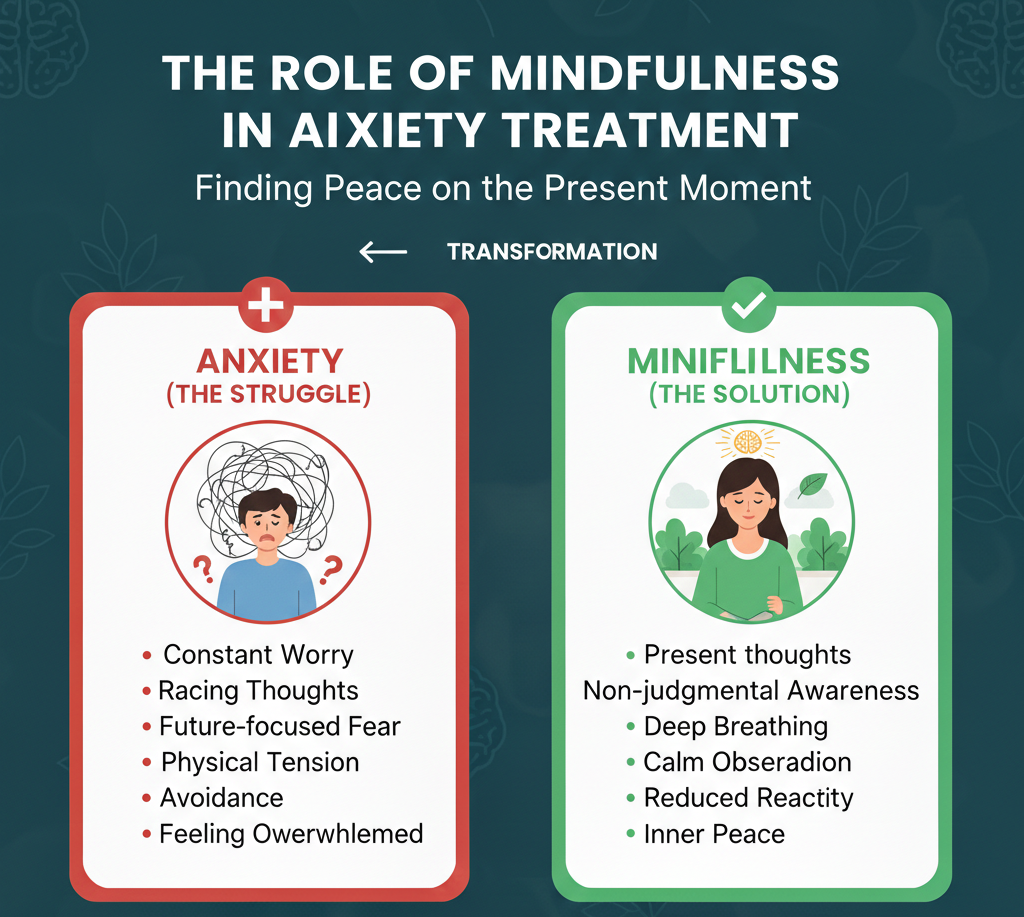
Anxiety is one of the most common mental health challenges in today’s fast-paced world. Constant notifications, work pressures, financial stress, and health concerns can keep the mind locked in a state of worry. For many individuals, anxiety feels like living in the future — always anticipating what could go wrong.
Mindfulness offers a powerful counterbalance.
Instead of trying to eliminate thoughts or suppress emotions, mindfulness teaches you to observe them without judgment. This shift — from reacting automatically to responding consciously — can significantly reduce anxiety symptoms and improve overall well-being.
In this article, we’ll explore what mindfulness is, how it works in anxiety treatment, and practical ways to incorporate it into daily life.
What Is Mindfulness?
Mindfulness is the practice of paying deliberate attention to the present moment without judgment. It involves noticing thoughts, emotions, bodily sensations, and surroundings as they are — rather than as you fear them to be.
While mindfulness has roots in ancient contemplative traditions, it has been widely studied in modern psychology and medicine. Today, mindfulness-based interventions are commonly integrated into therapy approaches such as Mindfulness-Based Stress Reduction (MBSR) and Mindfulness-Based Cognitive Therapy (MBCT).
The core principle is simple:
You are not your thoughts. You are the observer of your thoughts.
How Anxiety Affects the Mind
Anxiety thrives on future-focused thinking:
-
“What if something goes wrong?”
-
“What if I fail?”
-
“What if this symptom is serious?”
-
“What if I embarrass myself?”
The brain’s threat detection system becomes overactive, scanning constantly for danger. Even neutral situations can feel threatening. This triggers physical symptoms such as rapid heartbeat, muscle tension, restlessness, and sleep disturbance.
Mindfulness interrupts this cycle by anchoring attention in the present moment — where, most of the time, you are actually safe.
How Mindfulness Helps Treat Anxiety
1. Reduces Rumination
Rumination is repetitive, negative thinking about past mistakes or future fears. Mindfulness helps individuals notice these thought loops without becoming entangled in them.
Instead of:
“I can’t stop thinking about what might happen.”
Mindfulness encourages:
“I’m noticing that I’m having a worrying thought.”
This subtle shift creates space between you and the thought.
2. Calms the Nervous System
When practiced regularly, mindfulness activates the parasympathetic nervous system — the body’s “rest and digest” response.
Slow breathing, body awareness, and focused attention reduce stress hormones like cortisol. Over time, this lowers baseline anxiety levels and improves emotional regulation.
Research shows that consistent mindfulness practice can reduce heart rate, blood pressure, and muscle tension — all common physical symptoms of anxiety.
3. Builds Emotional Regulation
Anxiety often feels overwhelming because emotions seem uncontrollable. Mindfulness helps individuals tolerate discomfort without reacting impulsively.
Instead of suppressing fear or trying to escape it, mindfulness encourages curiosity:
-
“Where do I feel this anxiety in my body?”
-
“What does this sensation feel like?”
-
“Is it rising or falling?”
Emotions, like waves, naturally rise and fall when not resisted.
4. Decreases Catastrophic Thinking
Mindfulness trains the brain to observe thoughts as mental events rather than facts.
For example:
“I’m going to fail” becomes “I’m having the thought that I might fail.”
This distancing technique reduces the power of catastrophic thinking and allows for more balanced reasoning.
5. Improves Sleep Quality
Anxiety often worsens at night when distractions disappear. Mindfulness techniques, especially body scans and breathing exercises, can quiet racing thoughts and promote relaxation before sleep.
By reducing mental chatter, mindfulness supports deeper, more restorative rest.
Practical Mindfulness Techniques for Anxiety
You don’t need hours of meditation to benefit from mindfulness. Even a few minutes daily can make a difference.
1. Mindful Breathing (5 Minutes)
-
Sit comfortably.
-
Focus on your breath.
-
Notice the sensation of air entering and leaving your body.
-
When your mind wanders (which it will), gently bring attention back to your breath.
This simple exercise trains attention and reduces reactivity.
2. Body Scan Meditation
Lie down or sit comfortably.
-
Start by focusing on your toes.
-
Slowly move attention upward through your body.
-
Notice tension, warmth, or sensations without judgment.
-
Release tension gently as you breathe.
This practice increases body awareness and helps calm physical anxiety symptoms.
3. 5-4-3-2-1 Grounding Exercise
When anxiety spikes, try:
-
5 things you see
-
4 things you feel
-
3 things you hear
-
2 things you smell
-
1 thing you taste
This anchors you in the present moment and reduces spiraling thoughts.
4. Mindful Walking
You can practice mindfulness while walking.
-
Notice the sensation of your feet touching the ground.
-
Observe sounds and surroundings.
-
Pay attention to your breathing rhythm.
This is especially helpful for those who find seated meditation challenging.
5. Observing Thoughts Exercise
Imagine your thoughts as clouds passing in the sky. Instead of chasing them, simply watch them drift by.
You don’t need to analyze or fix them. Just observe.
Over time, this reduces emotional attachment to anxious thoughts.
Combining Mindfulness with Therapy
Mindfulness works particularly well when integrated with evidence-based treatments such as Cognitive Behavioral Therapy (CBT).
CBT helps challenge distorted thinking patterns, while mindfulness builds awareness of those patterns in real time.
Together, they create a powerful framework for anxiety management:
-
Awareness (mindfulness)
-
Evaluation (CBT)
-
Balanced response (behavioral change)
For individuals experiencing moderate to severe anxiety, combining professional guidance with mindfulness practice often produces the best results.
How Long Does It Take to See Results?
Mindfulness is not a quick fix — it’s a skill.
Some people notice reduced stress within a few weeks of consistent practice. For deeper changes in anxiety patterns, several months of regular practice may be beneficial.
Consistency matters more than duration. Even 5–10 minutes daily can lead to measurable improvements over time.
Common Misconceptions About Mindfulness
“I have to stop thinking.”
Not true. The goal isn’t to eliminate thoughts — it’s to observe them without judgment.
“I’m bad at meditation.”
If your mind wanders, you’re doing it correctly. Noticing wandering and returning focus is the practice.
“Mindfulness is only for severe anxiety.”
Mindfulness benefits everyone — from mild stress to chronic anxiety.
When Mindfulness Alone May Not Be Enough
While mindfulness is highly effective, it may not replace professional treatment for individuals experiencing:
-
Frequent panic attacks
-
Severe insomnia
-
Debilitating social anxiety
-
Depression alongside anxiety
-
Trauma-related symptoms
In such cases, consulting a healthcare professional is important. Mindfulness can complement therapy and medical treatment, but it should not substitute appropriate care when needed.
Creating a Sustainable Mindfulness Routine
Start small and realistic.
Example daily plan:
-
Morning: 5 minutes mindful breathing
-
Afternoon: 5-4-3-2-1 grounding if stress arises
-
Evening: 10-minute body scan before bed
Choose a consistent time and place. Use reminders if necessary.
Over time, mindfulness becomes less of a task and more of a way of living — bringing awareness into everyday moments like eating, driving, or listening.
Long-Term Benefits Beyond Anxiety
Regular mindfulness practice can also improve:
-
Focus and concentration
-
Emotional resilience
-
Relationship satisfaction
-
Stress management
-
Immune function
-
Overall mental clarity
By strengthening awareness and self-regulation, mindfulness builds psychological flexibility — the ability to adapt calmly to change.
Final Thoughts
Anxiety often pulls you into imagined futures filled with uncertainty. Mindfulness gently brings you back to the only moment you truly have — the present.
It teaches that thoughts are not commands, fears are not facts, and discomfort is temporary.
With patience and consistency, mindfulness can transform your relationship with anxiety. Instead of fighting your mind, you learn to work with it.
In a world that constantly demands attention, choosing presence may be one of the most powerful forms of self-care.
FAQs
Is guilt a symptom of depression?
Yes, excessive or guilt is listed as a core symptom of Major Depressive Disorder in the DSM-5.
Can guilt cause depression?
While guilt alone doesn’t cause depression, chronic guilt can contribute to its development and worsen existing symptoms.
How do I stop feeling guilty when depressed?
Working with a therapist, practicing self-compassion, and potentially using medication can help manage guilt associated with depression.

Contact us
Have questions? Reach out and we’ll get back to you shortly.
Content
Guilt and Depression at a Glance
How Guilt and Depression Interact
Coping When You’re
Depressed and Feeling Guilty
Evidence-Based Treatments
When to Seek Help
How Loved Ones Can Help
FAQs