
Blog
The Psychology of Overthinking and How to Stop

Author:
Medical Writer
Saya Des Marais

Medical Reviewer:
Dr. Russell A. Barkley, Ph.D
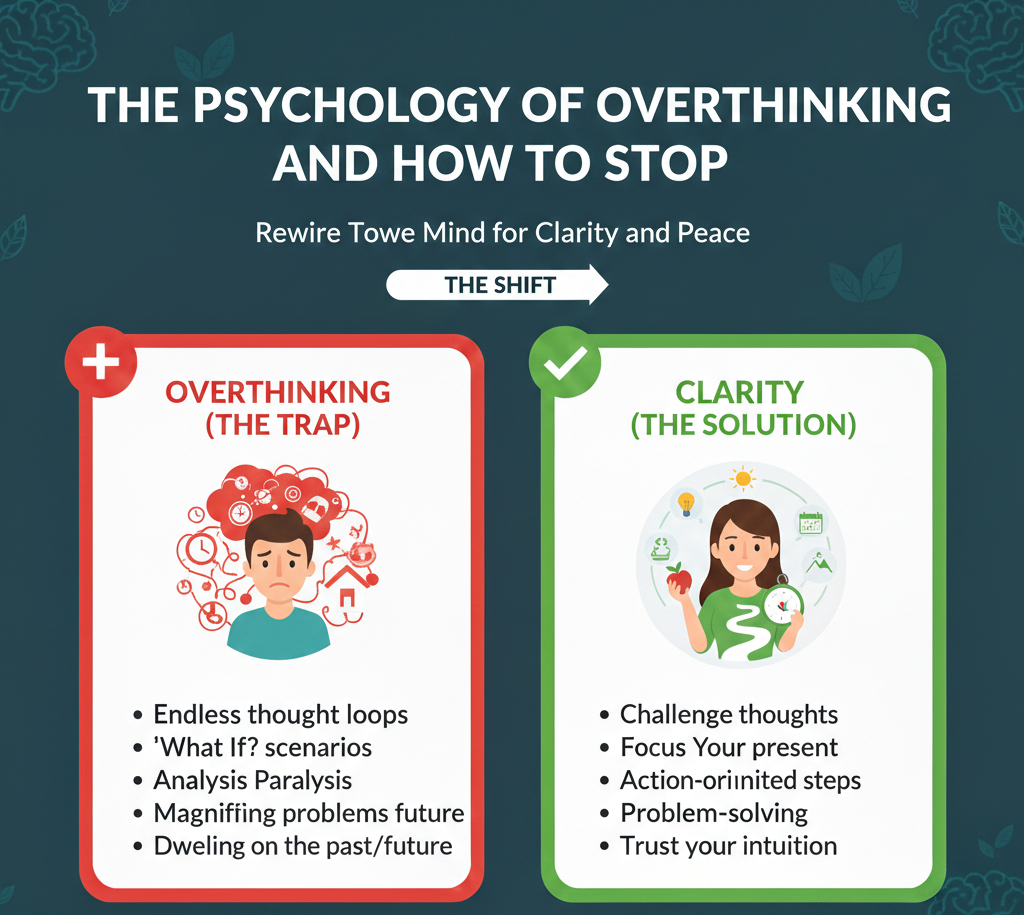
Overthinking is something most people experience at some point. You replay conversations in your head, analyze every decision, or worry about situations that haven’t even happened yet. While occasional reflection is normal, chronic overthinking can fuel anxiety, disrupt sleep, and interfere with daily life.
If you’ve ever felt trapped in a loop of repetitive thoughts, you’re not alone. Understanding the psychology behind overthinking is the first step toward breaking free from it.
In this guide, we’ll explore why overthinking happens, how it affects mental health, and practical strategies to regain control of your thoughts.
What Is Overthinking?
Overthinking involves dwelling excessively on thoughts, decisions, or problems. It often takes two main forms:
-
Rumination – Replaying past events repeatedly, often focusing on mistakes or perceived failures.
-
Worrying – Obsessing about future uncertainties and worst-case scenarios.
While thinking through problems can be helpful, overthinking becomes harmful when it prevents action, increases stress, or amplifies fear.
The Psychology Behind Overthinking
Overthinking is closely linked to anxiety. The brain is wired to detect threats and anticipate potential dangers. This survival mechanism once helped humans avoid real physical harm. However, in modern life, the “threats” are often social, financial, or emotional rather than physical.
For individuals diagnosed with Generalized Anxiety Disorder, the mind tends to scan constantly for possible problems. Overthinking becomes an attempt to gain control over uncertainty.
Unfortunately, this mental habit often backfires.
Why the Brain Gets Stuck in Thought Loops
The brain seeks certainty and closure. When faced with ambiguity, it continues analyzing information in an attempt to resolve discomfort. This repetitive thinking activates the stress response system.
Research supported by organizations such as the American Psychological Association suggests that rumination can increase cortisol levels, the body’s primary stress hormone. Elevated cortisol contributes to physical symptoms such as:
-
Tension headaches
-
Muscle tightness
-
Digestive issues
-
Sleep disturbances
-
Fatigue
Ironically, the more we try to “think our way out” of anxiety, the more activated our nervous system becomes.
Common Triggers of Overthinking
Certain situations tend to increase the likelihood of rumination:
-
Social interactions (“Did I say something wrong?”)
-
Career decisions
-
Relationship conflicts
-
Health concerns
-
Financial uncertainty
-
Major life transitions
People with Social Anxiety Disorder often replay conversations repeatedly, analyzing tone, facial expressions, or perceived mistakes.
The Difference Between Problem-Solving and Overthinking
Healthy problem-solving:
-
Is time-limited
-
Focuses on solutions
-
Leads to action
-
Reduces stress
Overthinking:
-
Is repetitive and circular
-
Focuses on “what if” scenarios
-
Delays action
-
Increases stress
The key distinction is whether your thinking moves you forward or keeps you stuck.
How Overthinking Impacts Mental Health
Chronic rumination can:
-
Increase anxiety symptoms
-
Worsen depressive moods
-
Reduce concentration
-
Interfere with decision-making
-
Disrupt sleep patterns
For individuals experiencing Panic Disorder, excessive focus on bodily sensations can escalate into panic attacks.
Overthinking can also damage self-confidence. Constant self-criticism reinforces negative beliefs and increases emotional distress.
Why Overthinking Feels Productive
Many people believe overthinking helps them prepare or prevent mistakes. It creates an illusion of control.
However, excessive mental rehearsal rarely changes outcomes. Instead, it drains mental energy and amplifies fear.
The goal is not to stop thinking altogether—but to shift from unproductive rumination to constructive action.
How to Stop Overthinking
Breaking the cycle requires intentional strategies. Here are evidence-based techniques that can help:
1. Practice Cognitive Restructuring
One of the most effective approaches comes from Cognitive Behavioral Therapy (CBT). Cognitive restructuring involves identifying distorted thoughts and replacing them with balanced alternatives.
Ask yourself:
-
Is this thought based on facts or assumptions?
-
What evidence contradicts this belief?
-
What would I tell a friend in this situation?
Challenging irrational thoughts weakens their emotional power.
2. Set a “Worry Window”
Instead of trying to suppress worry completely, designate a specific 15–20 minute period each day to think about concerns. When intrusive thoughts arise outside that window, gently remind yourself you’ll address them later.
This technique trains the brain to contain rumination rather than allowing it to dominate the entire day.
3. Shift to Action
Overthinking often replaces action. If possible, take one small step toward resolution.
For example:
-
Send the email you’ve been drafting repeatedly.
-
Schedule the appointment you’ve been worrying about.
-
Make a pros-and-cons list for a decision.
Action reduces uncertainty and builds confidence.
4. Practice Mindfulness
Mindfulness focuses attention on the present moment without judgment. Instead of engaging with thoughts, you observe them as passing mental events.
Simple mindfulness exercises include:
-
Deep breathing for five minutes
-
Body scan meditation
-
Grounding techniques (identify five things you see, four you feel, etc.)
These practices calm the nervous system and interrupt rumination cycles.
5. Limit Information Overload
Constant exposure to news and social media can fuel anxiety and overanalysis. Setting boundaries around media consumption helps reduce mental clutter.
Digital detox periods can improve clarity and reduce mental fatigue.
6. Improve Sleep Hygiene
Lack of sleep increases negative thinking patterns. Establish a bedtime routine that includes:
-
Limiting screen time
-
Reducing caffeine intake
-
Keeping consistent sleep hours
-
Creating a calm bedroom environment
A rested brain handles stress more effectively.
7. Use the 5-5-5 Rule
When overwhelmed by a worry, ask:
-
Will this matter in 5 days?
-
Will this matter in 5 months?
-
Will this matter in 5 years?
This technique helps put problems into perspective.
8. Practice Self-Compassion
Overthinkers are often highly self-critical. Replace harsh inner dialogue with supportive language.
Instead of:
“I always mess things up.”
Try:
“I’m learning and doing my best.”
Self-compassion reduces emotional intensity and builds resilience.
9. Engage in Physical Activity
Exercise reduces stress hormones and increases endorphins, natural mood stabilizers. Even a 20-minute walk can interrupt mental loops and improve emotional balance.
Movement shifts focus from internal thoughts to physical sensations, creating mental space.
When to Seek Professional Help
If overthinking interferes with daily life, relationships, or sleep, professional support may be beneficial.
Signs that help may be needed include:
-
Persistent anxiety lasting several months
-
Frequent panic attacks
-
Avoidance of responsibilities
-
Difficulty making basic decisions
-
Significant emotional distress
Therapies like CBT are highly effective for reducing rumination and anxiety symptoms.
Building Long-Term Mental Clarity
Overthinking is a habit—and habits can be changed. The goal is not to eliminate thinking but to develop healthier thought patterns.
Long-term strategies include:
-
Regular journaling
-
Practicing gratitude
-
Maintaining social connections
-
Setting realistic expectations
-
Celebrating small achievements
With consistent effort, the brain can learn to respond to uncertainty with calm rather than fear.
Final Thoughts
Overthinking may feel like a protective strategy, but in reality, it often increases stress and emotional exhaustion. By understanding the psychological mechanisms behind rumination, you can begin to break free from repetitive thought patterns.
Techniques such as cognitive restructuring, mindfulness, structured worry time, and small action steps can significantly reduce mental overload. If symptoms persist or intensify, professional guidance provides additional support.
You cannot control every outcome in life—but you can control how you respond to your thoughts. Learning to quiet overthinking is not about ignoring problems; it’s about approaching them with clarity, balance, and confidence.
FAQs
Is guilt a symptom of depression?
Yes, excessive or guilt is listed as a core symptom of Major Depressive Disorder in the DSM-5.
Can guilt cause depression?
While guilt alone doesn’t cause depression, chronic guilt can contribute to its development and worsen existing symptoms.
How do I stop feeling guilty when depressed?
Working with a therapist, practicing self-compassion, and potentially using medication can help manage guilt associated with depression.

Contact us
Have questions? Reach out and we’ll get back to you shortly.
Content
Guilt and Depression at a Glance
How Guilt and Depression Interact
Coping When You’re
Depressed and Feeling Guilty
Evidence-Based Treatments
When to Seek Help
How Loved Ones Can Help
FAQs