
Blog
Stress Management Skills Used in Anxiety Treatment

Author:
Medical Writer
Saya Des Marais

Medical Reviewer:
Dr. Russell A. Barkley, Ph.D
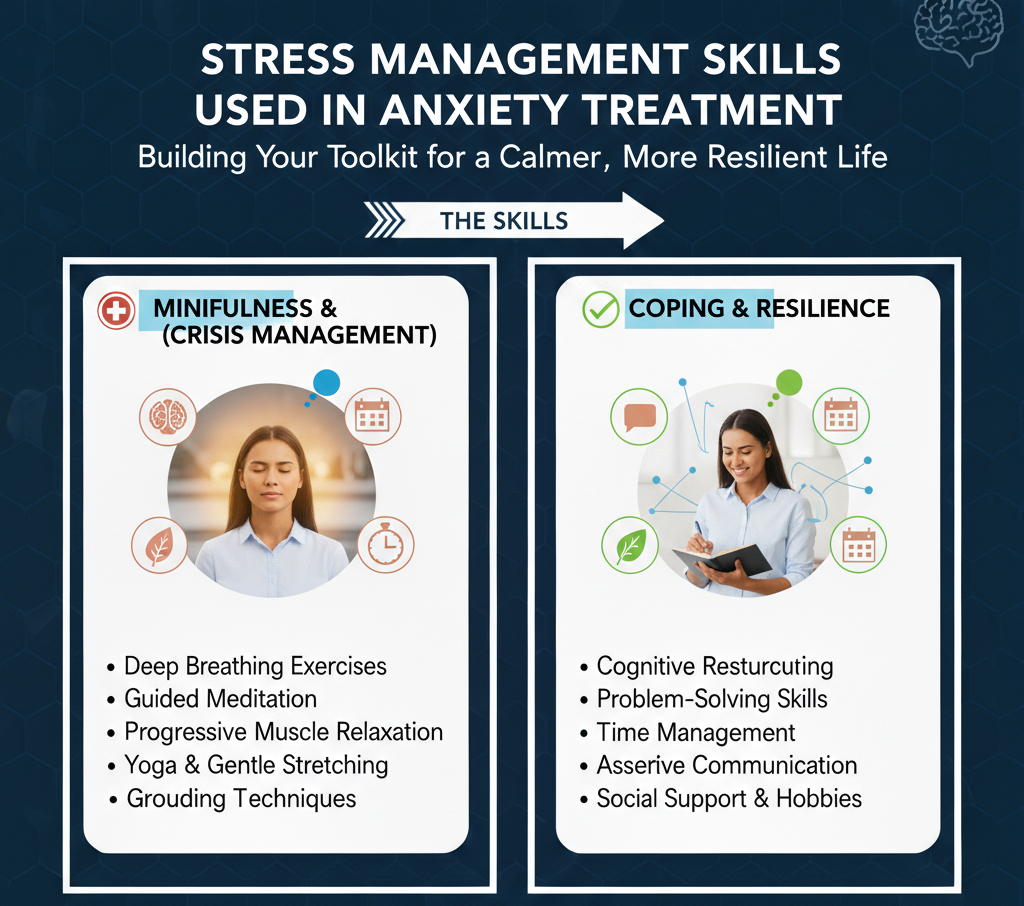
Anxiety disorders affect millions of people worldwide, impacting daily functioning, relationships, work performance, and overall well-being. While medication plays a crucial role in treatment for many individuals, stress management skills are equally important. These practical tools help individuals regulate emotions, reduce physical symptoms of anxiety, and regain a sense of control over their lives.
Anxiety often develops or worsens when stress becomes overwhelming. By learning structured stress management techniques, individuals can interrupt the cycle of worry, tension, and avoidance that fuels anxiety disorders. In this article, we explore the most effective stress management skills used in anxiety treatment and how they contribute to long-term recovery.
Understanding the Link Between Stress and Anxiety
Stress and anxiety are closely related but not identical. Stress is typically a response to an external pressure, such as work deadlines, financial problems, or relationship conflicts. Anxiety, on the other hand, can persist even when no immediate threat is present.
When stress becomes chronic, the body remains in a prolonged state of “fight or flight.” This leads to symptoms such as:
-
Rapid heartbeat
-
Muscle tension
-
Irritability
-
Trouble sleeping
-
Difficulty concentrating
-
Excessive worry
Over time, unmanaged stress can trigger or worsen anxiety disorders such as generalized anxiety disorder (GAD), panic disorder, and social anxiety disorder. That’s why stress management skills are a cornerstone of anxiety treatment plans.
1. Deep Breathing and Controlled Respiration
One of the simplest yet most powerful stress management tools is controlled breathing. Anxiety often causes shallow, rapid breathing, which can intensify physical symptoms such as dizziness and chest tightness.
Common Breathing Techniques:
-
Diaphragmatic breathing: Slow breaths using the diaphragm instead of the chest
-
Box breathing: Inhale for 4 seconds, hold for 4 seconds, exhale for 4 seconds, hold for 4 seconds
-
4-7-8 breathing: Inhale for 4 seconds, hold for 7 seconds, exhale for 8 seconds
These techniques activate the parasympathetic nervous system, which signals the body to relax. Practicing breathing exercises daily can significantly reduce anxiety intensity over time.
2. Cognitive Behavioral Techniques (CBT)
Cognitive Behavioral Therapy (CBT) is one of the most evidence-based approaches for anxiety treatment. Stress management within CBT focuses on identifying and restructuring unhelpful thought patterns.
Key CBT-Based Skills:
Cognitive restructuring:
Challenging irrational thoughts such as “I will fail” or “Something terrible will happen.”
Thought records:
Writing down anxious thoughts and evaluating evidence for and against them.
Behavioral experiments:
Gradually testing fears in real-life situations to reduce avoidance.
By learning to question distorted thinking, individuals can lower stress responses and build emotional resilience.
3. Progressive Muscle Relaxation (PMR)
Anxiety frequently causes physical tension, especially in the shoulders, neck, and jaw. Progressive Muscle Relaxation involves systematically tightening and then releasing muscle groups throughout the body.
How PMR Works:
-
Tighten a muscle group (e.g., fists) for 5–10 seconds.
-
Release and notice the sensation of relaxation.
-
Move through the body step-by-step.
This method increases body awareness and reduces chronic tension. Regular practice improves sleep quality and reduces physical stress symptoms.
4. Mindfulness and Meditation
Mindfulness involves focusing attention on the present moment without judgment. Many anxiety symptoms stem from worrying about the future or ruminating about the past.
Mindfulness techniques include:
-
Guided meditation
-
Body scan exercises
-
Observing thoughts without reacting
-
Grounding exercises (5-4-3-2-1 sensory method)
Research shows that mindfulness-based interventions reduce anxiety severity by decreasing emotional reactivity and increasing cognitive flexibility. Even 10–15 minutes of daily practice can produce noticeable benefits.
5. Time Management and Structured Planning
Poor time management often contributes to stress overload. When responsibilities feel unmanageable, anxiety levels rise.
Effective strategies include:
-
Prioritizing tasks
-
Breaking large projects into smaller steps
-
Using planners or digital calendars
-
Setting realistic deadlines
-
Learning to say “no” when necessary
Creating structure reduces uncertainty and builds a sense of control, which directly decreases anxiety symptoms.
6. Physical Activity and Exercise
Exercise is a natural stress reliever. Physical activity reduces cortisol (the stress hormone) and increases endorphins, which improve mood.
Recommended forms of exercise:
-
Brisk walking
-
Yoga
-
Strength training
-
Swimming
-
Cycling
Even 30 minutes of moderate exercise five times a week can significantly reduce anxiety symptoms. Yoga, in particular, combines movement, breath control, and mindfulness for enhanced stress relief.
7. Sleep Hygiene
Sleep disturbances are both a cause and consequence of anxiety. Poor sleep increases irritability, emotional sensitivity, and stress reactivity.
Healthy Sleep Habits:
-
Maintain a consistent bedtime
-
Avoid screens 1 hour before sleep
-
Limit caffeine intake
-
Create a calm, dark sleeping environment
-
Avoid heavy meals late at night
Improving sleep hygiene strengthens emotional regulation and stress tolerance.
8. Healthy Lifestyle Choices
Diet and substance use play a major role in stress levels. Excess caffeine, alcohol, and processed foods can worsen anxiety symptoms.
Supportive lifestyle practices include:
-
Balanced nutrition
-
Adequate hydration
-
Limiting stimulants
-
Avoiding nicotine
-
Reducing alcohol consumption
Small, consistent changes in daily habits can significantly impact long-term mental health.
9. Social Support and Communication Skills
Isolation often worsens anxiety. Building healthy support systems is a critical stress management skill.
Helpful strategies include:
-
Open communication with trusted friends or family
-
Joining support groups
-
Practicing assertiveness skills
-
Seeking professional counseling
Learning to express needs clearly and set boundaries reduces interpersonal stress and enhances emotional safety.
10. Exposure and Tolerance Building
Avoidance temporarily reduces anxiety but strengthens it in the long run. Gradual exposure to feared situations builds tolerance and confidence.
For example:
-
A person with social anxiety might begin by making small talk with a cashier.
-
Someone with panic disorder might practice staying in mildly uncomfortable situations without escaping.
Exposure therapy reduces fear sensitivity and increases emotional endurance.
11. Emotional Regulation Skills
Anxiety treatment often includes learning how to manage intense emotions without reacting impulsively.
Skills include:
-
Labeling emotions accurately
-
Practicing distress tolerance
-
Using grounding techniques
-
Developing self-soothing routines
These strategies help prevent emotional overwhelm and reduce chronic stress patterns.
Combining Stress Management with Medication
For some individuals, stress management skills alone may not be sufficient. In moderate to severe anxiety cases, healthcare providers may recommend medications such as SSRIs or other non-addictive options alongside therapy.
Medication can reduce symptom intensity, making it easier to practice stress management techniques effectively. The combination of behavioral skills and appropriate medical treatment often produces the best long-term outcomes.
Long-Term Benefits of Stress Management Skills
Consistent practice of stress management techniques offers numerous long-term advantages:
-
Reduced anxiety frequency and intensity
-
Improved emotional stability
-
Better sleep quality
-
Enhanced focus and productivity
-
Stronger interpersonal relationships
-
Greater self-confidence
Most importantly, these skills empower individuals to take an active role in their recovery. Unlike medication alone, stress management tools remain useful throughout life.
When to Seek Professional Help
While self-help techniques are beneficial, professional evaluation is recommended if:
-
Anxiety interferes with daily functioning
-
Panic attacks are frequent
-
Sleep is severely disrupted
-
Avoidance behaviors are increasing
-
There are thoughts of self-harm
Licensed mental health professionals can provide structured therapy, personalized coping plans, and medication guidance when necessary.
Final Thoughts
Stress management skills are foundational in anxiety treatment. From breathing exercises and cognitive restructuring to mindfulness and healthy lifestyle changes, these tools address both the psychological and physical components of anxiety.
Anxiety recovery is not about eliminating stress entirely—it’s about learning how to respond to stress in healthier, more balanced ways. With consistent practice and appropriate support, individuals can significantly reduce anxiety symptoms and improve overall quality of life.
At USA Pharmas, we believe that informed decisions and comprehensive care—combining medication when appropriate with effective coping strategies—offer the strongest path toward lasting mental wellness.
FAQs
Is guilt a symptom of depression?
Yes, excessive or guilt is listed as a core symptom of Major Depressive Disorder in the DSM-5.
Can guilt cause depression?
While guilt alone doesn’t cause depression, chronic guilt can contribute to its development and worsen existing symptoms.
How do I stop feeling guilty when depressed?
Working with a therapist, practicing self-compassion, and potentially using medication can help manage guilt associated with depression.

Contact us
Have questions? Reach out and we’ll get back to you shortly.
Content
Guilt and Depression at a Glance
How Guilt and Depression Interact
Coping When You’re
Depressed and Feeling Guilty
Evidence-Based Treatments
When to Seek Help
How Loved Ones Can Help
FAQs