
Blog
Outpatient vs Inpatient Anxiety Treatment Programs

Author:
Medical Writer
Saya Des Marais

Medical Reviewer:
Dr. Russell A. Barkley, Ph.D
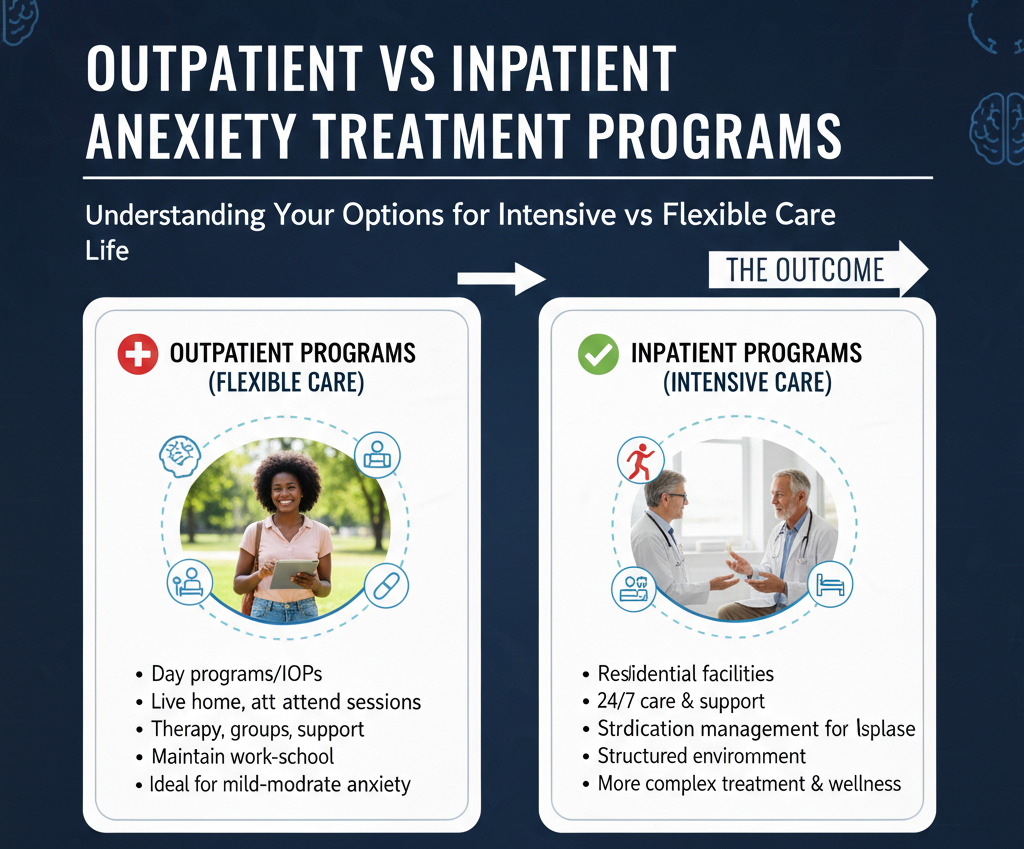
Anxiety disorders can significantly disrupt daily life, affecting work performance, relationships, sleep, and overall well-being. While many people manage mild anxiety through therapy and lifestyle changes, others may require more structured support. When symptoms become severe or persistent, healthcare providers may recommend either outpatient or inpatient treatment programs.
Understanding the differences between outpatient and inpatient anxiety treatment programs can help individuals and families make informed decisions about care. Each approach offers unique benefits depending on the severity of symptoms, personal responsibilities, and overall mental health needs.
Understanding Anxiety Treatment Programs
Treatment programs for anxiety are structured plans designed to provide consistent therapeutic support. They typically include:
-
Psychological evaluation
-
Individual therapy sessions
-
Group therapy
-
Medication management (if necessary)
-
Stress reduction techniques
-
Educational resources
The main difference between outpatient and inpatient programs lies in the level of supervision and time commitment required.
What Is Outpatient Anxiety Treatment?
Outpatient anxiety treatment allows individuals to receive professional care while continuing to live at home. Patients attend scheduled therapy sessions or structured programs during the day and return home afterward.
Types of Outpatient Programs
-
Standard Outpatient Therapy
Usually involves weekly one-on-one therapy sessions. -
Intensive Outpatient Programs (IOP)
Involves multiple therapy sessions per week, often several hours per day. -
Partial Hospitalization Programs (PHP)
Structured daytime treatment without overnight stays.
Outpatient care is commonly recommended for individuals with mild to moderate anxiety symptoms who can function safely outside a treatment facility.
Benefits of Outpatient Treatment
Outpatient programs offer several advantages:
1. Flexibility
Patients can continue working, attending school, and fulfilling family responsibilities while receiving care.
2. Lower Cost
Outpatient programs are generally more affordable than inpatient care.
3. Real-World Application
Individuals can immediately apply coping strategies in their daily environment.
4. Privacy and Comfort
Remaining at home may reduce stress and provide emotional comfort.
Limitations of Outpatient Treatment
While effective for many, outpatient treatment may not be suitable for everyone. Limitations include:
-
Less supervision for severe symptoms
-
Greater exposure to stress triggers
-
Requires strong self-discipline and motivation
-
Limited crisis management support
For individuals experiencing intense panic attacks, severe functional impairment, or co-occurring mental health conditions, outpatient care alone may not be sufficient.
What Is Inpatient Anxiety Treatment?
Inpatient treatment, also called residential treatment, involves staying at a specialized mental health facility for a specific period. Patients receive structured, round-the-clock care in a controlled environment.
Inpatient programs are typically recommended when anxiety symptoms are severe, disabling, or accompanied by other mental health concerns.
Features of Inpatient Treatment Programs
Inpatient anxiety programs often include:
-
24/7 medical supervision
-
Structured daily therapy schedules
-
Individual and group counseling
-
Medication management
-
Crisis intervention support
-
Stress-reduction activities
-
Peer support
Stays may range from a few days to several weeks, depending on individual needs.
Benefits of Inpatient Treatment
1. Intensive Support
Continuous monitoring provides safety and stability for individuals experiencing severe anxiety or panic attacks.
2. Controlled Environment
Patients are temporarily removed from external stressors and triggers.
3. Structured Routine
Daily schedules help establish healthy habits and coping skills.
4. Immediate Crisis Care
Medical professionals are available to address urgent mental health concerns.
Limitations of Inpatient Treatment
Although highly supportive, inpatient care also has potential drawbacks:
-
Higher cost
-
Temporary separation from family and work
-
Adjustment challenges after discharge
-
Limited real-world exposure during treatment
However, for individuals facing overwhelming anxiety, inpatient care may provide the stabilization needed before transitioning to outpatient therapy.
Comparing Outpatient and Inpatient Treatment
| Factor | Outpatient Program | Inpatient Program |
|---|---|---|
| Living Arrangement | Lives at home | Stays at facility |
| Supervision Level | Limited | 24/7 monitoring |
| Cost | Generally lower | Higher |
| Flexibility | High | Low |
| Best For | Mild to moderate anxiety | Severe or crisis-level anxiety |
| Crisis Support | Limited | Immediate access |
Both options aim to reduce anxiety symptoms and improve quality of life. The right choice depends on individual circumstances.
How Doctors Decide Which Program Is Appropriate
Healthcare professionals assess several factors when recommending treatment level:
-
Severity and duration of anxiety symptoms
-
Risk of self-harm or safety concerns
-
Ability to perform daily responsibilities
-
Support system at home
-
Presence of additional mental health conditions
-
Previous treatment outcomes
A thorough evaluation ensures that the chosen program aligns with the patient’s needs and safety.
Transitioning Between Programs
In many cases, treatment may begin in an inpatient setting and gradually transition to outpatient care once symptoms stabilize. This step-down approach allows patients to:
-
Maintain progress
-
Adjust to daily life gradually
-
Continue therapy with less intensive supervision
Ongoing follow-up appointments are crucial to prevent relapse and ensure long-term success.
The Role of Therapy in Both Programs
Regardless of setting, therapy remains the core component of anxiety treatment. Common approaches include:
-
Cognitive behavioral therapy
-
Exposure therapy
-
Mindfulness-based stress reduction
-
Relaxation training
-
Group counseling
Therapists tailor sessions to address individual triggers, thought patterns, and coping challenges.
Medication Management
Both outpatient and inpatient programs may include medication when clinically appropriate. In inpatient settings, medication adjustments can be monitored more closely due to continuous supervision.
Patients should maintain open communication with healthcare providers regarding effectiveness and potential side effects.
Choosing the Right Option
When deciding between outpatient and inpatient anxiety treatment, individuals should consider:
-
Symptom intensity
-
Safety concerns
-
Financial resources
-
Work and family obligations
-
Personal comfort level
Consulting a qualified mental health professional is essential before making a decision.
Long-Term Recovery and Maintenance
Regardless of the treatment setting, long-term recovery requires:
-
Consistent therapy participation
-
Healthy lifestyle habits
-
Stress management techniques
-
Strong support networks
-
Awareness of early warning signs
Anxiety management is an ongoing process, and continued care helps maintain emotional stability.
Conclusion
Both outpatient and inpatient anxiety treatment programs provide valuable support, but they serve different levels of need. Outpatient care offers flexibility and real-world application for mild to moderate anxiety, while inpatient treatment provides intensive supervision and stabilization for more severe cases.
The most effective treatment plan is one that matches the individual’s symptom severity, safety requirements, and lifestyle circumstances. With proper evaluation, professional guidance, and commitment to care, individuals can successfully manage anxiety and regain control over their lives.
Medical Disclaimer:
This article is for informational purposes only and should not replace professional medical advice. Always consult a qualified healthcare provider before starting or changing any mental health treatment program.
FAQs
Is guilt a symptom of depression?
Yes, excessive or guilt is listed as a core symptom of Major Depressive Disorder in the DSM-5.
Can guilt cause depression?
While guilt alone doesn’t cause depression, chronic guilt can contribute to its development and worsen existing symptoms.
How do I stop feeling guilty when depressed?
Working with a therapist, practicing self-compassion, and potentially using medication can help manage guilt associated with depression.

Contact us
Have questions? Reach out and we’ll get back to you shortly.
Content
Guilt and Depression at a Glance
How Guilt and Depression Interact
Coping When You’re
Depressed and Feeling Guilty
Evidence-Based Treatments
When to Seek Help
How Loved Ones Can Help
FAQs