
Blog
Oral Medications vs Topical Treatments for Pain

Author:
Medical Writer
Saya Des Marais

Medical Reviewer:
Dr. Russell A. Barkley, Ph.D
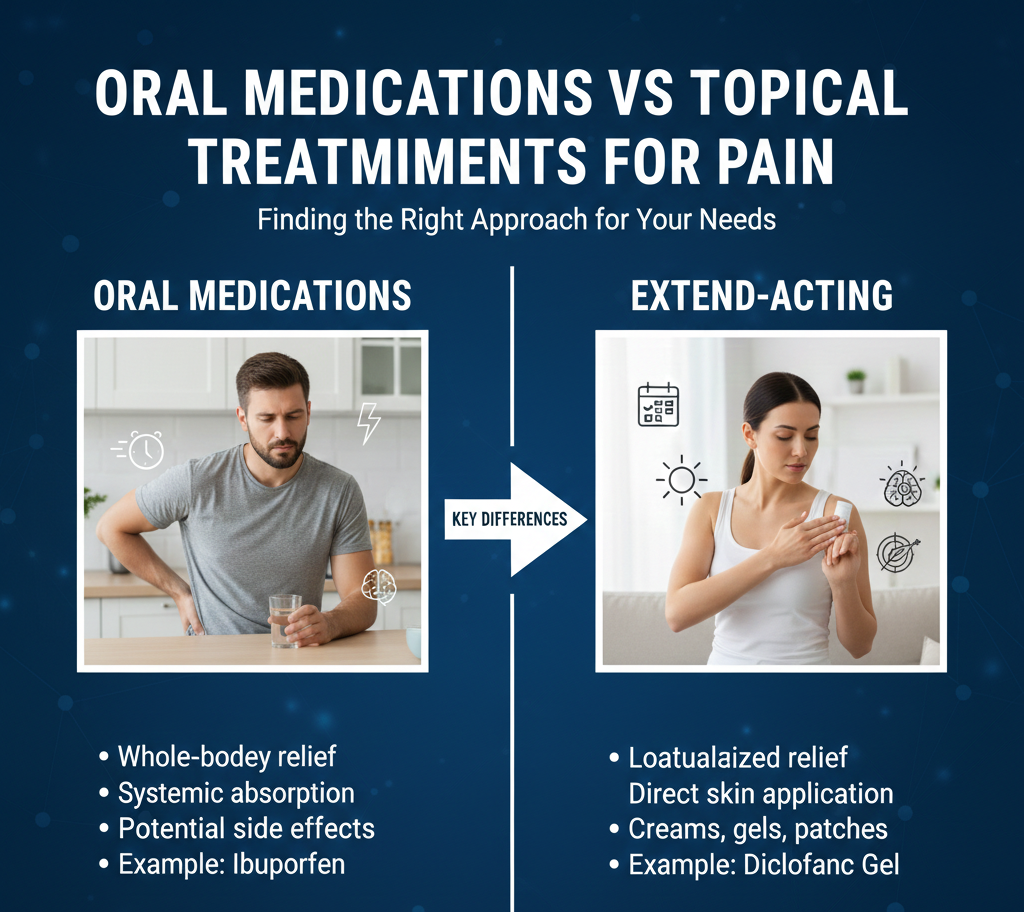
Pain is one of the most common reasons people seek medical care, affecting daily activities, sleep, mood, and overall quality of life. From headaches and muscle strains to arthritis and nerve pain, effective pain management is essential. Among the most widely used options are oral medications and topical treatments.
Both approaches can be effective, but they work in different ways and are suited to different types of pain. Understanding the differences between oral medications and topical treatments helps patients make informed decisions and use pain relief options safely.
This article explores how each method works, their advantages and limitations, and how healthcare providers decide which option is best.
Understanding Pain and Treatment Approaches
Pain can be classified in several ways, including:
-
Acute pain (short-term, injury-related)
-
Chronic pain (lasting longer than three months)
-
Inflammatory pain (arthritis, injuries)
-
Neuropathic pain (nerve-related)
-
Localized pain (specific area)
-
Widespread pain (affecting multiple regions)
The nature and location of pain often determine whether oral or topical treatment is more appropriate.
What Are Oral Medications for Pain?
Oral pain medications are taken by mouth and absorbed through the digestive system into the bloodstream. Once absorbed, they act throughout the body.
Common Types of Oral Pain Medications
-
Nonsteroidal anti-inflammatory drugs (NSAIDs)
-
Acetaminophen
-
Opioid pain relievers
-
Muscle relaxants
-
Certain antidepressants and anticonvulsants for nerve pain
These medications are commonly prescribed or purchased over the counter for moderate to severe pain.
How Oral Pain Medications Work
After ingestion, oral medications are metabolized by the liver and distributed systemically. This allows them to treat pain that is:
-
Widespread
-
Deep (such as joint or bone pain)
-
Associated with inflammation or nerve involvement
Because they circulate throughout the body, oral medications can affect multiple pain pathways simultaneously.
Benefits of Oral Pain Medications
Systemic Pain Relief
Oral medications are effective for pain that is not limited to a single area.
Stronger Pain Control
Some oral medications provide stronger relief, making them suitable for moderate to severe pain.
Proven Effectiveness
Oral pain medications are extensively studied and widely used in clinical practice.
Convenience
Many oral medications are easy to take and widely available.
Limitations and Risks of Oral Pain Medications
Despite their effectiveness, oral pain medications have potential drawbacks.
Systemic Side Effects
Because they affect the entire body, they may cause side effects such as:
-
Stomach irritation or ulcers
-
Liver or kidney strain
-
Drowsiness or dizziness
-
Risk of dependence (with certain medications)
Drug Interactions
Oral medications may interact with other prescriptions or supplements.
Not Ideal for Localized Pain
Using systemic medication for minor, localized pain may expose the body to unnecessary risks.
What Are Topical Pain Treatments?
Topical pain treatments are applied directly to the skin over the painful area. They include:
-
Creams
-
Gels
-
Ointments
-
Sprays
-
Patches
These products deliver pain-relieving ingredients locally rather than systemically.
How Topical Pain Treatments Work
Topical treatments penetrate the skin and act on underlying tissues, muscles, joints, or nerves. Depending on the formulation, they may:
-
Reduce inflammation
-
Block pain signals
-
Produce warming or cooling sensations
-
Desensitize nerve endings
Their effects are typically confined to the application site.
Common Types of Topical Pain Treatments
-
Topical NSAIDs
-
Capsaicin creams
-
Menthol or camphor products
-
Lidocaine patches or gels
-
Counterirritants
These treatments are widely used for musculoskeletal and joint-related pain.
Benefits of Topical Pain Treatments
Targeted Relief
Topicals work directly where pain occurs, making them ideal for localized pain.
Fewer Systemic Side Effects
Minimal absorption into the bloodstream reduces the risk of widespread side effects.
Safer for Long-Term Use
Topical treatments are often safer for older adults or those with chronic conditions.
Easy Combination Therapy
They can often be used alongside oral medications under medical guidance.
Limitations of Topical Pain Treatments
Limited Penetration
Topicals may not reach deep tissues or treat widespread pain effectively.
Skin Reactions
Some people experience irritation, redness, or allergic reactions.
Shorter Duration
Topical treatments may require frequent reapplication for sustained relief.
Oral Medications vs Topical Treatments: Key Differences
Area of Action
-
Oral medications: Whole body (systemic)
-
Topical treatments: Specific area (localized)
Strength of Relief
-
Oral medications: Often stronger
-
Topical treatments: Mild to moderate
Side Effect Risk
-
Oral medications: Higher systemic risk
-
Topical treatments: Lower systemic risk
Best For
-
Oral: Widespread, severe, or inflammatory pain
-
Topical: Localized muscle, joint, or nerve pain
Choosing the Right Option for Different Types of Pain
Muscle Strains and Sprains
Topical treatments are often effective for mild to moderate injuries.
Arthritis and Joint Pain
Topicals work well for surface joints, while oral medications may be needed for deeper or multiple joints.
Back Pain
A combination of oral and topical treatments is often recommended.
Neuropathic Pain
Oral medications are commonly used, though topical options may help localized nerve pain.
Combination Therapy: Using Oral and Topical Treatments Together
In some cases, healthcare providers recommend using both approaches.
Benefits of combination therapy include:
-
Enhanced pain control
-
Lower doses of oral medication
-
Reduced side effect risk
-
Better overall pain management
Combination use should always follow medical advice.
Safety Tips for Pain Treatment
To use pain treatments safely:
-
Follow dosing instructions carefully
-
Avoid applying topical products to broken skin
-
Do not combine medications without guidance
-
Monitor for side effects
-
Store medications securely
Consult a healthcare provider if pain persists or worsens.
When to See a Doctor
Medical advice is recommended if:
-
Pain lasts longer than expected
-
Pain interferes with daily activities
-
Over-the-counter options are ineffective
-
There are signs of nerve damage or inflammation
-
Side effects occur
Early intervention can prevent complications.
Conclusion
Both oral medications and topical treatments play important roles in pain management. Oral medications provide systemic relief for widespread or severe pain, while topical treatments offer targeted relief with fewer systemic risks.
Choosing the right option depends on the type, location, and severity of pain, as well as individual health factors. With proper guidance from a healthcare professional, patients can use these treatments safely and effectively to improve comfort and quality of life.
FAQs
Is guilt a symptom of depression?
Yes, excessive or guilt is listed as a core symptom of Major Depressive Disorder in the DSM-5.
Can guilt cause depression?
While guilt alone doesn’t cause depression, chronic guilt can contribute to its development and worsen existing symptoms.
How do I stop feeling guilty when depressed?
Working with a therapist, practicing self-compassion, and potentially using medication can help manage guilt associated with depression.

Contact us
Have questions? Reach out and we’ll get back to you shortly.
Content
Guilt and Depression at a Glance
How Guilt and Depression Interact
Coping When You’re
Depressed and Feeling Guilty
Evidence-Based Treatments
When to Seek Help
How Loved Ones Can Help
FAQs