
Blog
Non-Addictive Medications for Anxiety Management

Author:
Medical Writer
Saya Des Marais

Medical Reviewer:
Dr. Russell A. Barkley, Ph.D
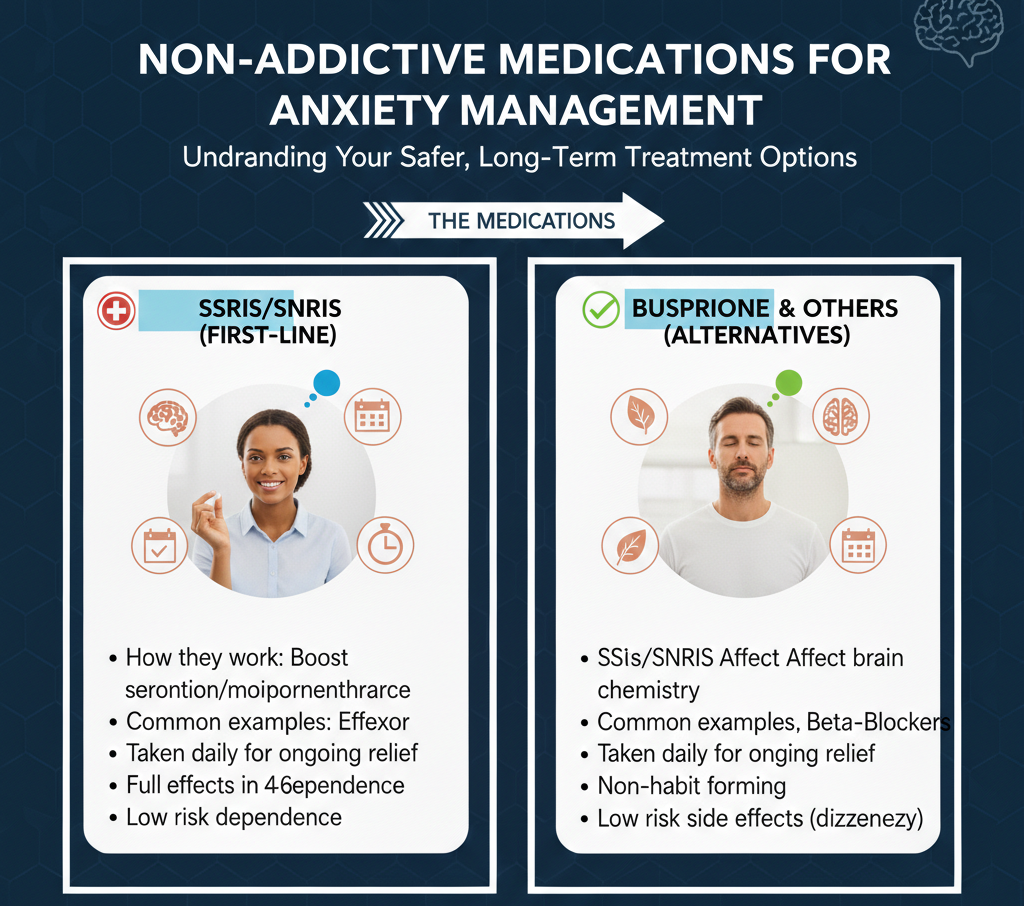
Anxiety disorders affect millions of people and can significantly impact daily life, relationships, work performance, and physical health. While medications can play a vital role in treatment, many individuals worry about dependency and addiction—especially when they hear about medications like benzodiazepines.
The good news is that several effective, non-addictive medications are available for anxiety management. These treatments are supported by extensive research and are commonly recommended as first-line therapies by mental health professionals.
In this comprehensive guide, we’ll explore the safest non-addictive medication options for anxiety, how they work, who they’re best suited for, and what to expect during treatment.
Understanding Anxiety and Medication Concerns
Anxiety disorders include:
-
Generalized Anxiety Disorder (GAD)
-
Panic Disorder
-
Social Anxiety Disorder
-
Obsessive-Compulsive Disorder (OCD)
-
Post-Traumatic Stress Disorder (PTSD)
When symptoms are persistent or severe, medication may be recommended alongside therapy.
However, concerns about addiction are common—particularly with medications like:
-
Alprazolam
-
Clonazepam
These benzodiazepines can be habit-forming when used long-term. Fortunately, they are not the only option. Several non-addictive medications provide effective, long-term anxiety control.
What Makes a Medication Non-Addictive?
A non-addictive medication:
-
Does not cause cravings
-
Does not produce a “high” or euphoric effect
-
Does not lead to compulsive drug-seeking behavior
-
Does not create tolerance requiring increasing doses for effect
Most first-line anxiety medications fall into this category.
1. SSRIs (Selective Serotonin Reuptake Inhibitors)
SSRIs are considered the gold standard for long-term anxiety management. They are recommended by organizations such as the American Psychiatric Association and the National Institute of Mental Health.
How SSRIs Work
SSRIs increase serotonin levels in the brain. Serotonin helps regulate mood, fear response, and stress. By improving serotonin balance, SSRIs reduce excessive worry, panic, and emotional reactivity.
Common SSRIs for Anxiety
-
Sertraline
-
Escitalopram
-
Fluoxetine
-
Paroxetine
Benefits
-
Non-addictive
-
Safe for long-term use
-
Effective for multiple anxiety disorders
-
Also treat co-occurring depression
Timeline
SSRIs typically take 4–8 weeks to show significant improvement.
Side Effects
-
Nausea
-
Headache
-
Sleep changes
-
Sexual dysfunction
Most side effects are mild and improve over time.
2. SNRIs (Serotonin-Norepinephrine Reuptake Inhibitors)
SNRIs are another first-line, non-addictive medication group.
How SNRIs Work
They increase serotonin and norepinephrine levels, helping regulate both emotional and physical anxiety symptoms.
Common SNRIs
-
Venlafaxine
-
Duloxetine
Benefits
-
Effective for generalized anxiety disorder
-
Helpful for physical symptoms like muscle tension
-
Safe for long-term treatment
Like SSRIs, SNRIs do not cause dependence or cravings.
3. Buspirone (A Dedicated Anti-Anxiety Option)
Buspirone is specifically approved for anxiety treatment and is non-addictive.
How It Works
Buspirone affects serotonin and dopamine receptors but does not act on GABA like benzodiazepines. This makes it much safer for long-term use.
Benefits
-
No sedation
-
No dependency risk
-
No withdrawal complications
-
Suitable for generalized anxiety disorder
Limitations
-
Takes 2–4 weeks to work
-
Not effective for acute panic attacks
Buspirone is often prescribed when patients prefer to avoid SSRIs or experience side effects from them.
4. Beta-Blockers for Performance Anxiety
Propranolol is commonly used to manage physical symptoms of anxiety.
How It Works
It blocks adrenaline effects, reducing:
-
Rapid heartbeat
-
Tremors
-
Sweating
Best For
-
Public speaking anxiety
-
Performance anxiety
-
Situational stress
Beta-blockers are non-addictive but do not treat chronic anxiety disorders.
Why Non-Addictive Medications Are Preferred
Long-term anxiety management requires safe, sustainable solutions. Non-addictive medications:
-
Reduce relapse risk
-
Avoid tolerance and dependency
-
Support stable brain chemistry
-
Allow consistent dosing
They focus on correcting neurotransmitter imbalances rather than suppressing symptoms temporarily.
How Long Should You Stay on Medication?
For most anxiety disorders:
-
Continue treatment for at least 6–12 months after symptom improvement
-
Some individuals may benefit from longer treatment
Stopping too early increases relapse risk. Always taper gradually under medical supervision.
Combining Medication with Therapy
Medication works best when combined with psychotherapy—especially Cognitive Behavioral Therapy (CBT).
Therapy helps individuals:
-
Identify anxiety triggers
-
Change negative thought patterns
-
Develop coping strategies
-
Build resilience
Medication reduces symptom intensity, while therapy addresses root causes.
Common Concerns About Non-Addictive Medications
“Will I Become Dependent?”
SSRIs, SNRIs, and buspirone do not cause addiction. However, stopping abruptly may cause temporary discontinuation symptoms. This is not addiction—it simply means your body needs gradual adjustment.
“Do They Change My Personality?”
No. These medications help regulate excessive anxiety so your natural personality can function without overwhelming fear.
“What If the First Medication Doesn’t Work?”
It’s common to try more than one medication. Anxiety treatment is individualized.
Lifestyle Support for Medication Success
To maximize treatment benefits:
-
Exercise regularly
-
Maintain consistent sleep patterns
-
Limit caffeine
-
Practice mindfulness
-
Eat balanced meals
-
Stay socially connected
Healthy habits improve brain chemistry and reduce anxiety naturally.
When to Seek Immediate Help
Contact a healthcare provider immediately if you experience:
-
Suicidal thoughts
-
Severe mood changes
-
Allergic reactions
-
Unusual agitation
Serious side effects are rare but require prompt evaluation.
Final Thoughts
Non-addictive medications offer safe and effective options for long-term anxiety management. SSRIs, SNRIs, buspirone, and certain beta-blockers provide relief without the risks of dependence associated with benzodiazepines.
Anxiety is a medical condition—not a weakness. Seeking treatment is a proactive step toward stability and well-being. With the right medication, therapy, and lifestyle support, individuals can regain control, reduce distress, and achieve lasting improvement.
If anxiety is interfering with your life, consult a licensed healthcare provider to explore safe, non-addictive treatment options tailored to your needs.
FAQs
Is guilt a symptom of depression?
Yes, excessive or guilt is listed as a core symptom of Major Depressive Disorder in the DSM-5.
Can guilt cause depression?
While guilt alone doesn’t cause depression, chronic guilt can contribute to its development and worsen existing symptoms.
How do I stop feeling guilty when depressed?
Working with a therapist, practicing self-compassion, and potentially using medication can help manage guilt associated with depression.

Contact us
Have questions? Reach out and we’ll get back to you shortly.
Content
Guilt and Depression at a Glance
How Guilt and Depression Interact
Coping When You’re
Depressed and Feeling Guilty
Evidence-Based Treatments
When to Seek Help
How Loved Ones Can Help
FAQs