
Blog
Managing Medications While Working Full-Time

Author:
Medical Writer
Saya Des Marais

Medical Reviewer:
Dr. Russell A. Barkley, Ph.D
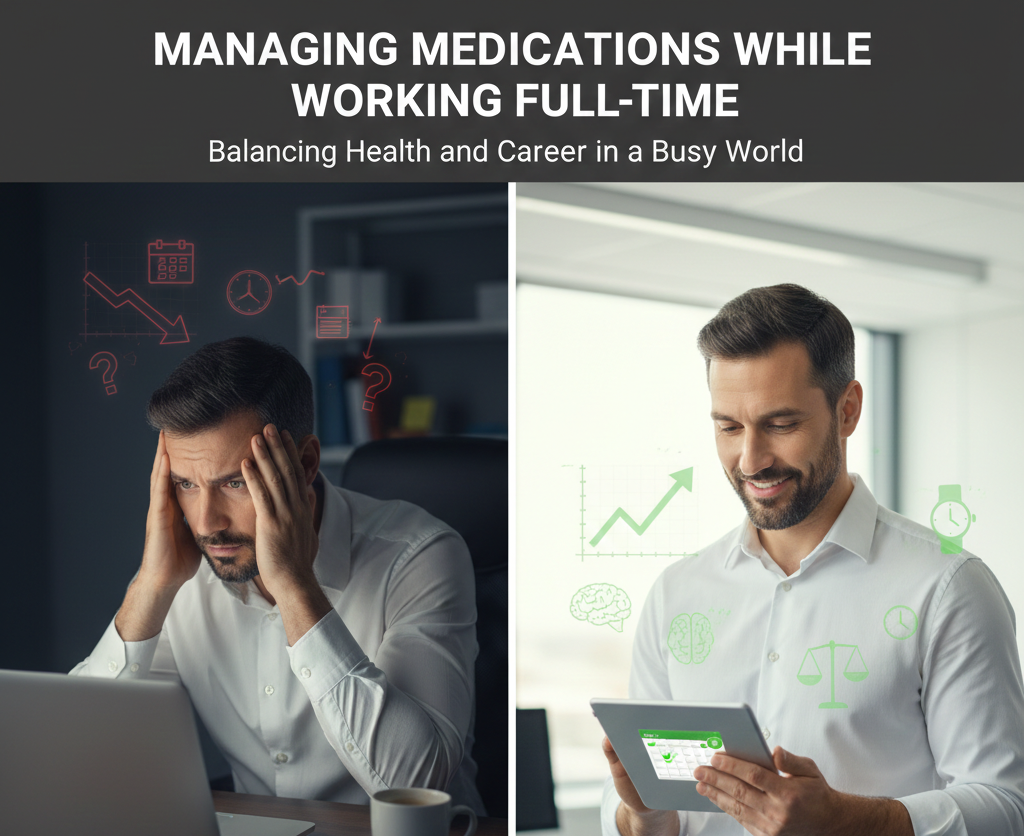
Balancing a full-time job while managing prescription medications can be challenging. Busy schedules, long work hours, and workplace responsibilities may make it difficult to maintain consistent treatment routines. However, staying organized and proactive can help ensure medications remain effective without interfering with professional productivity.
Many people take medications for mental health conditions, chronic illnesses, or temporary medical needs while maintaining demanding careers. With proper planning, communication, and self-care, it is possible to manage medications safely and efficiently while working full-time. This guide explores common challenges, practical solutions, and strategies to help individuals stay consistent with treatment while meeting workplace responsibilities.
Why Medication Consistency Matters
Consistency is one of the most important factors in treatment success. Many medications require regular dosing schedules to maintain stable levels in the bloodstream. Missing doses or taking medications irregularly may reduce effectiveness or increase the risk of side effects.
For individuals working full-time, maintaining a routine ensures:
-
Improved symptom control
-
Reduced risk of complications
-
Better overall health and energy
-
Greater ability to focus and perform at work
Building a structured medication schedule that fits into daily work routines is key to long-term success.
Common Challenges of Managing Medication at Work
1. Busy or Unpredictable Schedules
Meetings, travel, and shifting work hours can make it difficult to remember medication times.
2. Workplace Privacy Concerns
Some individuals feel uncomfortable taking medications in front of colleagues or discussing health conditions.
3. Side Effects During Work Hours
Certain medications may cause drowsiness, nausea, or concentration issues, affecting performance.
4. Limited Breaks or Access to Water
Some workplaces restrict breaks, making it challenging to take medications at scheduled times.
5. Stress and Fatigue
Work-related stress can lead to forgetfulness or inconsistent routines.
Recognizing these challenges allows individuals to plan solutions that support both health and professional responsibilities.
Creating a Medication Schedule That Fits Your Workday
1. Align Medication Times with Daily Habits
Link doses with regular activities such as breakfast, lunch, or bedtime. Consistent routines reduce the risk of missed doses.
2. Use Digital Reminders
Smartphone alarms or medication reminder apps can help keep track of dosing times even during busy workdays.
3. Keep a Small Medication Kit
Carry a discreet container with necessary medications, a water bottle, and dosing instructions to stay prepared.
4. Plan for Travel or Overtime
Keep extra doses in your bag or car in case work schedules change unexpectedly.
5. Review Timing with Healthcare Providers
If certain medication times interfere with work duties, discuss alternative dosing schedules with a professional.
Managing Medication Side Effects at Work
Side effects are a common concern, especially when starting new treatments. Some strategies to reduce workplace disruptions include:
-
Taking medications that cause drowsiness in the evening, if medically appropriate
-
Staying hydrated to reduce headaches or fatigue
-
Eating balanced meals to minimize stomach discomfort
-
Scheduling demanding tasks during peak energy periods
-
Taking short breaks to rest or stretch
If side effects persist or affect job performance, consult a healthcare provider for adjustments.
Maintaining Privacy and Professional Boundaries
Many employees prefer to keep medical information private. It is not always necessary to disclose specific health details unless accommodations are required.
Strategies for maintaining privacy include:
-
Using discreet pill containers
-
Taking medications during personal breaks
-
Storing medications securely in personal bags or lockers
-
Requesting private spaces for medical needs if necessary
If accommodations are needed, human resources departments may help ensure workplace support while protecting confidentiality.
Balancing Mental Health Medications and Work Performance
Mental health medications may require adjustment periods. During the first few weeks, individuals might experience changes in energy levels, focus, or sleep patterns.
Helpful strategies include:
-
Gradually adjusting workloads when starting new medications
-
Communicating with supervisors about temporary schedule flexibility if needed
-
Practicing stress management techniques such as mindfulness or breathing exercises
-
Ensuring adequate sleep to support cognitive performance
Many people find that once medications stabilize, work productivity and focus improve significantly.
Handling Physical Health Medications on the Job
Individuals managing chronic conditions such as diabetes, heart disease, or chronic pain may need to monitor symptoms and medication timing carefully.
Tips include:
-
Setting reminders for medication and symptom checks
-
Keeping snacks or medical supplies available if needed
-
Staying hydrated and taking movement breaks during long shifts
-
Monitoring energy levels and adjusting workloads accordingly
Consistency helps prevent sudden health issues that could disrupt work schedules.
Healthy Workplace Habits That Support Medication Effectiveness
Medication success is often influenced by lifestyle habits. Consider these supportive strategies:
-
Maintain Regular Sleep Patterns: Proper rest helps medications work effectively and reduces fatigue.
-
Stay Hydrated: Adequate fluid intake supports drug absorption and circulation.
-
Manage Stress: High stress levels may affect treatment outcomes and overall health.
-
Eat Balanced Meals: Nutrition supports energy levels and reduces medication side effects.
-
Incorporate Physical Activity: Movement boosts mood, focus, and physical well-being.
Communicating with Healthcare Providers
Healthcare providers can help tailor treatment plans to match work demands. Consider discussing:
-
Flexible dosing schedules
-
Strategies for managing side effects
-
Workplace challenges affecting treatment
-
Alternative medication options if current regimens interfere with productivity
Open communication ensures that treatment supports both health and career goals.
When to Seek Additional Support
Consider seeking professional help if:
-
You frequently miss medication doses due to work pressures
-
Side effects interfere with job performance
-
Stress or fatigue worsens symptoms
-
You struggle to balance health and work responsibilities
Counseling, occupational health support, or workplace accommodations may improve both treatment success and professional satisfaction.
Conclusion
Managing medications while working full-time requires organization, consistency, and proactive self-care. By developing structured routines, using reminders, maintaining healthy lifestyle habits, and communicating openly with healthcare providers, individuals can successfully balance treatment with professional responsibilities.
With the right strategies in place, medications can enhance overall well-being, improve work performance, and support long-term health goals. Taking small, consistent steps toward medication management ensures that both career and health remain strong and sustainable.
Medical Disclaimer:
This article is for educational purposes only and should not replace professional medical advice. Always consult a qualified healthcare professional before starting, stopping, or adjusting any medication or treatment plan.
FAQs
Is guilt a symptom of depression?
Yes, excessive or guilt is listed as a core symptom of Major Depressive Disorder in the DSM-5.
Can guilt cause depression?
While guilt alone doesn’t cause depression, chronic guilt can contribute to its development and worsen existing symptoms.
How do I stop feeling guilty when depressed?
Working with a therapist, practicing self-compassion, and potentially using medication can help manage guilt associated with depression.

Contact us
Have questions? Reach out and we’ll get back to you shortly.
Content
Guilt and Depression at a Glance
How Guilt and Depression Interact
Coping When You’re
Depressed and Feeling Guilty
Evidence-Based Treatments
When to Seek Help
How Loved Ones Can Help
FAQs