
Blog
Immediate-Release vs Extended-Release Drugs Explained

Author:
Medical Writer
Saya Des Marais

Medical Reviewer:
Dr. Russell A. Barkley, Ph.D
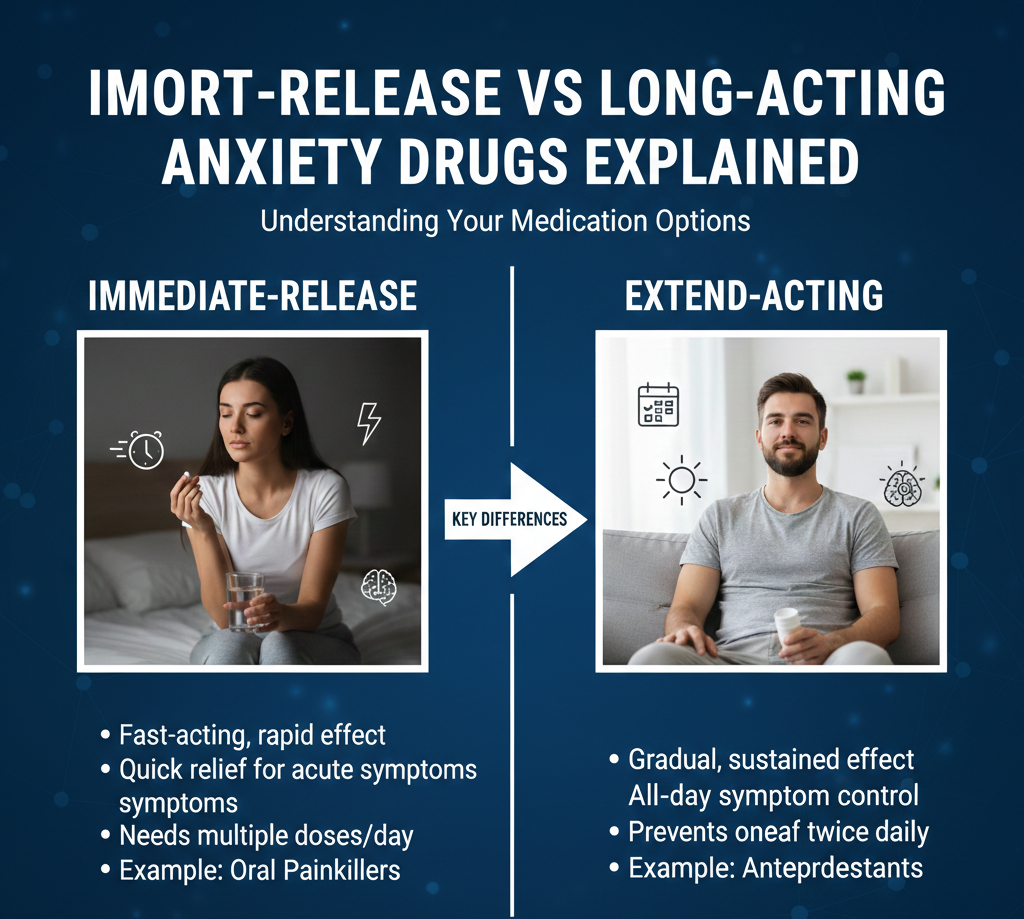
Many prescription and over-the-counter medications come in different formulations, often labeled as immediate-release (IR) or extended-release (ER). While the active ingredient may be the same, the way the medication is released into the body can significantly affect how well it works, how often it must be taken, and how it impacts daily life.
Understanding the difference between immediate-release and extended-release drugs helps patients take medications safely and effectively. This article explains how these formulations work, their advantages and disadvantages, and what healthcare providers consider when prescribing them.
What Does “Drug Release” Mean?
Drug release refers to how quickly and for how long a medication releases its active ingredient into the bloodstream after it is taken. The release rate influences:
-
How fast symptoms improve
-
How long relief lasts
-
How often doses are needed
-
Risk of side effects
Different release mechanisms are designed to meet different treatment goals.
What Are Immediate-Release (IR) Drugs?
Immediate-release drugs are formulated to release the active ingredient quickly after ingestion.
Key Characteristics of Immediate-Release Drugs
-
Rapid absorption into the bloodstream
-
Faster onset of action
-
Shorter duration of effect
-
Often require multiple doses per day
IR formulations are common for medications that need quick symptom relief.
Examples of Immediate-Release Medications
Immediate-release formulations are widely used across many drug classes, including:
-
Pain relievers
-
Anxiety medications
-
Antibiotics
-
Blood pressure medications
They are often the default option unless extended release is specifically needed.
Benefits of Immediate-Release Drugs
Immediate-release drugs offer several advantages:
-
Quick symptom relief
-
Flexible dosing adjustments
-
Easier to discontinue or change
-
Useful for acute or breakthrough symptoms
These benefits make IR drugs well-suited for conditions where rapid action is essential.
Limitations of Immediate-Release Drugs
Despite their usefulness, IR drugs also have drawbacks.
Shorter Duration
Symptoms may return as the medication wears off, requiring frequent dosing.
Peaks and Troughs
Rapid absorption can cause high peak drug levels followed by lower levels, potentially leading to side effects or symptom rebound.
Adherence Challenges
Taking medication multiple times a day can reduce adherence, especially for chronic conditions.
What Are Extended-Release (ER) Drugs?
Extended-release drugs are designed to release medication gradually over an extended period.
Key Characteristics of Extended-Release Drugs
-
Slower, controlled release
-
Longer-lasting effects
-
Fewer daily doses
-
More stable blood drug levels
ER formulations are often used for chronic or long-term conditions.
How Extended-Release Drugs Work
Extended-release medications use special technologies such as:
-
Coated beads or layers
-
Osmotic pumps
-
Matrix systems
These mechanisms allow the drug to dissolve slowly, providing consistent therapeutic levels throughout the day.
Benefits of Extended-Release Drugs
Extended-release drugs offer several important benefits:
-
Longer-lasting symptom control
-
Reduced dosing frequency
-
Fewer peaks and troughs
-
Improved medication adherence
-
Better overnight or all-day coverage
For many patients, ER formulations improve convenience and quality of life.
Limitations and Risks of Extended-Release Drugs
Slower Onset
Extended-release drugs typically take longer to begin working, making them less suitable for acute symptoms.
Limited Dosing Flexibility
ER tablets often cannot be split or crushed, which limits dose adjustments.
Risk If Misused
Crushing or chewing ER tablets can release the entire dose at once, increasing the risk of side effects or overdose.
Immediate-Release vs Extended-Release: Key Differences
Onset of Action
-
Immediate-release: Fast
-
Extended-release: Gradual
Duration of Effect
-
Immediate-release: Short
-
Extended-release: Long
Dosing Frequency
-
Immediate-release: Multiple times daily
-
Extended-release: Once or twice daily
Blood Level Stability
-
Immediate-release: Fluctuations
-
Extended-release: More consistent
How Doctors Choose Between IR and ER Formulations
Healthcare providers consider several factors:
Nature of the Condition
-
Acute or intermittent symptoms favor IR formulations
-
Chronic or stable conditions favor ER formulations
Patient Lifestyle
-
ER drugs may improve adherence for busy patients
-
IR drugs offer flexibility for variable symptoms
Side Effect Profile
-
ER formulations may reduce side effects caused by peak drug levels
Safety Considerations
Doctors consider the risk of misuse, overdose, and patient understanding of proper use.
Common Conditions Treated With IR and ER Drugs
Pain Management
-
IR formulations manage breakthrough pain
-
ER formulations provide baseline pain control
Anxiety and Mental Health
-
IR medications address acute anxiety
-
ER medications support long-term symptom stability
ADHD
-
ER stimulants provide all-day symptom control
-
IR formulations allow tailored dosing schedules
Cardiovascular Conditions
ER medications help maintain stable blood pressure or heart rate throughout the day.
Switching Between Immediate-Release and Extended-Release
Patients should never switch formulations without medical advice.
Important considerations include:
-
Dose equivalency
-
Timing of effects
-
Side effect monitoring
-
Individual response
Healthcare providers carefully adjust dosing when transitioning between formulations.
Medication Safety Tips
To use IR and ER drugs safely:
-
Take medication exactly as prescribed
-
Do not crush or chew ER tablets unless directed
-
Avoid double dosing if a dose is missed
-
Report side effects promptly
-
Store medications safely
Understanding release types reduces the risk of misuse.
When to Ask Your Doctor
Patients should consult their healthcare provider if:
-
Symptoms are not adequately controlled
-
Side effects interfere with daily life
-
Dosing schedule is difficult to maintain
-
There is confusion about medication instructions
Open communication improves treatment outcomes.
Conclusion
Immediate-release and extended-release drugs serve different but complementary roles in medical treatment. Immediate-release formulations provide rapid relief, while extended-release formulations offer consistent, long-lasting symptom control.
Choosing the right formulation depends on the condition being treated, symptom patterns, patient lifestyle, and safety considerations. With proper guidance from a healthcare provider, both IR and ER drugs can be used effectively to support better health outcomes.
FAQs
Is guilt a symptom of depression?
Yes, excessive or guilt is listed as a core symptom of Major Depressive Disorder in the DSM-5.
Can guilt cause depression?
While guilt alone doesn’t cause depression, chronic guilt can contribute to its development and worsen existing symptoms.
How do I stop feeling guilty when depressed?
Working with a therapist, practicing self-compassion, and potentially using medication can help manage guilt associated with depression.

Contact us
Have questions? Reach out and we’ll get back to you shortly.
Content
Guilt and Depression at a Glance
How Guilt and Depression Interact
Coping When You’re
Depressed and Feeling Guilty
Evidence-Based Treatments
When to Seek Help
How Loved Ones Can Help
FAQs