
Blog
How to Support a Loved One With Anxiety

Author:
Medical Writer
Saya Des Marais

Medical Reviewer:
Dr. Russell A. Barkley, Ph.D
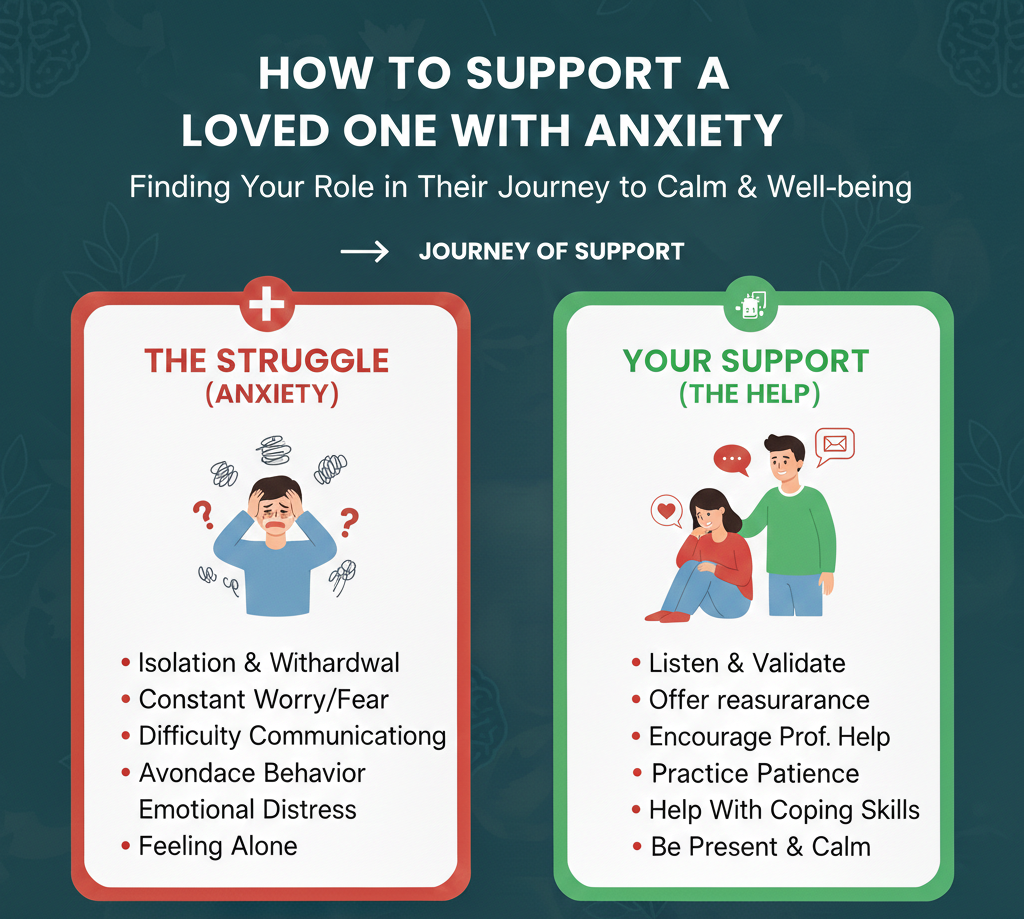
Watching someone you care about struggle with anxiety can be heartbreaking. You may see them overwhelmed by worry, avoiding situations, experiencing panic attacks, or dealing with physical symptoms like racing heart or insomnia. Naturally, you want to help — but you may not always know how.
Supporting a loved one with anxiety requires patience, understanding, and balance. While you can’t “fix” their anxiety, you can play a powerful role in creating a safe and supportive environment that encourages healing and growth.
This guide will help you understand anxiety better and provide practical strategies for offering meaningful support.
Understanding Anxiety: It’s More Than Worry
Anxiety isn’t simply nervousness or overthinking. For many people, it involves intense fear responses that feel uncontrollable and physically distressing.
Common symptoms include:
-
Excessive worrying
-
Restlessness
-
Irritability
-
Muscle tension
-
Racing thoughts
-
Sleep problems
-
Rapid heartbeat
-
Shortness of breath
Anxiety disorders are medical conditions — not personality flaws or weaknesses. Your loved one is not choosing to feel anxious.
Understanding this distinction is the first step toward compassionate support.
1. Listen Without Trying to “Fix” It
When someone opens up about anxiety, your first instinct may be to offer solutions.
However, statements like:
-
“Just relax.”
-
“Don’t think about it.”
-
“It’s not a big deal.”
can unintentionally minimize their experience.
Instead, focus on listening.
You can say:
-
“That sounds really overwhelming.”
-
“I’m here with you.”
-
“Tell me more about what you’re feeling.”
Validation does not mean you agree with their fears — it means you acknowledge that their feelings are real to them.
Feeling heard reduces isolation.
2. Learn Their Triggers
Anxiety can be triggered by specific situations such as:
-
Social gatherings
-
Work presentations
-
Health concerns
-
Financial stress
-
Travel
-
Crowded spaces
Gently ask what tends to increase their anxiety. Understanding patterns helps you anticipate moments when extra support may be helpful.
Avoid pressuring them to face triggers abruptly. Gradual exposure, when appropriate, is more effective than forced confrontation.
3. Encourage Professional Help (Without Pressure)
If anxiety significantly impacts daily functioning, professional support can make a major difference.
You might say:
-
“Have you considered talking to a professional?”
-
“I can help you look into options if you’d like.”
-
“You don’t have to handle this alone.”
Be careful not to frame therapy as something they “need” because they’re failing. Present it as a tool for support — not a punishment.
Ultimately, the decision must be theirs.
4. Avoid Enabling Avoidance
It’s natural to want to protect your loved one from distress. However, constantly helping them avoid anxiety-triggering situations can unintentionally strengthen anxiety.
For example:
-
Canceling plans repeatedly
-
Speaking for them in social settings
-
Reassuring them excessively
While occasional support is helpful, consistent avoidance prevents growth.
Instead, encourage small, manageable steps toward facing fears, celebrating progress along the way.
5. Offer Practical Support During Anxiety Episodes
If your loved one experiences panic attacks or acute anxiety, remain calm.
You can help by:
-
Speaking in a steady, reassuring tone
-
Encouraging slow breathing
-
Reminding them the feeling will pass
-
Staying physically present (if they’re comfortable with that)
Avoid overwhelming them with too many instructions. Simplicity and calm energy matter most.
6. Be Mindful of Your Language
Certain phrases can unintentionally worsen anxiety:
Avoid:
-
“You’re overreacting.”
-
“Everyone feels that way.”
-
“Why can’t you just stop?”
Try:
-
“I can see this is really hard for you.”
-
“Let’s take this one step at a time.”
-
“What would help right now?”
Supportive language fosters trust.
7. Set Healthy Boundaries
Supporting someone with anxiety does not mean neglecting your own needs.
It’s okay to say:
-
“I care about you, but I also need time to recharge.”
-
“I can’t answer texts at work, but I’ll check in later.”
Healthy boundaries prevent burnout and resentment.
You cannot pour from an empty cup. Taking care of yourself strengthens your ability to support others.
8. Educate Yourself About Anxiety
The more you understand anxiety disorders, the more empathetic and patient you’ll become.
Learn about:
-
Generalized Anxiety Disorder (GAD)
-
Social Anxiety Disorder
-
Panic Disorder
-
Health Anxiety
-
Phobias
Understanding that anxiety has biological and psychological components reduces frustration.
Knowledge builds compassion.
9. Encourage Healthy Habits Together
You can model and promote habits that reduce anxiety, such as:
-
Regular exercise
-
Balanced nutrition
-
Limiting caffeine
-
Consistent sleep routines
-
Mindfulness or breathing exercises
Doing these activities together makes them feel less isolating.
For example:
-
Take evening walks together
-
Practice short breathing exercises before bed
-
Prepare healthy meals as a team
Small shared routines can strengthen both mental health and relationships.
10. Celebrate Progress — Even Small Wins
Recovery from anxiety is rarely linear. There will be good days and difficult days.
Acknowledge progress such as:
-
Attending a social event
-
Completing a stressful task
-
Managing a panic episode
-
Trying therapy
Positive reinforcement builds confidence and resilience.
11. Be Patient With Setbacks
Anxiety can fluctuate. Stressful life events, lack of sleep, or unexpected challenges may temporarily worsen symptoms.
Avoid expressing disappointment.
Instead, say:
-
“It’s okay to have a tough day.”
-
“We’ll get through this together.”
Consistency in support builds security.
12. Know When You Need Support Too
Supporting someone with anxiety can be emotionally demanding.
If you feel overwhelmed, consider:
-
Talking to a counselor
-
Joining a support group
-
Speaking with trusted friends
-
Practicing self-care regularly
Taking care of your own mental health is not selfish — it’s essential.
What Not to Do
While intentions are usually good, certain behaviors may worsen anxiety:
-
Mocking fears
-
Forcing exposure abruptly
-
Taking over responsibilities completely
-
Using ultimatums
-
Dismissing physical symptoms
Remember, anxiety symptoms feel real and intense. Respect that experience, even if you don’t fully understand it.
The Power of Consistent Support
Support does not require grand gestures. Often, it’s the small, steady actions that matter most:
-
Checking in regularly
-
Offering reassurance during tough moments
-
Showing patience
-
Being reliable
Over time, this stability creates a foundation of trust and safety.
When Anxiety Becomes a Crisis
Seek immediate professional help if your loved one experiences:
-
Thoughts of self-harm
-
Severe panic attacks with fainting
-
Inability to function daily
-
Substance misuse related to anxiety
Early intervention can prevent worsening symptoms.
Final Thoughts
Supporting a loved one with anxiety is an act of compassion — but it also requires balance.
You cannot eliminate their anxiety, but you can:
-
Listen without judgment
-
Encourage growth without pressure
-
Offer reassurance without enabling
-
Maintain boundaries while staying supportive
Anxiety may be part of their life, but it does not define who they are — or your relationship.
With patience, understanding, and the right support systems in place, healing and progress are absolutely possible.
And sometimes, simply saying “I’m here for you” makes more difference than you realize.
FAQs
Is guilt a symptom of depression?
Yes, excessive or guilt is listed as a core symptom of Major Depressive Disorder in the DSM-5.
Can guilt cause depression?
While guilt alone doesn’t cause depression, chronic guilt can contribute to its development and worsen existing symptoms.
How do I stop feeling guilty when depressed?
Working with a therapist, practicing self-compassion, and potentially using medication can help manage guilt associated with depression.

Contact us
Have questions? Reach out and we’ll get back to you shortly.
Content
Guilt and Depression at a Glance
How Guilt and Depression Interact
Coping When You’re
Depressed and Feeling Guilty
Evidence-Based Treatments
When to Seek Help
How Loved Ones Can Help
FAQs