Blog
How to Dispose of Expired Medications Properly

Author:
Medical Writer
Saya Des Marais

Medical Reviewer:
Dr. Russell A. Barkley, Ph.D
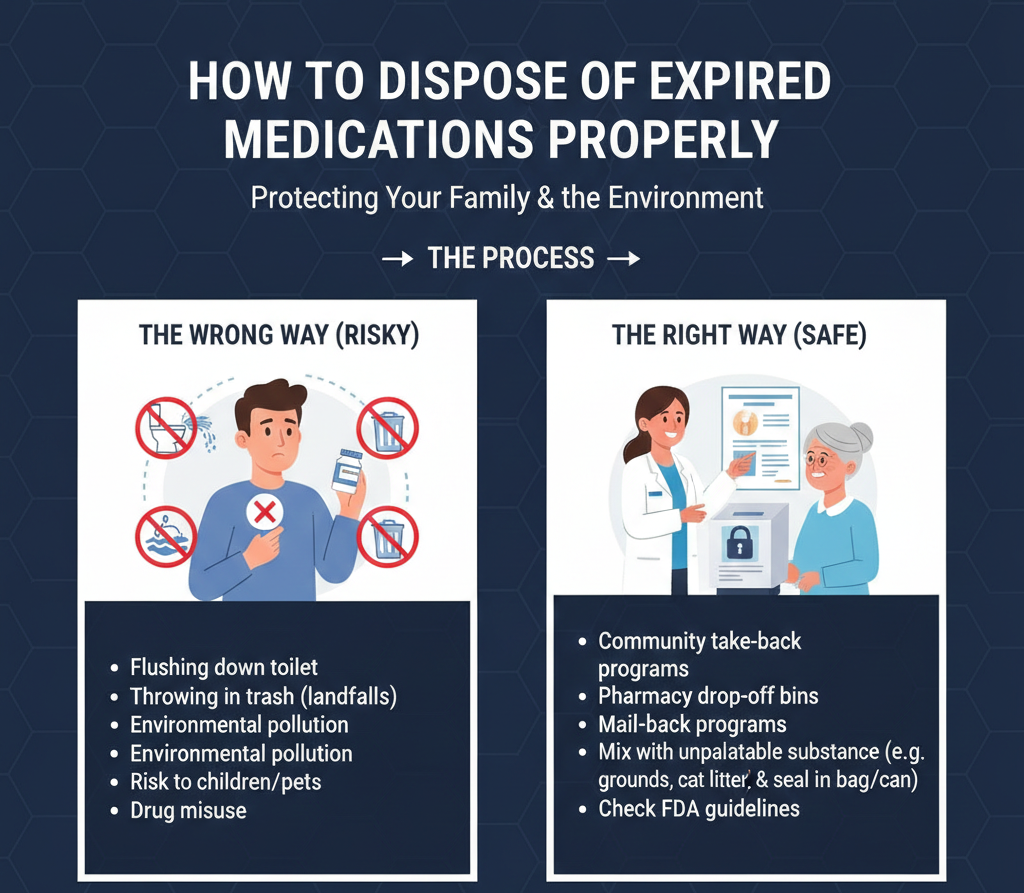
Prescription and over-the-counter medications play an important role in managing health conditions. However, when medicines expire or are no longer needed, many people are unsure how to dispose of them safely. Keeping old medications around the home can increase the risk of accidental ingestion, misuse, or environmental contamination.
Proper medication disposal is not only about clearing space in your medicine cabinet—it’s about protecting your family, your community, and the environment. Understanding how to discard expired drugs responsibly ensures that they do not end up in the wrong hands or harm ecosystems.
This comprehensive guide explains why safe medication disposal matters, outlines recommended methods, and highlights common mistakes to avoid.
Why Proper Medication Disposal Is Important
Expired or unused medications can pose serious risks if handled incorrectly. Many people store old prescriptions for years without realizing that doing so may create safety hazards.
Health Risks
-
Reduced effectiveness of expired medications
-
Increased chance of medication errors
-
Accidental poisoning in children or pets
-
Misuse or abuse by others
Environmental Concerns
Improper disposal—such as flushing medications or throwing them directly into the trash—can lead to chemicals entering water systems and soil. Even small amounts of pharmaceutical substances may affect wildlife and drinking water quality.
Legal and Community Safety
Leaving unused medications accessible can contribute to unauthorized use or diversion. Responsible disposal helps prevent misuse and promotes safer communities.
When Should Medications Be Disposed Of?
Knowing when to discard medicines is just as important as knowing how to do it.
Common Reasons for Disposal
-
Expiration date has passed
-
Medication is no longer prescribed
-
Doctor changes treatment plan
-
Medicine appears damaged or contaminated
-
Packaging is broken or unclear
Regularly reviewing your medicine cabinet—every few months—is a good habit to ensure outdated drugs are removed promptly.
Understanding Medication Expiration Dates
Expiration dates indicate the period during which a medication is expected to remain safe and effective when stored correctly. Over time, chemical changes may reduce potency or alter how the medication works.
While some medications may remain stable beyond their expiration date, relying on outdated drugs is generally not recommended. Reduced effectiveness may lead to inadequate treatment, especially for conditions that require precise dosing.
Best Option: Drug Take-Back Programs
The safest and most recommended method for disposing of expired medications in the United States is through authorized drug take-back programs.
What Are Take-Back Programs?
These programs allow individuals to return unused medications to designated collection sites, such as pharmacies, hospitals, or community events. The collected medications are then disposed of through environmentally responsible methods.
Benefits of Take-Back Programs
-
Protects the environment
-
Prevents medication misuse
-
Ensures proper destruction
-
Provides convenient drop-off options
Many pharmacies and law enforcement agencies offer year-round drop boxes. National take-back events also occur periodically, making disposal accessible to the public.
Using Pharmacy or Mail-Back Services
Some pharmacies provide mail-back envelopes or on-site disposal kiosks. These services allow patients to send expired medications to authorized facilities for safe destruction.
Advantages
-
Easy and secure disposal
-
Suitable for various medication types
-
Often available at local pharmacies
Always follow instructions provided by the service to ensure compliance with disposal guidelines.
Disposing of Medications at Home (If No Take-Back Option Exists)
If a take-back program is not available, certain medications can be disposed of in household trash—but only after taking precautions.
Safe Steps for Trash Disposal
-
Remove medications from original containers.
-
Mix them with undesirable substances such as coffee grounds or used cat litter.
-
Place the mixture in a sealed plastic bag or container.
-
Throw it away in household trash.
-
Remove personal information from prescription labels before discarding packaging.
This process reduces the risk of accidental ingestion or intentional misuse.
Should Medications Ever Be Flushed?
In most cases, flushing medications down the toilet or sink is not recommended due to environmental concerns. However, certain high-risk drugs may appear on official “flush lists” because they pose serious dangers if accidentally ingested.
Important Considerations
-
Follow official disposal instructions on medication labels.
-
Only flush medications if specifically directed by healthcare authorities.
-
Avoid flushing unless no safer option exists.
When in doubt, consult a pharmacist or healthcare provider before flushing any medication.
Special Considerations for Certain Medication Types
Liquid Medications
Seal containers tightly and consider mixing liquids with absorbent materials before disposal.
Controlled Substances
Take-back programs are the safest method. Keep documentation if needed and avoid improper disposal.
Inhalers and Aerosols
Do not puncture or incinerate these items. Follow manufacturer instructions or pharmacy guidance.
Sharps and Injectable Medications
Needles and syringes require special disposal in approved sharps containers. Many communities provide dedicated disposal sites for medical sharps.
Protecting Children and Pets During Disposal
Expired medications can be particularly dangerous to children and animals. Even small amounts may cause serious harm.
Safety Tips
-
Store medications in locked cabinets until disposal
-
Keep medicines out of sight and reach
-
Never leave pills unattended during sorting
-
Dispose of medications promptly once expired
Quick action helps minimize risks to vulnerable family members.
Environmental Impact of Improper Disposal
Medications thrown directly into sinks or toilets may pass through water treatment systems and enter natural waterways. Over time, pharmaceutical chemicals can affect aquatic life and ecosystems.
Environmental organizations emphasize responsible disposal as a key step toward reducing pollution and protecting natural resources. Using approved disposal methods helps limit contamination and supports public health.
Common Mistakes to Avoid
Many people unintentionally dispose of medications incorrectly.
-
Flushing medications without checking guidelines
-
Throwing pills directly into trash without mixing
-
Leaving personal information on labels
-
Keeping expired medicines “just in case”
-
Sharing unused prescriptions with others
Avoiding these mistakes helps maintain safety and prevents potential misuse.
How to Build a Medication Disposal Routine
Developing regular habits makes responsible disposal easier.
-
Check your medicine cabinet every three to six months
-
Mark expiration dates on calendars
-
Participate in community take-back events
-
Keep a list of current medications
-
Educate family members about safe practices
A consistent routine ensures that expired drugs are removed promptly.
The Role of Healthcare Providers and Pharmacists
Healthcare professionals play a vital role in educating patients about medication safety. Pharmacists can explain disposal guidelines, provide information about local take-back programs, and answer questions about specific medications.
Doctors may also advise patients when it’s appropriate to stop a medication and how to dispose of remaining supplies safely.
Conclusion
Properly disposing of expired medications is a simple but powerful way to protect your health, prevent misuse, and reduce environmental harm. Whether through drug take-back programs, pharmacy services, or safe at-home disposal methods, responsible practices help ensure that unused medications do not pose risks to individuals or communities.
By regularly reviewing your medicine cabinet, following official disposal guidelines, and seeking advice from healthcare professionals, you can manage medications safely and responsibly. Making proper disposal a routine habit supports not only your well-being but also the health and safety of everyone around you.
FAQs
Is guilt a symptom of depression?
Yes, excessive or guilt is listed as a core symptom of Major Depressive Disorder in the DSM-5.
Can guilt cause depression?
While guilt alone doesn’t cause depression, chronic guilt can contribute to its development and worsen existing symptoms.
How do I stop feeling guilty when depressed?
Working with a therapist, practicing self-compassion, and potentially using medication can help manage guilt associated with depression.

Contact us
Have questions? Reach out and we’ll get back to you shortly.
Content
Guilt and Depression at a Glance
How Guilt and Depression Interact
Coping When You’re
Depressed and Feeling Guilty
Evidence-Based Treatments
When to Seek Help
How Loved Ones Can Help
FAQs