
Blog
How SSRIs Help Reduce Anxiety Symptoms

Author:
Medical Writer
Saya Des Marais

Medical Reviewer:
Dr. Russell A. Barkley, Ph.D
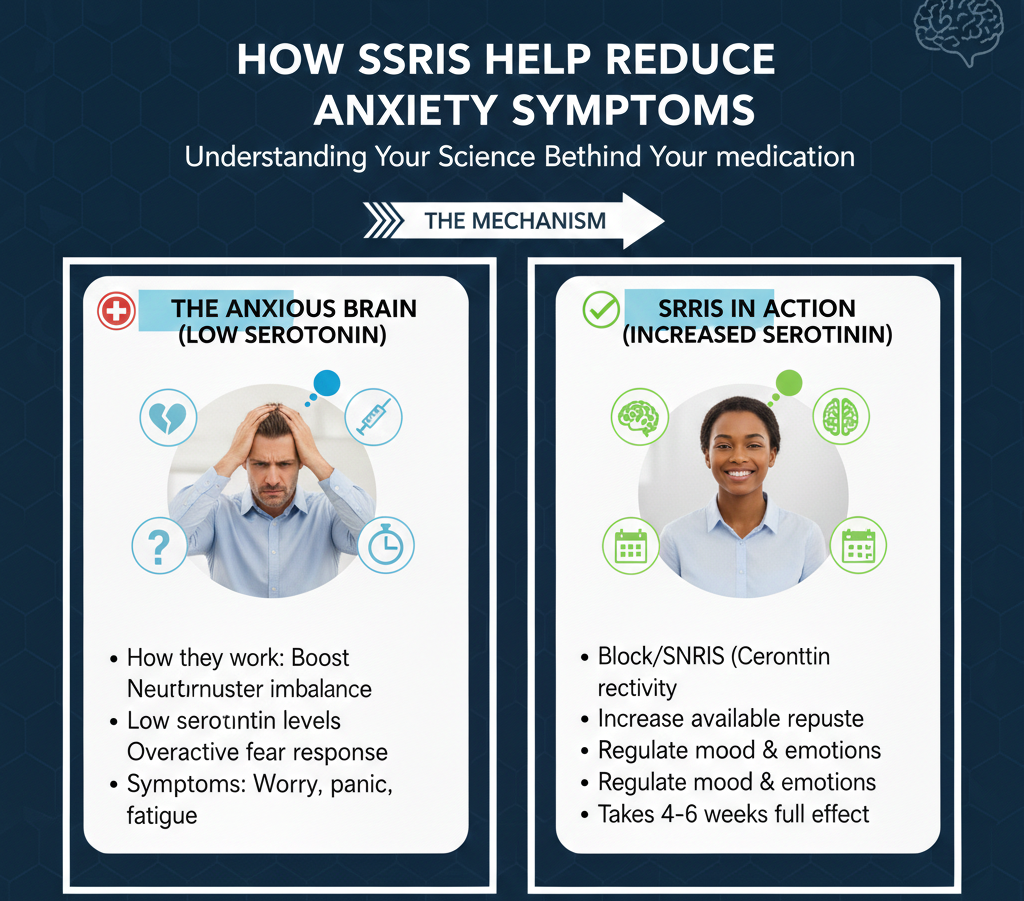
Anxiety disorders affect millions of people worldwide, causing persistent worry, panic, muscle tension, racing thoughts, and difficulty concentrating. While therapy plays a critical role in treatment, medications are often recommended when symptoms are moderate to severe. Among the most commonly prescribed medications for anxiety are SSRIs.
Selective Serotonin Reuptake Inhibitors (SSRIs) are considered first-line treatments for many anxiety disorders. They are widely studied, generally well tolerated, and effective for long-term management. In this comprehensive guide, we’ll explore how SSRIs help reduce anxiety symptoms, how they work in the brain, what to expect during treatment, and important safety considerations.
What Are SSRIs?
SSRIs are a class of antidepressant medications that increase serotonin levels in the brain. Although originally developed for depression, they are now widely used to treat anxiety disorders.
Major medical organizations such as the American Psychiatric Association and the National Institute of Mental Health recommend SSRIs as first-line medications for many anxiety conditions.
SSRIs are commonly prescribed for:
-
Generalized Anxiety Disorder (GAD)
-
Panic Disorder
-
Social Anxiety Disorder
-
Obsessive-Compulsive Disorder (OCD)
-
Post-Traumatic Stress Disorder (PTSD)
How Anxiety Affects the Brain
To understand how SSRIs work, it helps to know what happens in the brain during anxiety.
Anxiety is linked to overactivity in areas such as:
-
The amygdala (fear processing center)
-
The prefrontal cortex (decision-making and regulation)
-
The stress response system
Neurotransmitters—chemical messengers in the brain—play a major role. One of the most important neurotransmitters involved in mood and anxiety regulation is serotonin.
Low or imbalanced serotonin activity is associated with:
-
Excessive worry
-
Heightened fear response
-
Irritability
-
Sleep disturbances
SSRIs help correct this imbalance.
How SSRIs Work
Serotonin is released between nerve cells and then reabsorbed in a process called “reuptake.” SSRIs block this reuptake process, allowing more serotonin to remain available in the brain.
By increasing serotonin availability, SSRIs help:
-
Stabilize mood
-
Reduce fear signaling
-
Lower emotional reactivity
-
Improve sleep patterns
-
Decrease panic intensity
Over time, these changes reduce the frequency and severity of anxiety symptoms.
Importantly, SSRIs do not create artificial happiness. Instead, they help restore balance so the brain can regulate stress more effectively.
Common SSRIs Used for Anxiety
Several SSRIs are FDA-approved or widely prescribed for anxiety disorders, including:
-
Sertraline
-
Escitalopram
-
Fluoxetine
-
Paroxetine
-
Citalopram
Each medication has slightly different properties, but all work through similar serotonin-based mechanisms.
Your healthcare provider will choose the most appropriate option based on:
-
Specific anxiety diagnosis
-
Symptom severity
-
Other medical conditions
-
Potential drug interactions
-
Previous medication history
How Long Do SSRIs Take to Work?
Unlike fast-acting medications such as benzodiazepines, SSRIs take time to show results.
Typical timeline:
-
Week 1–2: Mild side effects may appear; anxiety may feel slightly worse temporarily.
-
Week 3–4: Early improvements may begin.
-
Week 6–8: Noticeable symptom reduction.
-
Up to 12 weeks: Full therapeutic effect.
Patience is essential. SSRIs gradually change brain chemistry and neural pathways, which takes time.
What Anxiety Symptoms Do SSRIs Improve?
SSRIs are effective in reducing:
-
Excessive worry
-
Constant rumination
-
Panic attacks
-
Physical tension
-
Social fear
-
Irritability
-
Sleep disruption
-
Obsessive thoughts
They are particularly helpful for chronic, persistent anxiety rather than situational stress.
Are SSRIs Addictive?
SSRIs are not addictive. They do not cause cravings, intoxication, or drug-seeking behavior.
However, stopping SSRIs abruptly can cause temporary discontinuation symptoms such as:
-
Dizziness
-
Irritability
-
Headache
-
Flu-like symptoms
This is why gradual tapering under medical supervision is recommended.
Common Side Effects of SSRIs
Most side effects are mild and temporary. They may include:
-
Nausea
-
Headache
-
Sleep changes
-
Increased sweating
-
Sexual dysfunction
-
Mild jitteriness early in treatment
Side effects often improve within a few weeks as the body adjusts.
If side effects persist or become bothersome, your provider may adjust the dose or switch medications.
Why SSRIs May Initially Increase Anxiety
Some people notice slightly increased anxiety during the first week or two. This happens because serotonin levels begin shifting before the brain fully adapts.
This temporary phase usually resolves within 1–2 weeks. Providers sometimes start with a very low dose to reduce this effect.
SSRIs vs. Benzodiazepines
Benzodiazepines such as:
-
Alprazolam
-
Clonazepam
work quickly, often within hours. However, they carry risks of:
-
Dependence
-
Tolerance
-
Withdrawal
-
Cognitive slowing
SSRIs are preferred for long-term anxiety management because they address the underlying neurochemical imbalance rather than just temporarily suppressing symptoms.
Combining SSRIs with Therapy
Research consistently shows that combining SSRIs with Cognitive Behavioral Therapy (CBT) produces stronger and longer-lasting results than medication alone.
While SSRIs reduce symptom intensity, therapy helps:
-
Change negative thought patterns
-
Build coping skills
-
Reduce relapse risk
-
Improve emotional regulation
Medication stabilizes the brain, and therapy strengthens the mind.
How Long Should You Stay on SSRIs?
Treatment duration varies depending on:
-
Severity of anxiety
-
Number of previous episodes
-
Risk of relapse
Most providers recommend continuing SSRIs for at least 6–12 months after symptoms improve.
For recurrent anxiety disorders, longer treatment may be advised.
Never stop SSRIs without consulting your healthcare provider.
Who Should Avoid SSRIs?
SSRIs may not be appropriate for individuals with:
-
Certain bipolar disorders (without mood stabilizers)
-
Severe allergic reactions to previous SSRIs
-
Specific medication interactions
Your provider will carefully review your medical history before prescribing.
Lifestyle Factors That Enhance SSRI Effectiveness
Medication works best when supported by healthy habits:
-
Regular exercise
-
Adequate sleep
-
Balanced nutrition
-
Reduced caffeine intake
-
Stress management techniques
-
Strong social support
These strategies improve brain health and strengthen recovery.
Signs SSRIs Are Working
You may notice:
-
Reduced frequency of panic attacks
-
Less constant worry
-
Improved sleep
-
Increased focus
-
Better emotional control
-
Feeling more capable of handling stress
Improvements often happen gradually rather than suddenly.
When to Seek Immediate Medical Attention
Contact a healthcare provider immediately if you experience:
-
Suicidal thoughts
-
Severe agitation
-
Allergic reactions (rash, swelling, breathing difficulty)
-
Sudden mood changes
Serious side effects are rare but require prompt evaluation.
Final Thoughts
SSRIs play a crucial role in modern anxiety treatment. By increasing serotonin availability in the brain, they help regulate mood, reduce fear responses, and restore emotional balance. Although they require patience and careful monitoring, SSRIs are safe, non-addictive, and highly effective for many individuals living with anxiety disorders.
If anxiety is interfering with your daily life, speaking with a qualified healthcare provider can help determine whether an SSRI may be right for you. When combined with therapy and healthy lifestyle habits, SSRIs can provide meaningful, long-term relief and support a return to stability, confidence, and well-being.
FAQs
Is guilt a symptom of depression?
Yes, excessive or guilt is listed as a core symptom of Major Depressive Disorder in the DSM-5.
Can guilt cause depression?
While guilt alone doesn’t cause depression, chronic guilt can contribute to its development and worsen existing symptoms.
How do I stop feeling guilty when depressed?
Working with a therapist, practicing self-compassion, and potentially using medication can help manage guilt associated with depression.

Contact us
Have questions? Reach out and we’ll get back to you shortly.
Content
Guilt and Depression at a Glance
How Guilt and Depression Interact
Coping When You’re
Depressed and Feeling Guilty
Evidence-Based Treatments
When to Seek Help
How Loved Ones Can Help
FAQs