
Blog
How Sleep Medications Work in the Brain: A Simple Explanation

Author:
Medical Writer
Saya Des Marais

Medical Reviewer:
Dr. Russell A. Barkley, Ph.D
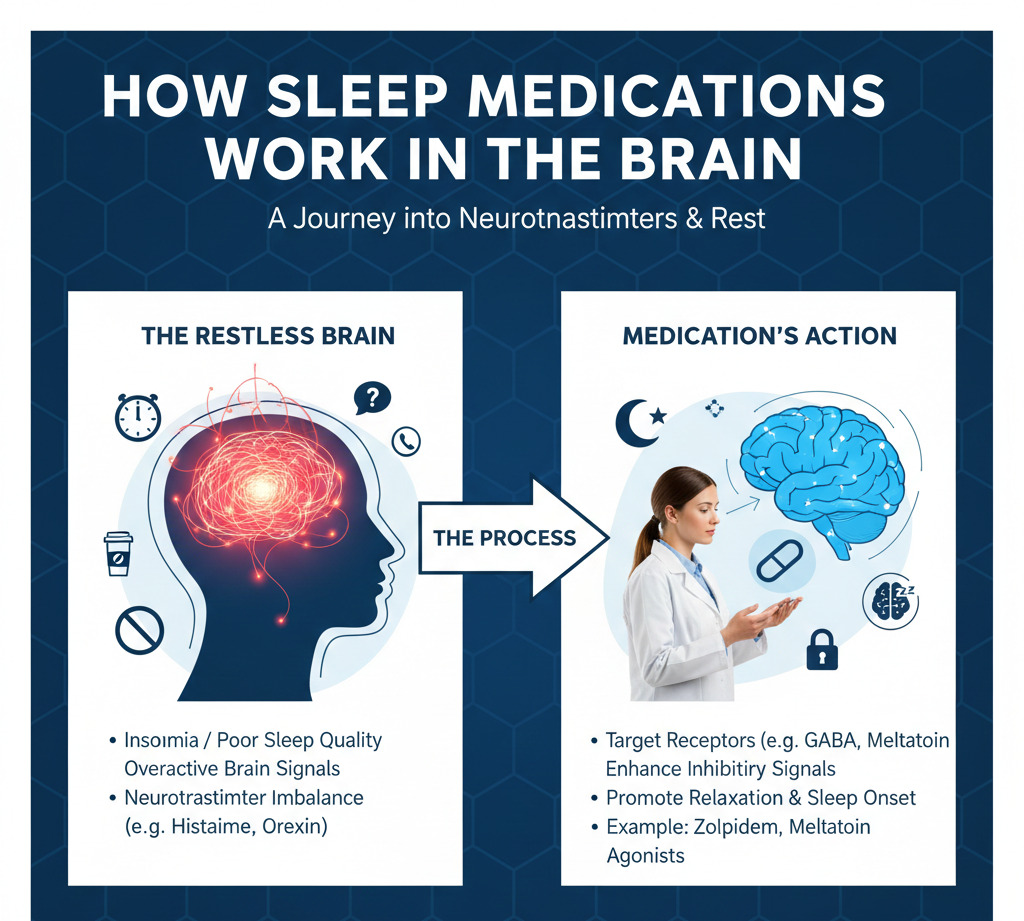
Sleep plays a vital role in physical health, mental well-being, and daily functioning. Yet millions of adults in the United States struggle with sleep disorders such as insomnia. When lifestyle changes and behavioral strategies are not enough, healthcare providers may recommend sleep medications. But how exactly do these medications work in the brain?
Understanding the science behind sleep medications helps patients make informed decisions and use them responsibly. This article explains how sleep medications affect brain chemistry, the key neurotransmitters involved, and why different types of sleep aids exist.
The Brain and the Sleep–Wake Cycle
Sleep is regulated by a complex interaction of brain regions, hormones, and neurotransmitters. Two main systems control sleep:
Circadian Rhythm
This internal biological clock follows a roughly 24-hour cycle and is regulated by the hypothalamus. It responds to light and darkness, helping determine when we feel alert or sleepy.
Sleep Drive
Also known as homeostatic sleep pressure, this system increases the longer we stay awake. The chemical adenosine builds up in the brain throughout the day, creating the urge to sleep.
When these systems are disrupted—due to stress, medical conditions, or lifestyle factors—sleep problems can occur.
Neurotransmitters Involved in Sleep
Sleep medications work by influencing neurotransmitters, which are chemical messengers in the brain. Key neurotransmitters involved in sleep include:
-
GABA (Gamma-Aminobutyric Acid): Promotes relaxation and reduces brain activity
-
Melatonin: Regulates the sleep–wake cycle
-
Histamine: Promotes wakefulness
-
Orexin: Maintains alertness and prevents sudden sleep onset
-
Serotonin: Influences mood and sleep regulation
Different sleep medications target one or more of these neurotransmitters to promote sleep.
How Common Sleep Medications Work
1. GABA-Enhancing Medications
Many prescription sleep medications work by enhancing the effects of GABA, the brain’s primary inhibitory neurotransmitter. GABA slows down neural activity, helping the brain transition into sleep.
When GABA activity increases:
-
Brain signals become calmer
-
Anxiety and mental alertness decrease
-
Sleep onset becomes easier
These medications are often prescribed for short-term use under medical supervision.
2. Melatonin-Based Sleep Aids
Melatonin is a hormone naturally produced by the pineal gland in response to darkness. It signals the brain that it is time to sleep.
Melatonin-based sleep aids:
-
Help regulate circadian rhythm
-
Are commonly used for jet lag or shift work sleep issues
-
May support sleep onset rather than sleep maintenance
Unlike many prescription medications, melatonin does not directly sedate the brain but supports natural sleep timing.
3. Antihistamine Sleep Aids
Some over-the-counter sleep aids contain antihistamines, which block histamine, a neurotransmitter involved in wakefulness.
By reducing histamine activity:
-
Alertness decreases
-
Drowsiness increases
While effective for occasional sleep difficulties, these medications may cause next-day grogginess and are not typically recommended for long-term use.
4. Orexin Receptor Antagonists
Orexin is a neurotransmitter that promotes wakefulness and alertness. Some newer sleep medications work by blocking orexin receptors.
This mechanism:
-
Reduces excessive wake signals
-
Allows natural sleep processes to take over
-
Supports both sleep onset and sleep maintenance
These medications represent a more targeted approach to treating insomnia.
Why Different Sleep Medications Exist
Sleep disorders vary widely, and not all sleep problems are the same. Some people struggle to fall asleep, while others wake frequently during the night or too early in the morning.
Different medications are designed to:
-
Help initiate sleep
-
Maintain sleep throughout the night
-
Regulate circadian rhythm
-
Address underlying neurological imbalances
Healthcare providers choose treatments based on individual symptoms, medical history, and risk factors.
Effects of Sleep Medications on Brain Activity
Sleep medications generally reduce brain activity in areas associated with alertness and stress. Brain imaging studies show that these medications can:
-
Decrease activity in the cortex
-
Reduce nighttime hyperarousal
-
Promote deeper stages of sleep
However, not all medications affect sleep architecture in the same way. Some may alter REM sleep or deep sleep patterns, which is why medical guidance is essential.
Risks and Considerations
While sleep medications can be helpful, they must be used responsibly.
Potential Considerations Include:
-
Daytime drowsiness
-
Memory or concentration issues
-
Tolerance with prolonged use
-
Interactions with other medications
For these reasons, sleep medications are often recommended alongside behavioral strategies rather than as a standalone long-term solution.
The Role of Behavioral Therapy
In the United States, Cognitive Behavioral Therapy for Insomnia (CBT-I) is widely recognized as a first-line treatment for chronic insomnia. CBT-I addresses the thoughts and behaviors that interfere with sleep and may reduce reliance on medications over time.
Sleep medications may still play a supportive role, especially during short-term symptom relief or severe sleep disruption.
Final Thoughts
Sleep medications work by influencing key neurotransmitters in the brain that regulate alertness, relaxation, and sleep timing. By targeting systems such as GABA, melatonin, histamine, and orexin, these medications help restore balance to disrupted sleep patterns.
Understanding how these medications work empowers individuals to use them safely and appropriately under professional guidance. Educational resources like USA Pharmas help bridge the gap between medical science and public understanding, supporting informed and responsible healthcare decisions.
FAQs
Is guilt a symptom of depression?
Yes, excessive or guilt is listed as a core symptom of Major Depressive Disorder in the DSM-5.
Can guilt cause depression?
While guilt alone doesn’t cause depression, chronic guilt can contribute to its development and worsen existing symptoms.
How do I stop feeling guilty when depressed?
Working with a therapist, practicing self-compassion, and potentially using medication can help manage guilt associated with depression.

Contact us
Have questions? Reach out and we’ll get back to you shortly.
Content
Guilt and Depression at a Glance
How Guilt and Depression Interact
Coping When You’re
Depressed and Feeling Guilty
Evidence-Based Treatments
When to Seek Help
How Loved Ones Can Help
FAQs