Blog
How Sleep Affects Anxiety and Ways to Improve Rest


Sleep and mental health are deeply connected. While occasional sleepless nights are common, chronic sleep problems can significantly increase anxiety levels. At the same time, anxiety itself often makes it difficult to fall asleep or stay asleep, creating a frustrating cycle that affects both emotional and physical well-being.
Understanding how sleep affects anxiety—and learning practical ways to improve rest—can play a major role in managing stress, improving mood, and supporting overall mental health.
The Relationship Between Sleep and Anxiety
Sleep allows the brain and body to recover from daily stress. During restful sleep, the brain processes emotions, regulates stress hormones, and restores cognitive function.
When sleep is disrupted, these important processes are affected, making individuals more vulnerable to anxiety symptoms such as worry, irritability, and emotional sensitivity.
Research shows that people who experience poor sleep are more likely to develop anxiety disorders, while those already living with anxiety often struggle with insomnia or restless sleep.
How Lack of Sleep Increases Anxiety
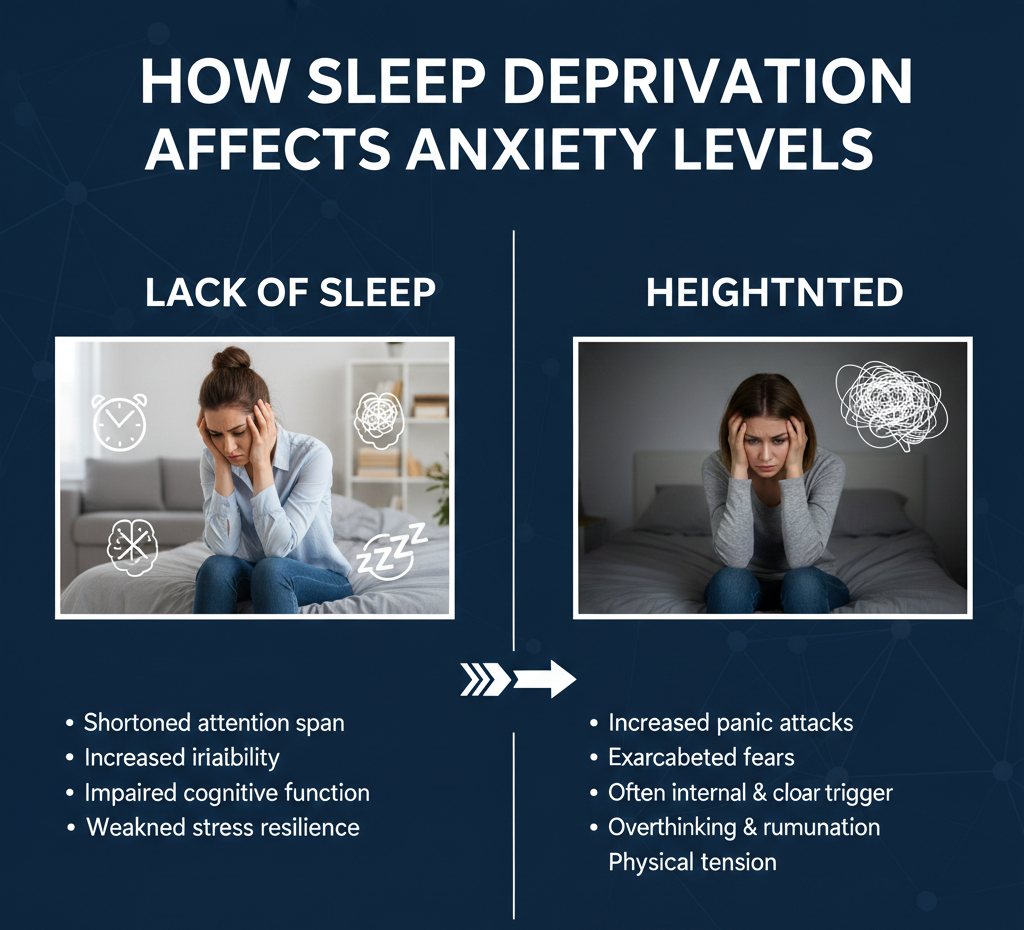
Sleep deprivation impacts several brain functions directly linked to emotional regulation.
1. Increased Stress Hormones
Poor sleep raises cortisol levels—the body’s primary stress hormone. Elevated cortisol keeps the nervous system in a constant state of alertness, making relaxation difficult.
2. Reduced Emotional Control
The brain’s prefrontal cortex helps regulate emotional responses. Sleep loss weakens this control, allowing fear and worry responses to become stronger.
As a result, everyday challenges may feel overwhelming after inadequate rest.
3. Heightened Fight-or-Flight Response
Insufficient sleep makes the brain more reactive to perceived threats. This heightened sensitivity can trigger anxiety, panic symptoms, or excessive worrying.
4. Difficulty Concentrating
Fatigue reduces focus and decision-making ability, which may increase frustration and anxious thinking throughout the day.
How Anxiety Disrupts Sleep
The relationship between sleep and anxiety works both ways.
Common anxiety-related sleep problems include:
-
Racing thoughts at bedtime
-
Difficulty falling asleep
-
Frequent nighttime awakenings
-
Nightmares or vivid dreams
-
Muscle tension preventing relaxation
-
Early morning waking
Many individuals describe feeling physically tired but mentally unable to “switch off,” which is a hallmark of anxiety-related insomnia.
Signs Anxiety May Be Affecting Your Sleep
You may notice anxiety-related sleep disruption if you:
-
Take more than 30 minutes to fall asleep regularly
-
Wake frequently during the night
-
Feel tired despite adequate sleep time
-
Experience nighttime worrying
-
Depend on screens or distractions to fall asleep
-
Feel more anxious after poor sleep
Recognizing these signs helps identify when lifestyle changes or professional support may be needed.
The Importance of Quality Sleep for Mental Health
Quality sleep supports several processes essential for anxiety management:
-
Emotional regulation
-
Memory processing
-
Hormonal balance
-
Nervous system recovery
-
Improved resilience to stress
Adults typically require 7–9 hours of sleep per night for optimal mental and physical health.
Consistent, restorative sleep strengthens the brain’s ability to cope with daily stressors.
Ways to Improve Sleep and Reduce Anxiety
Improving sleep habits is one of the most effective non-medication strategies for managing anxiety.
1. Maintain a Consistent Sleep Schedule
Going to bed and waking up at the same time daily helps regulate the body’s internal clock.
Consistency improves sleep quality and makes falling asleep easier over time—even on weekends.
2. Create a Relaxing Bedtime Routine
A calming pre-sleep routine signals the brain that it is time to rest.
Helpful activities include:
-
Reading
-
Gentle stretching
-
Meditation
-
Listening to calming music
-
Taking a warm shower
Avoid stimulating activities shortly before bedtime.
3. Limit Screen Exposure Before Sleep
Phones, tablets, and computers emit blue light that suppresses melatonin—the hormone responsible for sleep.
Try to avoid screens at least 30–60 minutes before bedtime to promote natural sleepiness.
4. Practice Relaxation and Breathing Techniques
Relaxation exercises calm the nervous system and reduce nighttime anxiety.
Effective techniques include:
-
Deep breathing exercises
-
Progressive muscle relaxation
-
Guided meditation
-
Mindfulness practices
Slow breathing can lower heart rate and prepare the body for sleep.
5. Optimize Your Sleep Environment
A comfortable sleep setting improves rest quality.
Consider:
-
Keeping the room cool and dark
-
Using comfortable bedding
-
Reducing noise levels
-
Limiting bedroom activities to sleep and relaxation
A peaceful environment encourages faster sleep onset.
6. Reduce Caffeine and Alcohol Intake
Caffeine stimulates the nervous system and may remain in the body for several hours.
Limiting caffeine after midday can improve sleep quality. Although alcohol may initially cause drowsiness, it disrupts deeper sleep stages and may worsen anxiety overnight.
7. Exercise Regularly
Physical activity helps regulate stress hormones and promotes deeper sleep.
Moderate exercise such as walking, yoga, or cycling can improve both sleep duration and anxiety symptoms. However, intense workouts close to bedtime may interfere with sleep for some individuals.
8. Manage Nighttime Worry
If racing thoughts keep you awake, try:
-
Writing worries in a journal before bed
-
Creating a next-day task list
-
Practicing gratitude journaling
-
Setting aside “worry time” earlier in the evening
Externalizing thoughts reduces mental overload at bedtime.
When Professional Help May Be Needed
Sleep difficulties that persist despite lifestyle improvements may require professional evaluation.
Consider seeking help if:
-
Insomnia lasts several weeks or longer
-
Anxiety worsens significantly
-
Daytime functioning becomes difficult
-
Panic symptoms occur at night
Healthcare providers may recommend therapy, behavioral sleep treatments, or medical support when appropriate.
Building a Healthy Sleep–Anxiety Balance
Improving sleep is not an overnight process. Small, consistent changes often lead to meaningful long-term results.
Healthy sleep habits combined with stress management, therapy, and balanced lifestyle practices can significantly reduce anxiety severity.
Prioritizing rest is not simply about avoiding fatigue—it is a powerful tool for emotional stability and mental resilience.
Final Thoughts
Sleep and anxiety share a powerful two-way relationship. Poor sleep can intensify anxiety symptoms, while anxiety can prevent restful sleep, creating a challenging cycle. Fortunately, improving sleep habits can break this pattern and support better mental health.
By maintaining consistent routines, practicing relaxation techniques, optimizing sleep environments, and addressing stress proactively, individuals can enhance sleep quality and reduce anxiety naturally.
Quality rest allows the mind and body to recover, improving emotional balance, focus, and overall well-being—making sleep one of the most important foundations of anxiety management.