
Blog
How Long Does Anxiety Last Without Treatment?

Author:
Medical Writer
Saya Des Marais

Medical Reviewer:
Dr. Russell A. Barkley, Ph.D
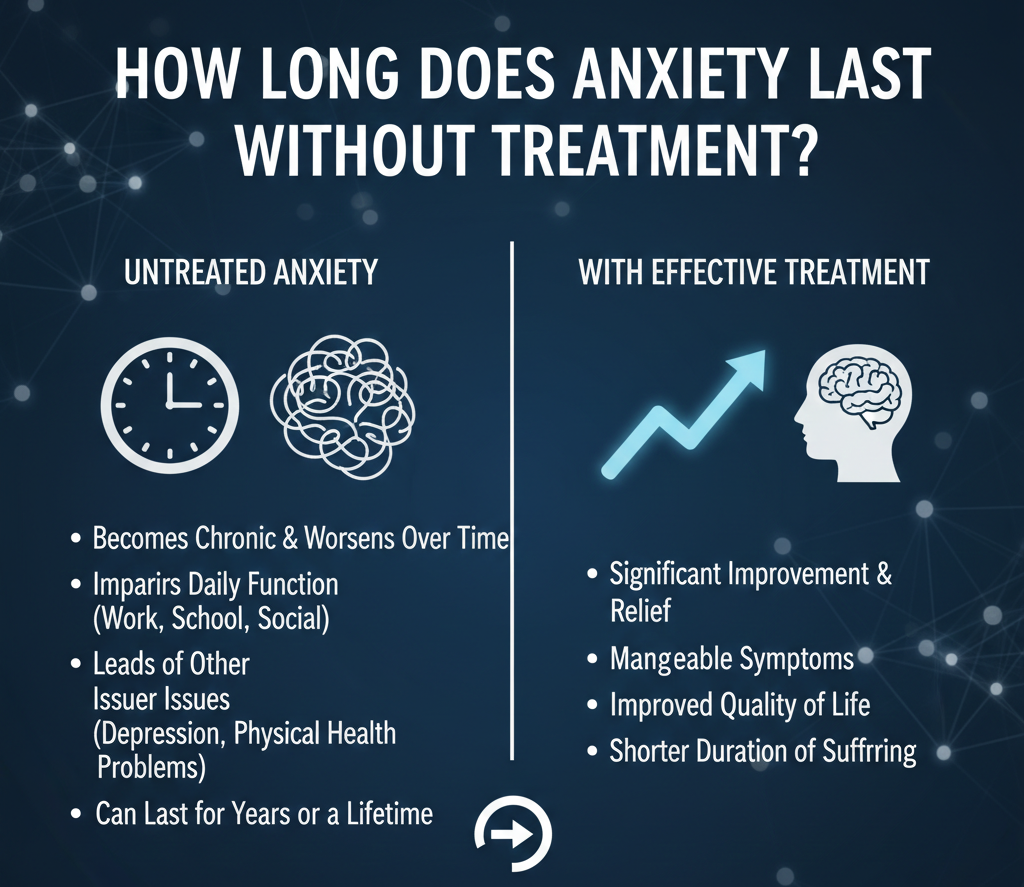
Anxiety is a natural response to stress, uncertainty, or perceived danger. In many cases, anxiety is temporary and fades once the stressful situation passes. However, when anxiety persists without treatment, it can become chronic and significantly affect daily life, emotional well-being, and physical health.
Understanding how long anxiety can last without treatment—and what factors influence its duration—can help individuals recognize when professional support may be necessary.
Short-Term Anxiety vs Long-Term Anxiety
Not all anxiety follows the same timeline. The duration depends on its cause, severity, and how the body responds to stress.
Short-Term Anxiety
Short-term anxiety often arises from identifiable stressors such as:
-
Work deadlines
-
Exams or presentations
-
Medical procedures
-
Life transitions
This type of anxiety may last from a few minutes to several weeks and usually resolves once the stressor is removed or managed.
Long-Term or Chronic Anxiety
When continues for months or years without treatment, it may be classified as chronic anxiety or an anxiety disorder. Chronic does not resolve on its own and often worsens over time.
How Long Do Anxiety Symptoms Last Without Treatment?
The duration of untreated anxiety varies widely, but research and clinical experience show several common patterns.
1. Weeks to Months
In the early stages, symptoms may fluctuate. Individuals might experience periods of relief followed by recurring worry, restlessness, or physical discomfort.
2. Six Months or Longer
If anxiety persists for six months or more, it may meet the criteria for an anxiety disorder such as generalized anxiety disorder (GAD). At this stage, symptoms often become more entrenched and difficult to manage independently.
3. Years
Without treatment, anxiety can last for years or even decades. Over time, the nervous system remains in a heightened state of alert, reinforcing anxiety responses and making recovery more challenging.
Why Anxiety Often Persists Without Treatment
Anxiety tends to be self-reinforcing. Several factors contribute to its persistence:
1. Avoidance Behaviors
People with anxiety often avoid situations that trigger discomfort. While avoidance provides temporary relief, it reinforces fear and prevents long-term improvement.
2. Negative Thought Patterns
Untreated anxiety can strengthen patterns such as catastrophic thinking, excessive worry, and fear of uncertainty.
3. Nervous System Dysregulation
Chronic anxiety keeps the nervous system in a constant “fight or flight” mode, making it harder for the body to relax naturally.
4. Lack of Coping Strategies
Without guidance or support, individuals may not develop effective tools to manage stress and anxious thoughts.
Does Anxiety Ever Go Away on Its Own?
In some cases, mild anxiety related to a specific situation may improve without formal treatment. However, clinical anxiety disorders rarely resolve completely on their own.
For many adults, anxiety may:
-
Decrease temporarily
-
Shift to different worries
-
Return during periods of stress
Without intervention, symptoms often resurface and may intensify over time.
Physical and Mental Effects of Untreated Anxiety
Long-term untreated anxiety affects both mental and physical health.
Mental and Emotional Effects
-
Difficulty concentrating
-
Persistent fear or worry
-
Irritability
-
Low mood or emotional exhaustion
Physical Effects
-
Muscle tension and pain
-
Digestive problems
-
Sleep disturbances
-
Headaches
-
Fatigue
Over time, chronic anxiety may increase the risk of other mental health conditions, such as depression.
Factors That Influence Anxiety Duration
Several factors determine how long anxiety lasts without treatment:
Severity of Symptoms
More severe anxiety tends to persist longer and cause greater impairment.
Type of Anxiety Disorder
-
Generalized anxiety may last continuously
-
Panic disorder may involve recurring episodes
-
Phobias may persist until specific fears are addressed
Stress Levels
Ongoing stressors such as financial pressure or health issues can prolong anxiety.
Support System
Strong social support may help reduce symptom intensity, while isolation can worsen anxiety.
Risks of Leaving Anxiety Untreated
Ignoring persistent anxiety can lead to:
-
Reduced quality of life
-
Difficulty maintaining relationships
-
Impaired work or academic performance
-
Increased reliance on avoidance behaviors
In some cases, untreated anxiety can increase sensitivity to stress and make future anxiety episodes more severe.
When Should You Seek Professional Help?
Professional support should be considered if:
-
Anxiety lasts longer than a few weeks
-
Symptoms interfere with daily activities
-
Physical symptoms are distressing
-
Panic attacks occur
-
Anxiety affects sleep or appetite
Early intervention often leads to better outcomes and shorter recovery times.
How Treatment Can Change the Timeline
With appropriate treatment, many individuals experience significant improvement within weeks to months. Treatment helps:
-
Regulate the nervous system
-
Reduce avoidance behaviors
-
Improve emotional resilience
-
Teach coping and stress-management skills
The earlier anxiety is addressed, the less likely it is to become chronic.
Final Thoughts
Anxiety can last anywhere from a few days to many years without treatment, depending on its severity and underlying causes. While mild anxiety may resolve on its own, persistent anxiety often requires professional support to prevent long-term effects.
Recognizing prolonged anxiety as a medical condition, not a personal failure, can empower individuals to seek help and regain control over their mental well-being.
⚠️ Medical Disclaimer
This content is for informational purposes only and does not replace professional medical advice, diagnosis, or treatment. Always consult a qualified healthcare provider regarding mental health concerns.
FAQs
Is guilt a symptom of depression?
Yes, excessive or guilt is listed as a core symptom of Major Depressive Disorder in the DSM-5.
Can guilt cause depression?
While guilt alone doesn’t cause depression, chronic guilt can contribute to its development and worsen existing symptoms.
How do I stop feeling guilty when depressed?
Working with a therapist, practicing self-compassion, and potentially using medication can help manage guilt associated with depression.

Contact us
Have questions? Reach out and we’ll get back to you shortly.
Content
Guilt and Depression at a Glance
How Guilt and Depression Interact
Coping When You’re
Depressed and Feeling Guilty
Evidence-Based Treatments
When to Seek Help
How Loved Ones Can Help
FAQs