
Blog
How Benzodiazepines Work for Anxiety Relief

Author:
Medical Writer
Saya Des Marais

Medical Reviewer:
Dr. Russell A. Barkley, Ph.D
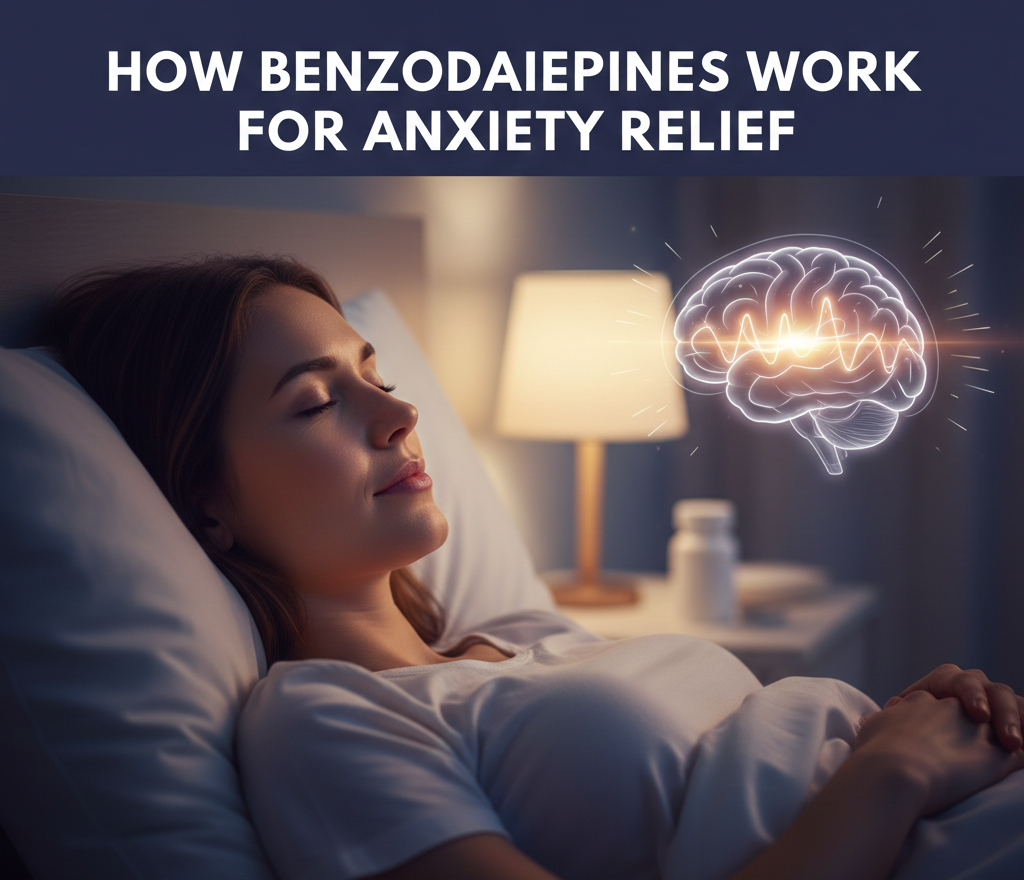
Anxiety disorders are among the most common mental health conditions worldwide. While therapy, lifestyle changes, and long-term medications are often recommended, benzodiazepines have been used for decades to provide fast relief from acute anxiety symptoms.
But how exactly do benzodiazepines work? Why are they effective for anxiety, and what are their risks?
This article explains the science behind benzodiazepines, their benefits, potential side effects, and safe considerations—helping you understand their role in anxiety treatment.
What Are Benzodiazepines?
Benzodiazepines are a class of medications known as central nervous system (CNS) depressants. They are commonly prescribed for:
-
Anxiety disorders
-
Panic attacks
-
Insomnia
-
Muscle spasms
-
Seizures
-
Short-term stress-related conditions
Some widely known benzodiazepines include:
-
Alprazolam
-
Diazepam
-
Lorazepam
-
Clonazepam
-
Midazolam
These medications are typically prescribed for short-term use due to their potential risks.
How Benzodiazepines Work in the Brain
To understand how benzodiazepines relieve anxiety, it’s important to know how the brain regulates emotions and stress.
1) The Role of GABA in the Nervous System
The brain uses chemical messengers called neurotransmitters to communicate between nerve cells. One of the most important calming neurotransmitters is GABA (gamma-aminobutyric acid).
GABA works like a natural “brake system” for the brain. It helps:
-
Reduce excessive brain activity
-
Calm nervous system responses
-
Promote relaxation and sleep
People with anxiety often have an imbalance in brain activity, where excitatory signals overpower calming signals.
2) Benzodiazepines Enhance GABA Activity
Benzodiazepines do not create GABA, but they enhance its effect.
They bind to specific receptors in the brain called GABA-A receptors, which leads to:
-
Increased calming signals
-
Reduced nerve activity
-
Faster relaxation
-
Lower stress and fear responses
This is why benzodiazepines can provide quick relief during anxiety or panic episodes.
Effects of Benzodiazepines on the Body
Because benzodiazepines slow down brain activity, they can produce several effects:
Psychological Effects
-
Reduced anxiety and fear
-
Sedation and relaxation
-
Improved sleep
-
Reduced panic symptoms
Physical Effects
-
Muscle relaxation
-
Slower heart rate
-
Reduced tension
-
Drowsiness
These effects make benzodiazepines useful for short-term anxiety relief, especially in severe or acute situations.
Why Benzodiazepines Act Quickly
Unlike many long-term anxiety medications (such as antidepressants), benzodiazepines work rapidly.
Reasons for Fast Action:
-
Direct effect on brain receptors
-
Rapid absorption into the bloodstream
-
Immediate calming impact
Some benzodiazepines can begin working within minutes to hours, which is why they are often used for panic attacks or emergency anxiety situations.
Short-Term vs Long-Term Use
Short-Term Use
Doctors often prescribe benzodiazepines for short durations because they:
-
Provide immediate symptom relief
-
Help during acute stress or panic episodes
-
Bridge the gap until long-term treatments take effect
Long-Term Use Concerns
Long-term use can lead to challenges such as:
-
Reduced effectiveness (tolerance)
-
Dependence
-
Withdrawal symptoms
For this reason, many healthcare providers recommend alternative long-term treatments like therapy or antidepressants.
Potential Side Effects of Benzodiazepines
Like all medications, benzodiazepines can cause side effects.
Common Side Effects
-
Drowsiness
-
Dizziness
-
Fatigue
-
Confusion
-
Impaired coordination
Less Common Effects
-
Memory problems
-
Mood changes
-
Reduced concentration
The likelihood of side effects can vary depending on dosage, duration, and individual sensitivity.
Risks and Safety Considerations
Benzodiazepines must be used responsibly and under medical guidance.
1) Tolerance
Over time, the body may require higher doses to achieve the same effect.
2) Dependence
The brain may become reliant on benzodiazepines to feel calm.
3) Withdrawal Symptoms
Stopping suddenly can cause symptoms such as:
-
Anxiety rebound
-
Insomnia
-
Irritability
-
Physical discomfort
4) Interaction with Other Substances
Combining benzodiazepines with alcohol or other sedatives can be dangerous and should always be avoided without medical advice.
Benzodiazepines vs Other Anxiety Treatments
Benzodiazepines are only one part of anxiety treatment. Other options include:
Psychological Therapies
-
Cognitive Behavioral Therapy (CBT)
-
Mindfulness-based therapy
-
Stress management techniques
Lifestyle Approaches
-
Regular exercise
-
Healthy sleep habits
-
Balanced diet
-
Meditation and breathing exercises
Long-Term Medications
Some medications are designed for long-term anxiety management rather than immediate relief.
Each treatment option has its own role, and many people benefit from a combination approach.
Who May Benefit from Benzodiazepines?
Benzodiazepines may be considered in situations such as:
-
Severe anxiety episodes
-
Panic attacks
-
Short-term stress-related conditions
-
Medical procedures causing anxiety
However, they are not suitable for everyone. Individual health conditions, history, and risk factors must be considered.
The Importance of Professional Guidance
Because benzodiazepines affect brain chemistry, they should never be used without professional supervision.
A qualified healthcare provider can help determine:
-
Whether benzodiazepines are appropriate
-
The correct dosage and duration
-
Safer alternatives if needed
Education and awareness are key to using anxiety treatments responsibly.
Conclusion
Benzodiazepines work by enhancing the calming effects of GABA in the brain, helping reduce anxiety and nervous system overactivity. Their fast action makes them valuable in short-term anxiety relief, but they also come with risks that require careful management.
Understanding how benzodiazepines work empowers individuals to make informed decisions about anxiety treatment. When combined with therapy, lifestyle changes, and professional guidance, they can be part of a balanced approach to mental health.
FAQs
Is guilt a symptom of depression?
Yes, excessive or guilt is listed as a core symptom of Major Depressive Disorder in the DSM-5.
Can guilt cause depression?
While guilt alone doesn’t cause depression, chronic guilt can contribute to its development and worsen existing symptoms.
How do I stop feeling guilty when depressed?
Working with a therapist, practicing self-compassion, and potentially using medication can help manage guilt associated with depression.

Contact us
Have questions? Reach out and we’ll get back to you shortly.
Content
Guilt and Depression at a Glance
How Guilt and Depression Interact
Coping When You’re
Depressed and Feeling Guilty
Evidence-Based Treatments
When to Seek Help
How Loved Ones Can Help
FAQs