
Blog
How Does Anxiety Affect the Brain and Nervous System?

Author:
Medical Writer
Saya Des Marais

Medical Reviewer:
Dr. Russell A. Barkley, Ph.D
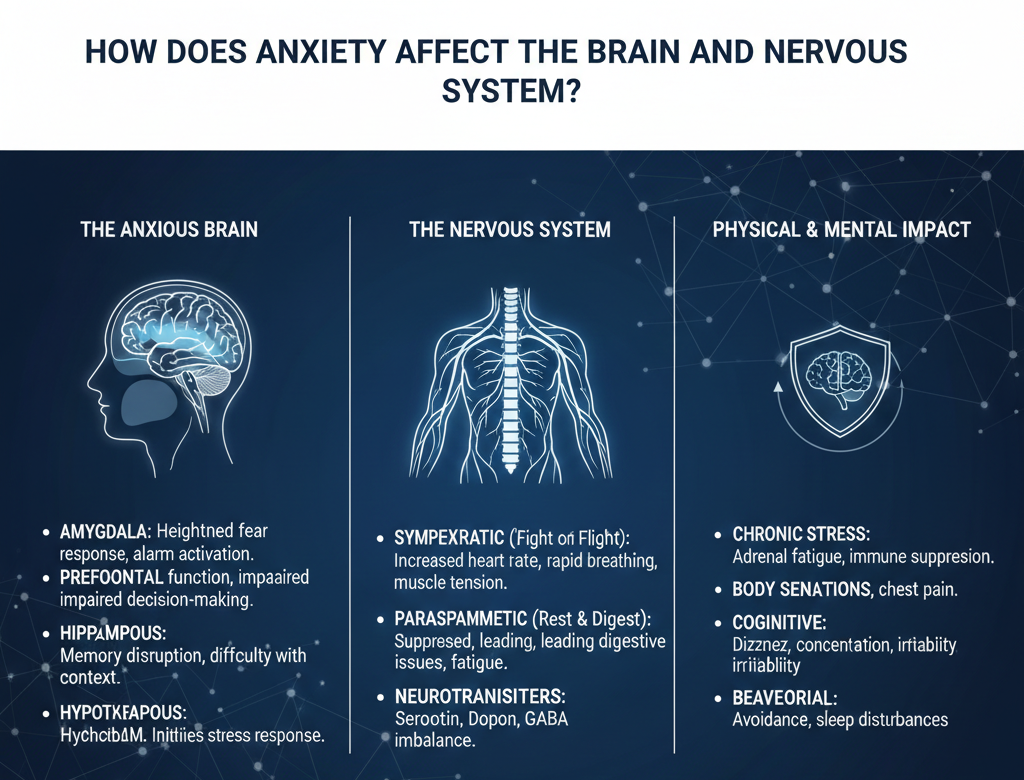
Anxiety is more than just a mental or emotional experience, it has a powerful and measurable impact on the brain and nervous system. While short-term anxiety can help the body respond to danger, chronic or excessive anxiety can disrupt normal brain function and strain the nervous system over time.
Understanding how anxiety affects the brain and nervous system can help explain common symptoms such as racing thoughts, rapid heartbeat, muscle tension, and fatigue. It also highlights why early management and treatment are important for long-term mental and physical health.
The Brain–Body Connection in Anxiety
The brain and nervous system work together to detect threats and protect the body. When anxiety occurs, this system becomes overactivated, even when there is no immediate danger.
Key systems involved include:
-
The amygdala (fear processing)
-
The prefrontal cortex (decision-making and emotional regulation)
-
The hypothalamic-pituitary-adrenal (HPA) axis
-
The autonomic nervous system
When anxiety is persistent, these systems remain in a heightened state of alert, affecting both mental clarity and physical health.
The Role of the Amygdala: Fear Detection Center
The amygdala is a small, almond-shaped structure in the brain responsible for detecting threats and generating fear responses. In people with anxiety disorders, the amygdala tends to be overactive.
Effects of an Overactive Amygdala
-
Heightened fear response to non-threatening situations
-
Increased sensitivity to stress
-
Rapid emotional reactions
-
Difficulty calming down after stressful events
This overactivity causes the brain to interpret neutral situations as dangerous, triggering anxiety even when no real threat exists.
The Prefrontal Cortex: Reduced Emotional Control
The prefrontal cortex helps regulate emotions, make rational decisions, and control impulsive reactions. Anxiety can interfere with this region’s ability to function effectively.
When anxiety is high:
-
Logical thinking becomes harder
-
Decision-making slows
-
Emotional regulation weakens
This imbalance between the amygdala and prefrontal cortex explains why people with anxiety often know their fears are irrational but still feel overwhelmed by them.
Stress Hormones and the HPA Axis
The HPA axis controls the body’s stress response. When anxiety triggers this system, stress hormones such as cortisol and adrenaline are released.
Short-Term Effects
-
Increased heart rate
-
Sharper focus
-
Increased energy
Long-Term Effects of Chronic Anxiety
-
Constant cortisol release
-
Sleep disturbances
-
Memory problems
-
Weakened immune response
Chronic exposure to stress hormones can alter brain structure and function, especially in areas involved in learning, memory, and emotional regulation.
Neurotransmitters and Brain Chemistry
Anxiety is closely linked to imbalances in key neurotransmitters—chemical messengers that allow brain cells to communicate.
Important Neurotransmitters Involved in Anxiety
-
Serotonin: Regulates mood and emotional stability
-
GABA (Gamma-Aminobutyric Acid): Calms brain activity
-
Dopamine: Affects motivation and reward
Low levels of calming neurotransmitters or excessive excitatory signals can lead to:
-
Racing thoughts
-
Persistent worry
-
Difficulty relaxing
This chemical imbalance contributes to both emotional symptoms and physical tension associated with anxiety.
How Anxiety Affects the Autonomic Nervous System
The autonomic nervous system controls involuntary bodily functions such as heart rate, breathing, and digestion. It has two main branches:
1. Sympathetic Nervous System (Fight or Flight)
Anxiety activates this system, preparing the body for danger.
Common effects include:
-
Rapid heartbeat
-
Shallow breathing
-
Sweating
-
Muscle tension
2. Parasympathetic Nervous System (Rest and Digest)
This system calms the body after stress. In chronic anxiety, the parasympathetic system struggles to restore balance.
As a result, the body remains in a constant state of alertness, leading to exhaustion and physical discomfort.
Physical Symptoms Explained by Nervous System Changes
Many physical symptoms of anxiety originate from nervous system dysregulation rather than physical illness.
Common examples include:
-
Chest tightness from muscle tension
-
Digestive problems due to altered gut-brain signaling
-
Headaches from prolonged stress
-
Fatigue from constant nervous system activation
This explains why anxiety can feel like a full-body condition rather than a purely emotional issue.
Long-Term Effects of Chronic Anxiety on the Brain
When anxiety persists for long periods without management, it may lead to lasting changes in brain function.
Potential long-term effects include:
-
Reduced memory performance
-
Increased sensitivity to stress
-
Heightened emotional reactivity
-
Difficulty concentrating
Research suggests that chronic anxiety may affect brain plasticity, making it harder for the brain to adapt to stress over time.
Can Anxiety-Related Brain Changes Be Reversed?
The brain has a remarkable ability to adapt and recover—a concept known as neuroplasticity. With appropriate treatment and lifestyle changes, many anxiety-related brain changes can improve.
Helpful strategies include:
-
Psychotherapy (such as cognitive behavioral therapy)
-
Stress management techniques
-
Regular physical activity
-
Adequate sleep
-
Mindfulness and relaxation practices
These approaches help retrain the brain, calm the nervous system, and restore balance.
When to Seek Professional Help
Professional support should be considered if:
-
Anxiety symptoms are persistent or worsening
-
Physical symptoms interfere with daily life
-
Panic attacks occur frequently
-
Sleep, work, or relationships are affected
Early intervention can prevent long-term nervous system strain and improve overall well-being.
Final Thoughts
Anxiety affects far more than emotions—it directly influences the brain, nervous system, and body. From heightened fear responses to chemical imbalances and nervous system overstimulation, anxiety creates a cycle that can be difficult to break without proper understanding and support.
Learning how anxiety impacts the brain empowers individuals to recognize symptoms early, seek appropriate care, and adopt strategies that promote long-term mental and physical health.
⚠️ Medical Disclaimer
This content is for informational purposes only and does not replace professional medical advice, diagnosis, or treatment. Always consult a qualified healthcare provider regarding mental or neurological concerns.
FAQs
Is guilt a symptom of depression?
Yes, excessive or guilt is listed as a core symptom of Major Depressive Disorder in the DSM-5.
Can guilt cause depression?
While guilt alone doesn’t cause depression, chronic guilt can contribute to its development and worsen existing symptoms.
How do I stop feeling guilty when depressed?
Working with a therapist, practicing self-compassion, and potentially using medication can help manage guilt associated with depression.

Contact us
Have questions? Reach out and we’ll get back to you shortly.
Content
Guilt and Depression at a Glance
How Guilt and Depression Interact
Coping When You’re
Depressed and Feeling Guilty
Evidence-Based Treatments
When to Seek Help
How Loved Ones Can Help
FAQs