
Blog
Depression vs Anxiety: Symptoms and Treatments Compared

Author:
Medical Writer
Saya Des Marais

Medical Reviewer:
Dr. Russell A. Barkley, Ph.D
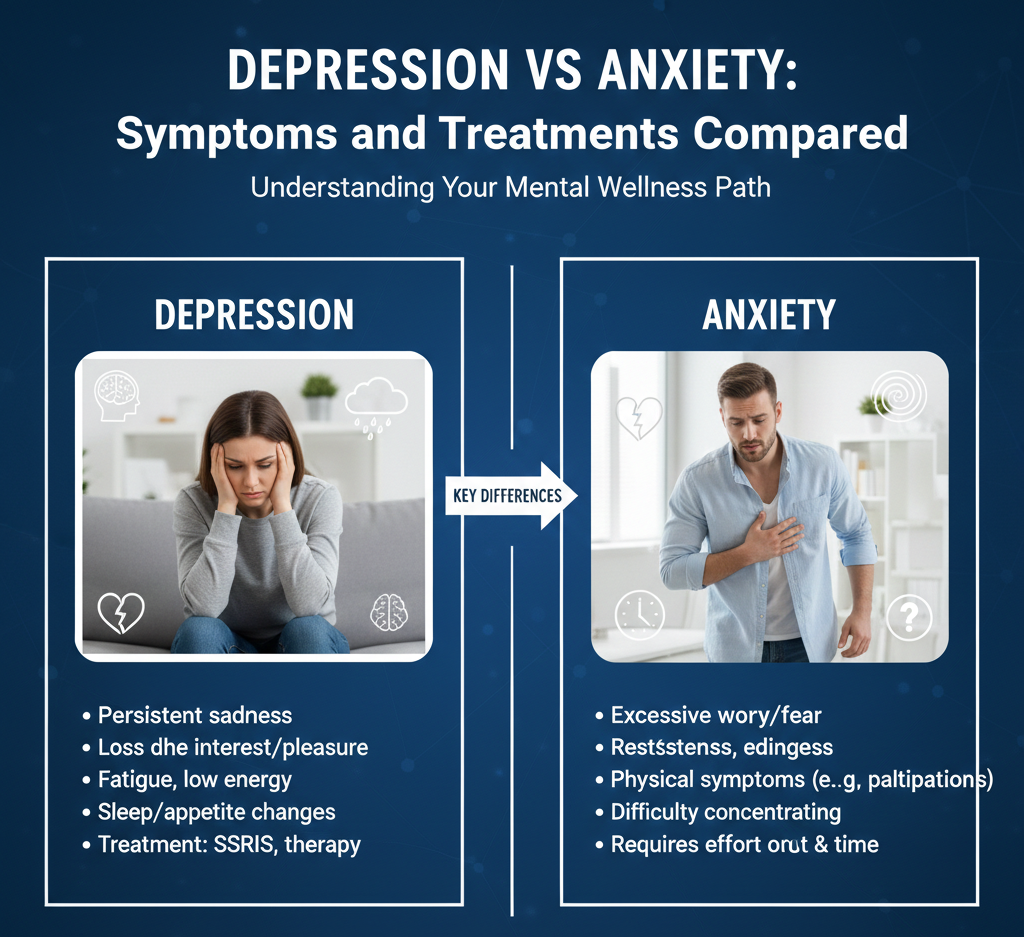
Depression and anxiety are two of the most common mental health conditions worldwide. Although they are distinct disorders, they frequently overlap, and many people experience symptoms of both at the same time. Because of this overlap, depression and anxiety are often misunderstood or confused with one another.
Understanding the differences between depression and anxiety is essential for accurate diagnosis and effective treatment. While both conditions affect mood, thinking, and physical health, they involve different emotional patterns, biological mechanisms, and treatment strategies.
This article compares depression vs anxiety, examining their symptoms, causes, diagnosis, and treatment options to help readers better understand these common mental health conditions.
Understanding Depression
Depression, clinically referred to as major depressive disorder, is a mood disorder characterized by persistent feelings of sadness, hopelessness, and loss of interest in activities once enjoyed.
Common Symptoms of Depression
Depression affects emotional, physical, and cognitive functioning. Symptoms may include:
-
Persistent low mood or sadness
-
Loss of interest or pleasure
-
Fatigue or low energy
-
Feelings of hopelessness or worthlessness
-
Changes in appetite or weight
-
Sleep disturbances
-
Difficulty concentrating
-
Slowed thinking or movement
Symptoms must typically persist for at least two weeks to meet diagnostic criteria.
Understanding Anxiety
Anxiety disorders are characterized by excessive fear, worry, or nervousness that is disproportionate to the situation. Unlike normal stress, anxiety disorders are persistent and interfere with daily life.
Common Symptoms of Anxiety
Anxiety often presents with both mental and physical symptoms, such as:
-
Excessive worry or fear
-
Restlessness or feeling on edge
-
Rapid heartbeat
-
Muscle tension
-
Shortness of breath
-
Difficulty sleeping
-
Irritability
-
Difficulty concentrating
Anxiety disorders include generalized anxiety disorder (GAD), panic disorder, social anxiety disorder, and phobias.
Key Differences Between Depression and Anxiety
Although they share some symptoms, depression and anxiety differ in several important ways.
Emotional Focus
-
Depression: Persistent sadness, emptiness, or numbness
-
Anxiety: Ongoing fear, worry, or anticipation of danger
Thought Patterns
-
Depression: Negative thoughts about oneself, the world, and the future
-
Anxiety: Catastrophic thinking and fear of what might happen
Energy Levels
-
Depression: Low motivation and energy
-
Anxiety: Heightened alertness and restlessness
Response to Stress
-
Depression: Withdrawal and reduced activity
-
Anxiety: Hypervigilance and avoidance
Overlapping Symptoms
Depression and anxiety often co-occur, and shared symptoms may include:
-
Sleep problems
-
Difficulty concentrating
-
Fatigue
-
Irritability
-
Physical discomfort
This overlap can make diagnosis challenging and highlights the importance of professional evaluation.
Causes and Risk Factors
Causes of Depression
Depression results from a combination of factors, including:
-
Chemical imbalances in the brain
-
Genetic vulnerability
-
Chronic stress
-
Trauma or loss
-
Medical conditions
-
Substance use
Causes of Anxiety
Anxiety disorders are influenced by:
-
Overactive stress response systems
-
Genetics
-
Environmental stressors
-
Learned behavioral patterns
-
Trauma or prolonged stress
Both conditions may be influenced by similar biological and environmental factors.
How Depression and Anxiety Affect the Body
Both conditions have physical effects beyond mood changes.
Depression and Physical Health
-
Weakened immune response
-
Increased risk of cardiovascular disease
-
Digestive issues
-
Chronic pain
Anxiety and Physical Health
-
Increased heart rate and blood pressure
-
Muscle tension
-
Gastrointestinal symptoms
-
Shortness of breath
Long-term untreated symptoms can impact overall health.
Diagnosis: Depression vs Anxiety
Healthcare providers diagnose depression and anxiety using:
-
Clinical interviews
-
Symptom questionnaires
-
Medical history review
-
Evaluation of duration and severity
Diagnosis focuses on identifying the dominant symptoms and ruling out medical causes.
Treatment Options for Depression
Medications for Depression
Common medication classes include:
-
Selective serotonin reuptake inhibitors (SSRIs)
-
Serotonin-norepinephrine reuptake inhibitors (SNRIs)
-
Atypical antidepressants
Medications help regulate neurotransmitters involved in mood.
Therapy for Depression
Psychotherapy is a core treatment option, including:
-
Cognitive behavioral therapy (CBT)
-
Interpersonal therapy
-
Behavioral activation
Therapy helps address negative thought patterns and emotional regulation.
Treatment Options for Anxiety
Medications for Anxiety
Medications commonly used include:
-
SSRIs and SNRIs
-
Benzodiazepines (short-term use)
-
Buspirone
-
Beta-blockers for physical symptoms
Medication choice depends on anxiety type and severity.
Therapy for Anxiety
Therapy is highly effective for anxiety disorders. Common approaches include:
-
Cognitive behavioral therapy
-
Exposure therapy
-
Mindfulness-based therapies
Therapy focuses on reducing avoidance and fear responses.
Treating Co-Occurring Depression and Anxiety
When both conditions occur together, treatment often involves:
-
Medications effective for both disorders
-
Integrated therapy approaches
-
Lifestyle and stress management strategies
Treating both simultaneously improves outcomes.
Lifestyle and Self-Management Strategies
Lifestyle changes support treatment for both depression and anxiety:
-
Regular physical activity
-
Consistent sleep schedule
-
Stress reduction techniques
-
Balanced nutrition
-
Limiting alcohol and caffeine
These strategies enhance overall mental health and treatment effectiveness.
When to Seek Professional Help
Professional evaluation is recommended if symptoms:
-
Persist for several weeks
-
Interfere with work or relationships
-
Affect sleep or appetite
-
Cause distress or impairment
Early treatment leads to better long-term outcomes.
Importance of Personalized Treatment
There is no single treatment that works for everyone. Effective care considers:
-
Individual symptom patterns
-
Medical history
-
Personal preferences
-
Treatment response
Ongoing monitoring ensures adjustments can be made as needed.
Conclusion
While depression and anxiety share some symptoms, they are distinct mental health conditions with different emotional experiences and treatment approaches. Depression is marked by persistent sadness and loss of interest, while anxiety involves excessive fear and worry.
Understanding these differences allows for accurate diagnosis and more effective treatment. With proper care—including medication, therapy, lifestyle changes, or a combination—individuals can manage symptoms and improve their quality of life.
FAQs
Is guilt a symptom of depression?
Yes, excessive or guilt is listed as a core symptom of Major Depressive Disorder in the DSM-5.
Can guilt cause depression?
While guilt alone doesn’t cause depression, chronic guilt can contribute to its development and worsen existing symptoms.
How do I stop feeling guilty when depressed?
Working with a therapist, practicing self-compassion, and potentially using medication can help manage guilt associated with depression.

Contact us
Have questions? Reach out and we’ll get back to you shortly.
Content
Guilt and Depression at a Glance
How Guilt and Depression Interact
Coping When You’re
Depressed and Feeling Guilty
Evidence-Based Treatments
When to Seek Help
How Loved Ones Can Help
FAQs