
Blog
Coping Strategies for Generalized Anxiety Disorder (GAD)

Author:
Medical Writer
Saya Des Marais

Medical Reviewer:
Dr. Russell A. Barkley, Ph.D
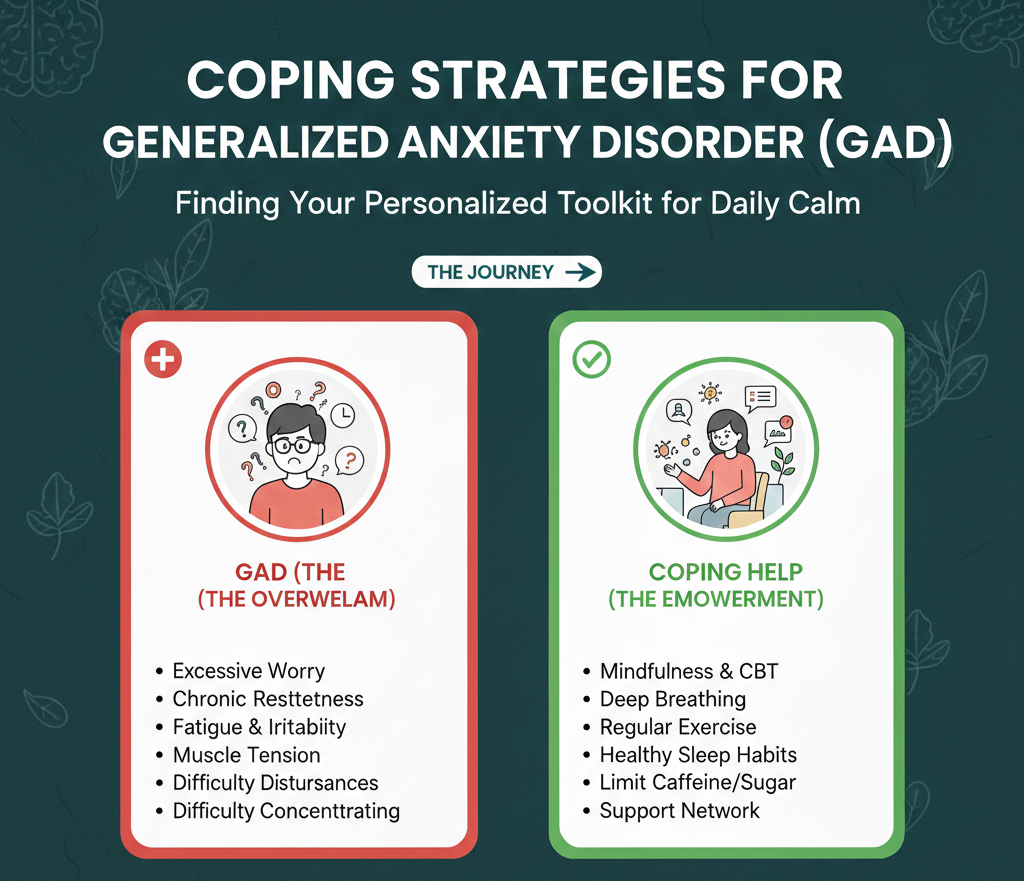
Generalized Anxiety Disorder (GAD) is more than occasional worry. It involves persistent, excessive anxiety about everyday situations—work, health, family, finances—even when there is little or no reason for concern. The worry feels difficult to control and often interferes with daily life.
Living with GAD can be exhausting. The constant mental tension, muscle tightness, sleep disturbances, and difficulty concentrating can significantly impact quality of life. However, with the right coping strategies and professional support, GAD can be effectively managed.
This guide explores practical, evidence-based coping strategies to help individuals reduce anxiety and regain control.
Understanding Generalized Anxiety Disorder
GAD is characterized by chronic, exaggerated worry lasting six months or longer. Common symptoms include:
-
Persistent worrying about multiple areas of life
-
Restlessness or feeling “on edge”
-
Fatigue
-
Muscle tension
-
Irritability
-
Difficulty concentrating
-
Sleep problems
Unlike situational anxiety, GAD often feels constant and overwhelming.
The good news is that treatment options and coping tools can significantly reduce symptoms.
1. Cognitive Behavioral Techniques
One of the most effective treatments for GAD is Cognitive Behavioral Therapy (CBT). Even outside of formal therapy, CBT-based strategies can be practiced independently.
Challenge Negative Thoughts
People with GAD often assume worst-case scenarios. Try this method:
-
Write down the anxious thought.
-
Ask: “What evidence supports this?”
-
Ask: “What evidence contradicts this?”
-
Replace it with a balanced thought.
For example:
Anxious thought:
“I’m going to lose my job because I made one mistake.”
Balanced thought:
“Mistakes happen. I’ve performed well overall.”
This practice reduces catastrophic thinking.
2. Schedule “Worry Time”
Trying to suppress worry can make it stronger. Instead, designate 15–20 minutes daily as “worry time.”
During this time:
-
Write down all concerns.
-
Problem-solve if solutions exist.
-
If worries arise outside this time, remind yourself to address them later.
This technique trains the brain to contain anxiety rather than letting it dominate the entire day.
3. Deep Breathing Exercises
GAD activates the body’s stress response. Deep breathing helps calm the nervous system.
Simple Breathing Exercise:
-
Inhale slowly for 4 seconds.
-
Hold for 4 seconds.
-
Exhale for 6 seconds.
-
Repeat for 5 minutes.
Practicing daily makes it more effective during anxiety spikes.
4. Progressive Muscle Relaxation
GAD often causes chronic muscle tension. Progressive Muscle Relaxation (PMR) helps release it.
How to Practice:
-
Tense a muscle group (e.g., shoulders) for 5 seconds.
-
Release for 10 seconds.
-
Move through the body gradually.
This technique reduces physical symptoms of anxiety.
5. Limit Information Overload
Constant news consumption and social media exposure can worsen anxiety.
Consider:
-
Setting specific times to check news
-
Avoiding negative content before bed
-
Reducing screen time
Creating mental boundaries protects emotional well-being.
6. Improve Sleep Hygiene
Sleep problems and GAD often go hand in hand.
To improve sleep:
-
Go to bed at the same time daily
-
Avoid caffeine late in the day
-
Create a relaxing nighttime routine
-
Keep electronics out of the bedroom
Quality sleep strengthens emotional regulation.
7. Exercise Regularly
Physical activity reduces stress hormones and boosts mood-enhancing chemicals like endorphins.
Even moderate exercise—such as:
-
Walking
-
Yoga
-
Cycling
-
Stretching
30 minutes most days of the week can significantly lower anxiety levels.
8. Practice Mindfulness
Mindfulness teaches you to focus on the present moment rather than future worries.
Simple mindfulness exercise:
-
Notice 5 things you see
-
4 things you feel
-
3 things you hear
-
2 things you smell
-
1 thing you taste
Grounding techniques bring attention away from anxious thoughts.
9. Journaling
Writing helps externalize worries and identify patterns.
Try:
-
Brain dumping anxious thoughts
-
Writing possible solutions
-
Listing three daily positives
Over time, journaling improves emotional clarity and reduces rumination.
10. Build a Support System
Isolation worsens anxiety. Sharing concerns with trusted friends, family members, or support groups can reduce emotional burden.
Sometimes simply expressing worries aloud helps them feel less overwhelming.
Professional counseling is also highly beneficial for persistent GAD.
11. Healthy Lifestyle Habits
Small daily choices impact anxiety levels.
Nutrition:
-
Reduce caffeine intake
-
Limit alcohol
-
Eat balanced meals regularly
Hydration:
Dehydration can increase fatigue and irritability.
Avoid Substance Misuse:
Self-medicating with alcohol or drugs often worsens anxiety long-term.
12. Consider Professional Treatment Options
For moderate to severe GAD, professional intervention may be necessary.
Common treatments include:
-
Cognitive Behavioral Therapy
-
Other evidence-based therapies
-
Doctor-prescribed medications when appropriate
Medication can help regulate brain chemistry, especially when anxiety significantly interferes with daily life. Always consult a licensed healthcare provider before starting or changing treatment.
13. Acceptance Over Control
A common pattern in GAD is the need for certainty. However, uncertainty is part of life.
Learning to accept uncertainty rather than fight it reduces anxiety over time.
Ask yourself:
“Can I control this right now?”
If not, focus on what is within your control—your response.
14. Break Tasks into Smaller Steps
Overwhelm fuels anxiety.
If a task feels intimidating:
-
Break it into smaller parts
-
Focus on one step at a time
-
Celebrate small progress
Action reduces worry more effectively than avoidance.
When to Seek Help
Consider professional support if:
-
Anxiety persists for months
-
Symptoms interfere with work or relationships
-
Sleep is consistently disrupted
-
Physical symptoms become frequent
-
You feel unable to control worry
Early intervention often leads to better outcomes.
Long-Term Outlook for GAD
While GAD can be chronic, it is highly treatable. With consistent coping strategies and appropriate treatment, many individuals experience significant improvement.
Recovery does not mean eliminating all worry—it means managing it effectively.
Building resilience takes time. Be patient with yourself.
Final Thoughts
Generalized Anxiety Disorder can feel overwhelming, but it does not define you. Practical coping strategies—combined with professional care when needed—can significantly reduce symptoms and improve quality of life.
Start small. Choose one or two strategies to implement this week. Over time, small changes lead to meaningful progress.
If anxiety feels unmanageable, seek guidance from a healthcare professional. Effective help is available, and you don’t have to face GAD alone.
FAQs
Is guilt a symptom of depression?
Yes, excessive or guilt is listed as a core symptom of Major Depressive Disorder in the DSM-5.
Can guilt cause depression?
While guilt alone doesn’t cause depression, chronic guilt can contribute to its development and worsen existing symptoms.
How do I stop feeling guilty when depressed?
Working with a therapist, practicing self-compassion, and potentially using medication can help manage guilt associated with depression.

Contact us
Have questions? Reach out and we’ll get back to you shortly.
Content
Guilt and Depression at a Glance
How Guilt and Depression Interact
Coping When You’re
Depressed and Feeling Guilty
Evidence-Based Treatments
When to Seek Help
How Loved Ones Can Help
FAQs