
Blog
Breathing vs Medication – Complementary Anxiety Treatments

Author:
Medical Writer
Saya Des Marais

Medical Reviewer:
Dr. Russell A. Barkley, Ph.D
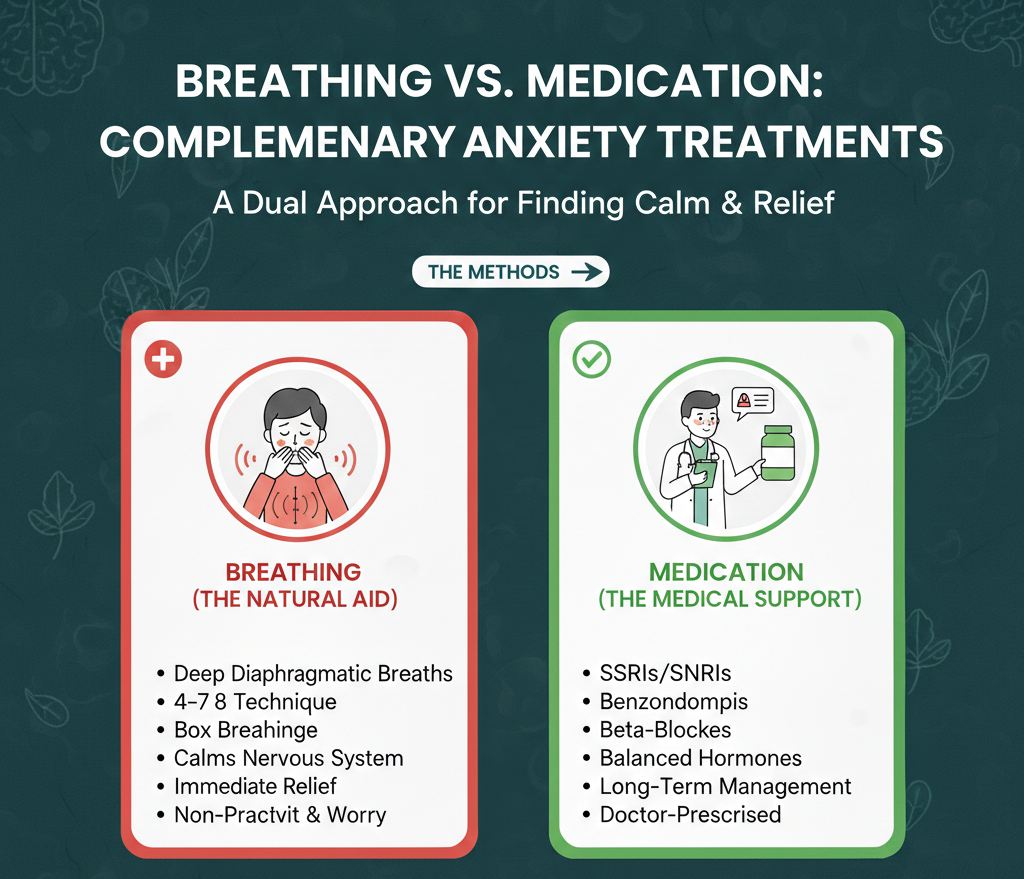
Anxiety disorders affect millions of people worldwide, disrupting sleep, concentration, relationships, and overall quality of life. When seeking relief, individuals often face a common question: should I rely on medication, natural techniques like breathing exercises, or both?
The truth is that anxiety treatment is not one-size-fits-all. Breathing techniques and medication work in different ways, and for many people, they can complement each other effectively. Understanding how each approach functions can help individuals make informed decisions about their mental health care.
In this guide, we’ll explore how breathing exercises and medication work, their benefits and limitations, and how they can be combined safely under professional guidance.
Understanding Anxiety and the Stress Response
Anxiety activates the body’s fight-or-flight system. When the brain perceives danger, it signals the release of stress hormones like adrenaline and cortisol. This leads to symptoms such as:
-
Rapid heartbeat
-
Shortness of breath
-
Sweating
-
Muscle tension
-
Racing thoughts
For individuals with conditions like Generalized Anxiety Disorder, this stress response may become chronic and disproportionate to real-life threats.
Treatment approaches aim to calm this response and restore emotional balance.
Breathing Techniques for Anxiety
Breathing exercises are simple, accessible tools that directly influence the nervous system. Unlike medication, they work immediately on the body’s physiological response.
How Breathing Affects the Nervous System
Slow, controlled breathing stimulates the parasympathetic nervous system—the body’s “rest and digest” mode. This counteracts the fight-or-flight response and reduces physical anxiety symptoms.
Deep breathing lowers heart rate, reduces blood pressure, and signals safety to the brain.
Common Breathing Techniques
1. Diaphragmatic Breathing
Also known as belly breathing, this technique focuses on slow, deep inhalations that expand the abdomen rather than the chest.
2. 4-7-8 Breathing
Inhale for four seconds, hold for seven seconds, and exhale for eight seconds. This structured rhythm promotes relaxation.
3. Box Breathing
Inhale for four seconds, hold for four, exhale for four, and hold again for four. Often used in high-stress professions, it stabilizes breathing patterns.
These exercises can be especially helpful during panic episodes, including those associated with Panic Disorder.
Benefits of Breathing Techniques
-
Immediate calming effect
-
No cost or prescription required
-
No side effects
-
Can be practiced anywhere
-
Improves long-term stress resilience
Breathing exercises are often incorporated into therapies like Cognitive Behavioral Therapy (CBT), enhancing emotional regulation skills.
Limitations of Breathing Alone
While breathing techniques are powerful, they may not fully address severe or chronic anxiety disorders. For individuals with persistent symptoms, breathing may reduce intensity but not eliminate underlying thought patterns or biochemical imbalances.
Medication for Anxiety
Medication is another effective tool for managing anxiety, particularly moderate to severe cases. It works by adjusting brain chemistry to reduce excessive fear and worry.
Common Types of Anxiety Medications
1. Selective Serotonin Reuptake Inhibitors (SSRIs)
SSRIs increase serotonin levels in the brain and are commonly prescribed for anxiety disorders.
2. Serotonin-Norepinephrine Reuptake Inhibitors (SNRIs)
These medications influence both serotonin and norepinephrine levels.
3. Benzodiazepines
Fast-acting medications that provide short-term relief but are typically prescribed cautiously due to dependency risks.
Healthcare providers often recommend medication for conditions like Social Anxiety Disorder when symptoms significantly impair daily functioning.
Benefits of Medication
-
Reduces frequency and intensity of anxiety symptoms
-
Helps regulate neurotransmitter imbalances
-
Supports individuals who struggle with severe panic or chronic worry
-
Can improve sleep and daily functioning
For some individuals, medication provides the stability needed to engage more effectively in therapy.
Potential Side Effects
Like all medications, anxiety treatments may have side effects. These can include:
-
Nausea
-
Fatigue
-
Headaches
-
Changes in appetite
-
Sleep disturbances
It’s important to consult a licensed healthcare provider for proper diagnosis and medication management.
Organizations such as the American Psychological Association emphasize that medication decisions should always be individualized and carefully monitored.
Breathing vs. Medication: Key Differences
| Breathing Techniques | Medication |
|---|---|
| Immediate physical calming | Gradual symptom reduction (weeks for full effect) |
| No prescription needed | Requires medical supervision |
| No chemical side effects | May cause side effects |
| Teaches self-regulation skills | Alters brain chemistry directly |
| Works best for mild-to-moderate symptoms | Often necessary for moderate-to-severe symptoms |
Rather than viewing them as competing approaches, it’s helpful to see them as complementary tools.
How Breathing and Medication Can Work Together
For many individuals, the most effective treatment plan combines multiple approaches.
Medication may reduce baseline anxiety levels, making it easier to practice breathing exercises consistently. Meanwhile, breathing techniques provide immediate coping tools during stressful moments.
For example:
-
A person taking SSRIs may use diaphragmatic breathing during public speaking.
-
Someone managing panic attacks may combine medication with box breathing to shorten episodes.
-
Therapy may integrate breathing exercises into cognitive restructuring sessions.
This integrative approach addresses both biological and behavioral components of anxiety.
Choosing the Right Approach
The best treatment plan depends on several factors:
-
Severity of symptoms
-
Frequency of panic attacks
-
Impact on work or school
-
Personal preference
-
Medical history
-
Access to therapy
Individuals experiencing mild situational anxiety may benefit from breathing techniques and lifestyle adjustments alone.
However, persistent anxiety lasting more than six months, significant avoidance behaviors, or recurring panic episodes may require medical evaluation.
Lifestyle Factors That Support Both Treatments
Regardless of whether someone chooses breathing, medication, or both, additional lifestyle habits strengthen recovery:
-
Regular exercise
-
Balanced nutrition
-
Adequate sleep
-
Reduced caffeine intake
-
Social support
These factors enhance emotional stability and complement structured treatment.
When to Seek Professional Help
You should consult a healthcare provider if:
-
Anxiety interferes with daily responsibilities
-
Panic attacks occur frequently
-
Symptoms feel uncontrollable
-
Sleep is consistently disrupted
-
You avoid important situations
A licensed professional can evaluate symptoms and recommend appropriate treatment options.
Self-diagnosis or abrupt medication changes should be avoided without medical guidance.
Final Thoughts
Breathing exercises and medication are not opposing treatments—they serve different but complementary roles in anxiety management.
Breathing techniques empower individuals with immediate, self-directed tools to calm the nervous system. Medication addresses underlying neurochemical imbalances that may contribute to chronic anxiety.
For many people, combining both approaches—alongside therapy—provides the most balanced and sustainable results. The key is working with a qualified healthcare professional to design a personalized treatment plan.
Anxiety is manageable, and with the right combination of strategies, individuals can regain control, improve emotional resilience, and restore quality of life.
FAQs
Is guilt a symptom of depression?
Yes, excessive or guilt is listed as a core symptom of Major Depressive Disorder in the DSM-5.
Can guilt cause depression?
While guilt alone doesn’t cause depression, chronic guilt can contribute to its development and worsen existing symptoms.
How do I stop feeling guilty when depressed?
Working with a therapist, practicing self-compassion, and potentially using medication can help manage guilt associated with depression.

Contact us
Have questions? Reach out and we’ll get back to you shortly.
Content
Guilt and Depression at a Glance
How Guilt and Depression Interact
Coping When You’re
Depressed and Feeling Guilty
Evidence-Based Treatments
When to Seek Help
How Loved Ones Can Help
FAQs