
Blog
Benzodiazepines in Anxiety Treatment – Benefits and Risks

Author:
Medical Writer
Saya Des Marais

Medical Reviewer:
Dr. Russell A. Barkley, Ph.D
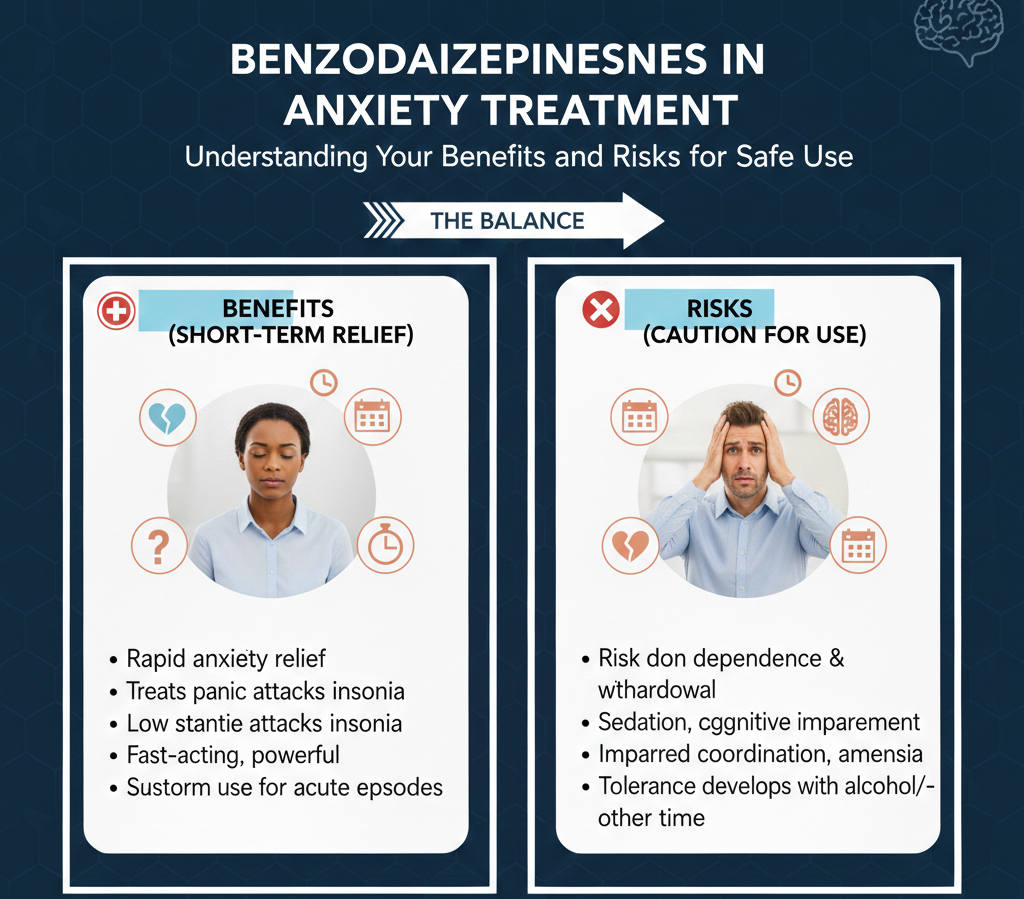
Anxiety disorders can be overwhelming, affecting daily life, work performance, relationships, and overall well-being. For individuals experiencing severe anxiety or panic attacks, fast relief may be necessary. This is where benzodiazepines are sometimes used.
Benzodiazepines have been prescribed for decades to treat anxiety-related conditions. They work quickly and can significantly reduce distressing symptoms. However, while effective, they also carry important risks that must be carefully considered.
In this comprehensive guide, we will explore how benzodiazepines work, their benefits, potential dangers, and when they are appropriate in anxiety treatment.
What Are Benzodiazepines?
Benzodiazepines are a class of medications that act on the central nervous system to produce calming effects. They enhance the activity of gamma-aminobutyric acid (GABA), a neurotransmitter that reduces brain activity and promotes relaxation.
Common benzodiazepines prescribed for anxiety include:
-
Alprazolam
-
Clonazepam
-
Diazepam
-
Lorazepam
These medications are typically used to treat:
-
Panic Disorder
-
Severe Generalized Anxiety Disorder
-
Acute anxiety episodes
-
Short-term situational anxiety
According to clinical guidelines from organizations such as the American Psychiatric Association, benzodiazepines are generally recommended for short-term use rather than long-term anxiety management.
How Benzodiazepines Work
Benzodiazepines increase the effect of GABA, the brain’s primary inhibitory neurotransmitter. By enhancing GABA activity, these medications:
-
Slow down excessive brain activity
-
Reduce feelings of fear and panic
-
Relax muscles
-
Promote sedation
-
Decrease physical tension
Unlike SSRIs, which take weeks to work, benzodiazepines often begin reducing anxiety within 30 minutes to an hour. This rapid onset makes them particularly useful for acute anxiety or panic attacks.
Benefits of Benzodiazepines in Anxiety Treatment
1. Rapid Symptom Relief
One of the biggest advantages is speed. For individuals experiencing severe panic attacks or overwhelming anxiety, benzodiazepines can provide quick relief.
2. Effective for Acute Episodes
They are particularly helpful in:
-
Emergency situations
-
Short-term stress
-
Severe panic attacks
-
Medical procedures that trigger anxiety
3. Short-Term Stabilization
In some cases, benzodiazepines are used temporarily while waiting for longer-term medications like SSRIs to take effect.
4. Muscle Relaxation and Sleep Support
Because of their sedative effects, they may also improve sleep disturbances linked to anxiety.
Risks and Potential Downsides
While benzodiazepines are effective, they come with significant risks that require careful monitoring.
1. Dependence and Tolerance
With regular use, the body can become dependent on benzodiazepines. Over time, higher doses may be needed to achieve the same effect (tolerance).
Dependence can develop even when medications are taken as prescribed for extended periods.
2. Withdrawal Symptoms
Stopping benzodiazepines abruptly can lead to withdrawal symptoms, including:
-
Rebound anxiety
-
Insomnia
-
Irritability
-
Tremors
-
Sweating
-
In severe cases, seizures
Gradual tapering under medical supervision is essential.
3. Cognitive Impairment
Long-term use may affect:
-
Memory
-
Concentration
-
Reaction time
This can increase the risk of accidents, especially when driving.
4. Sedation and Drowsiness
Because benzodiazepines suppress central nervous system activity, they can cause:
-
Fatigue
-
Dizziness
-
Slowed thinking
5. Risk of Misuse
Due to their calming and sedative effects, benzodiazepines carry a risk of misuse. Combining them with alcohol or opioids significantly increases the risk of respiratory depression and overdose.
Why Benzodiazepines Are Not First-Line for Long-Term Anxiety
For chronic anxiety disorders, medications such as SSRIs and SNRIs are typically preferred. These include:
-
Sertraline
-
Escitalopram
-
Venlafaxine
Unlike benzodiazepines, these medications:
-
Are non-addictive
-
Address underlying serotonin imbalance
-
Provide long-term symptom control
-
Reduce relapse risk
Benzodiazepines primarily suppress symptoms rather than treating the root cause of anxiety.
When Are Benzodiazepines Appropriate?
Benzodiazepines may be appropriate in:
-
Severe panic disorder
-
Acute crisis situations
-
Short-term bridge therapy
-
Patients who cannot tolerate SSRIs initially
-
Situational anxiety (e.g., fear of flying)
The key is short-term, carefully monitored use.
Short-Term vs. Long-Term Use
Short-Term Use (Preferred)
-
2–4 weeks
-
Used during crisis
-
Gradually discontinued once stable
Long-Term Use (Cautioned)
Long-term use increases risks of:
-
Dependence
-
Cognitive decline
-
Withdrawal complications
Healthcare providers carefully evaluate whether long-term use is justified.
Combining Benzodiazepines with Therapy
Medication alone does not address the psychological roots of anxiety. Combining short-term benzodiazepine use with Cognitive Behavioral Therapy (CBT) can be highly effective.
Therapy helps patients:
-
Identify anxiety triggers
-
Develop coping skills
-
Challenge distorted thinking
-
Reduce reliance on medication
Over time, many individuals can discontinue benzodiazepines while maintaining progress through therapy.
Special Populations and Considerations
Older Adults
Benzodiazepines may increase fall risk and cognitive impairment in older individuals.
Individuals with Substance Use History
Patients with a history of substance misuse require extra caution, as benzodiazepines have abuse potential.
Pregnancy
Use during pregnancy requires careful risk-benefit evaluation by a healthcare provider.
Safe Use Guidelines
If prescribed benzodiazepines:
-
Take exactly as directed
-
Do not increase dosage without approval
-
Avoid alcohol
-
Inform your provider about other medications
-
Never stop abruptly
Open communication with your healthcare provider is essential.
Signs You Should Contact Your Provider
Seek medical advice if you experience:
-
Increasing need for higher doses
-
Severe drowsiness
-
Memory problems
-
Mood changes
-
Difficulty stopping medication
Early intervention prevents complications.
Alternatives to Benzodiazepines
If long-term anxiety management is needed, providers may recommend:
-
SSRIs or SNRIs
-
Buspirone
-
Cognitive Behavioral Therapy
-
Lifestyle interventions (exercise, sleep regulation, stress management)
These approaches offer safer long-term solutions.
Final Thoughts
Benzodiazepines can be highly effective for rapid anxiety relief, especially in acute or severe situations. Their fast action makes them valuable tools in specific circumstances. However, their risks—including dependence, withdrawal, and cognitive effects—mean they must be used carefully and typically for short durations.
For long-term anxiety management, evidence-based treatments such as SSRIs and psychotherapy are often safer and more sustainable. The best treatment plan is individualized, balancing symptom severity, medical history, and personal preferences.
If you are considering benzodiazepines for anxiety treatment, consult a qualified healthcare provider to ensure safe and appropriate use. With the right approach, anxiety symptoms can be effectively managed while minimizing risks and promoting long-term well-being.
FAQs
Is guilt a symptom of depression?
Yes, excessive or guilt is listed as a core symptom of Major Depressive Disorder in the DSM-5.
Can guilt cause depression?
While guilt alone doesn’t cause depression, chronic guilt can contribute to its development and worsen existing symptoms.
How do I stop feeling guilty when depressed?
Working with a therapist, practicing self-compassion, and potentially using medication can help manage guilt associated with depression.

Contact us
Have questions? Reach out and we’ll get back to you shortly.
Content
Guilt and Depression at a Glance
How Guilt and Depression Interact
Coping When You’re
Depressed and Feeling Guilty
Evidence-Based Treatments
When to Seek Help
How Loved Ones Can Help
FAQs