
Blog
Anxiety Medication vs Therapy: Pros and Cons

Author:
Medical Writer
Saya Des Marais

Medical Reviewer:
Dr. Russell A. Barkley, Ph.D
Anxiety disorders are among the most common mental health conditions, affecting millions of adults each year. While occasional anxiety is a normal response to stress, persistent or intense anxiety can interfere with daily life, relationships, work performance, and physical health.
When anxiety becomes difficult to manage, people often face an important question: Should anxiety be treated with medication, therapy, or both? Each approach has proven benefits, but they work differently and suit different needs.
This article explores the pros and cons of anxiety medication and therapy, how they work, and how healthcare professionals decide which option—or combination—is most effective.
Understanding Anxiety Disorders
Anxiety disorders include several conditions, such as:
-
Generalized Anxiety Disorder (GAD)
-
Panic Disorder
-
Social Anxiety Disorder
-
Specific Phobias
-
Anxiety related to trauma or stress
Symptoms may include excessive worry, restlessness, racing thoughts, muscle tension, sleep disturbances, rapid heartbeat, and difficulty concentrating.
Treatment decisions depend on symptom severity, duration, personal history, and individual preferences.
What Is Anxiety Medication?
Anxiety medications are prescription drugs that help regulate brain chemicals involved in fear and stress responses. They are commonly used to reduce symptoms when anxiety is moderate to severe.
Common Types of Anxiety Medications
-
Selective Serotonin Reuptake Inhibitors (SSRIs)
-
Serotonin-Norepinephrine Reuptake Inhibitors (SNRIs)
-
Benzodiazepines
-
Buspirone
-
Beta-blockers (for physical symptoms)
Each class works differently and is prescribed based on individual needs.
How Anxiety Medications Work
Most anxiety medications affect neurotransmitters such as serotonin, norepinephrine, or gamma-aminobutyric acid (GABA). These chemicals influence mood, fear responses, and emotional regulation.
By stabilizing brain chemistry, medications can:
-
Reduce excessive worry
-
Decrease panic symptoms
-
Improve sleep
-
Lower physical tension
Pros of Anxiety Medication
Faster Symptom Relief
Some medications, especially short-acting ones, can provide relatively quick symptom reduction.
Helpful for Severe Anxiety
Medication can be essential when anxiety is intense, disabling, or interfering with daily functioning.
Improves Physical Symptoms
Medications are particularly effective at reducing physical symptoms such as heart palpitations, nausea, and muscle tension.
Supports Therapy Engagement
By reducing symptom intensity, medication may help individuals better engage in therapy.
Cons of Anxiety Medication
Side Effects
Common side effects may include:
-
Nausea
-
Fatigue
-
Weight changes
-
Sleep disturbances
-
Sexual side effects
Risk of Dependence
Certain medications, especially benzodiazepines, can cause tolerance or dependence if used long term.
Does Not Address Root Causes
Medication reduces symptoms but does not teach coping skills or address underlying thought patterns.
Requires Ongoing Monitoring
Dosages often need adjustment, and stopping medication abruptly can cause withdrawal symptoms.
What Is Therapy for Anxiety?
Therapy, also known as psychotherapy or counseling, focuses on understanding and changing the thoughts, behaviors, and emotional responses that contribute to anxiety.
Common Types of Anxiety Therapy
-
Cognitive Behavioral Therapy (CBT)
-
Exposure Therapy
-
Acceptance and Commitment Therapy (ACT)
-
Mindfulness-based therapies
CBT is considered one of the most effective treatments for anxiety disorders.
How Therapy Works
Therapy helps individuals:
-
Identify anxiety triggers
-
Challenge unhelpful thought patterns
-
Develop coping strategies
-
Reduce avoidance behaviors
-
Build emotional resilience
Rather than suppressing symptoms, therapy focuses on long-term change.
Pros of Therapy for Anxiety
Long-Term Effectiveness
Therapy provides skills that can reduce anxiety long after treatment ends.
No Medication Side Effects
Therapy avoids the physical side effects associated with medication.
Addresses Root Causes
Therapy targets the psychological and behavioral factors that maintain anxiety.
Empowers Self-Management
Patients learn tools they can apply independently in daily life.
Cons of Therapy
Takes Time
Therapy requires consistent effort, and improvements may take weeks or months.
Emotional Discomfort
Addressing anxiety triggers can feel challenging or uncomfortable initially.
Access and Cost Barriers
Therapy availability, cost, and scheduling can be obstacles for some individuals.
Requires Active Participation
Therapy is most effective when patients are engaged and motivated.
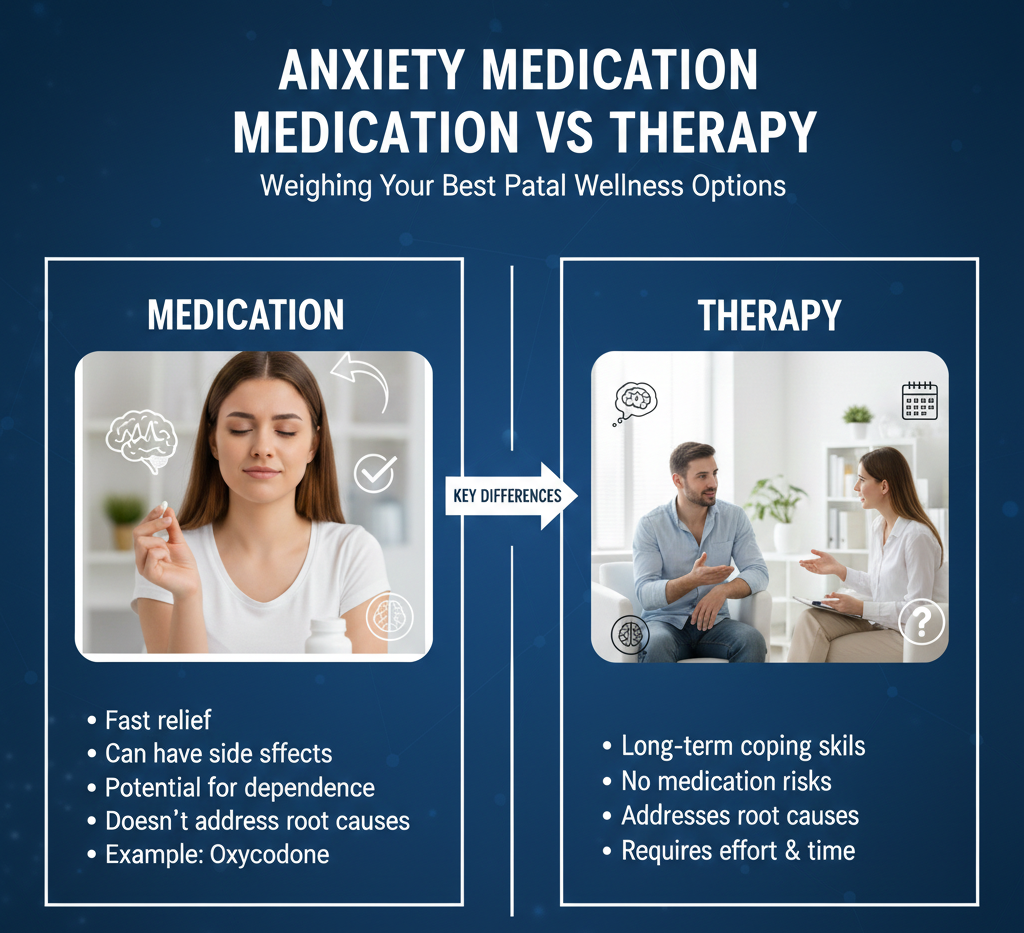
Anxiety Medication vs Therapy: Key Differences
Speed of Relief
-
Medication: Often faster symptom reduction
-
Therapy: Gradual but sustained improvement
Long-Term Outcomes
-
Medication: Effective while taken
-
Therapy: Benefits often persist after treatment
Risk Profile
-
Medication: Potential side effects and dependence risks
-
Therapy: Minimal physical risk
Skill Development
-
Medication: Does not teach coping strategies
-
Therapy: Builds lifelong skills
When Doctors Recommend Medication
Healthcare providers may recommend anxiety medication when:
-
Anxiety symptoms are severe
-
Daily functioning is impaired
-
Physical symptoms are overwhelming
-
Therapy alone is insufficient
-
Immediate relief is necessary
Medication may be prescribed short-term or long-term, depending on the situation.
When Therapy Is Preferred
Therapy is often recommended when:
-
Anxiety is mild to moderate
-
Symptoms are triggered by thought patterns or behaviors
-
Long-term self-management is a priority
-
Patients prefer non-medication approaches
For many individuals, therapy is considered a first-line treatment.
Combining Medication and Therapy
Research shows that combining medication and therapy often produces the best outcomes, especially for moderate to severe anxiety.
Benefits of combination treatment include:
-
Faster symptom relief
-
Improved therapy engagement
-
Lower medication doses
-
Better long-term outcomes
Many treatment plans begin with both approaches and later reduce medication as coping skills improve.
Individual Factors That Influence Treatment Choice
Treatment decisions are personalized and may depend on:
-
Type of anxiety disorder
-
Symptom severity
-
Previous treatment response
-
Medical history
-
Lifestyle and preferences
-
Risk tolerance
There is no one-size-fits-all solution.
Safety and Professional Guidance
Managing anxiety safely requires professional input. Self-medicating or stopping treatment abruptly can worsen symptoms.
Patients should:
-
Follow prescribed treatment plans
-
Communicate side effects promptly
-
Avoid mixing treatments without guidance
-
Reassess progress regularly
Ongoing evaluation ensures effective and safe care.
Conclusion
Both anxiety medication and therapy play important roles in anxiety treatment. Medication can offer quicker symptom relief and help manage severe anxiety, while therapy provides long-term coping skills and addresses underlying causes.
For many individuals, a combination of both approaches delivers the most balanced and effective results. With proper evaluation and professional guidance, people with anxiety can find a treatment plan that improves daily functioning, emotional well-being, and overall quality of life.
FAQs
Is guilt a symptom of depression?
Yes, excessive or guilt is listed as a core symptom of Major Depressive Disorder in the DSM-5.
Can guilt cause depression?
While guilt alone doesn’t cause depression, chronic guilt can contribute to its development and worsen existing symptoms.
How do I stop feeling guilty when depressed?
Working with a therapist, practicing self-compassion, and potentially using medication can help manage guilt associated with depression.

Contact us
Have questions? Reach out and we’ll get back to you shortly.
Content
Guilt and Depression at a Glance
How Guilt and Depression Interact
Coping When You’re
Depressed and Feeling Guilty
Evidence-Based Treatments
When to Seek Help
How Loved Ones Can Help
FAQs