
Blog
Acute vs Chronic Pain Treatment Options

Author:
Medical Writer
Saya Des Marais

Medical Reviewer:
Dr. Russell A. Barkley, Ph.D
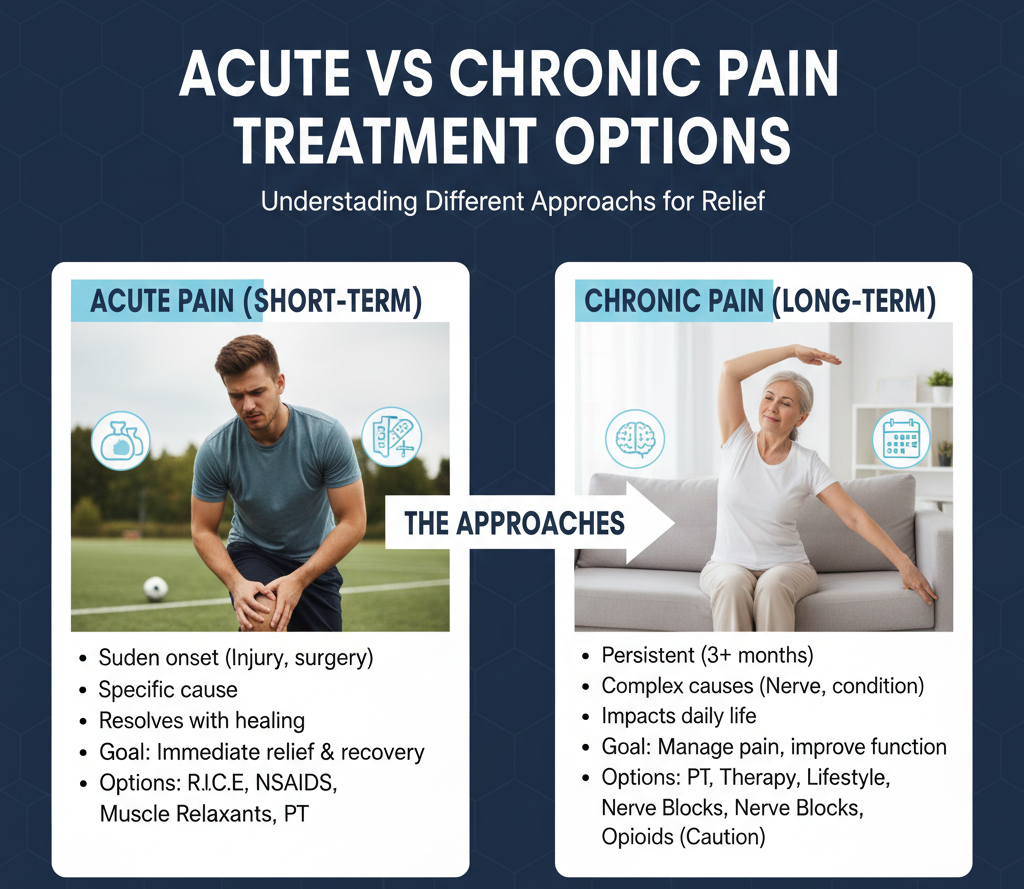
Pain is one of the most common reasons people seek medical care. While all pain can be uncomfortable and disruptive, not all pain is the same. Acute pain and chronic pain differ significantly in terms of causes, duration, and treatment approaches. Understanding these differences helps patients and healthcare providers choose the most appropriate management strategies.
Acute pain often occurs suddenly due to injury or illness and typically resolves once the underlying issue heals. Chronic pain, on the other hand, lasts for months or even years and may continue even after the original cause is no longer present. Because of these differences, treatment options must be tailored to each type of pain to ensure safe and effective relief.
This comprehensive guide explains how acute and chronic pain differ and explores the medical, therapeutic, and lifestyle approaches commonly used to manage each condition.
What Is Acute Pain?
Acute pain is short-term discomfort that usually results from a specific injury, surgery, illness, or medical condition. It serves as a warning signal from the body, alerting individuals to potential harm.
Common Causes of Acute Pain
-
Muscle strains or sprains
-
Cuts, burns, or fractures
-
Dental procedures
-
Surgical recovery
-
Infections or inflammation
Acute pain often improves as the body heals. Treatment typically focuses on reducing discomfort while supporting recovery.
What Is Chronic Pain?
Chronic pain is defined as pain that lasts longer than three months or persists beyond the expected healing period. It may develop from an initial injury or arise without a clear cause.
Common Types of Chronic Pain
-
Arthritis and joint disorders
-
Back or neck pain
-
Neuropathic pain (nerve damage)
-
Fibromyalgia
-
Migraines and chronic headaches
Unlike acute pain, chronic pain often involves complex physical and psychological factors, requiring a broader and more individualized treatment approach.
Key Differences Between Acute and Chronic Pain
| Feature | Acute Pain | Chronic Pain |
|---|---|---|
| Duration | Short-term | Long-term |
| Cause | Injury or illness | Ongoing or unclear |
| Purpose | Warning signal | May persist without active injury |
| Treatment Goal | Healing and symptom relief | Long-term management and quality of life |
Recognizing these differences is essential for choosing the right treatment strategy.
Treatment Options for Acute Pain
Acute pain treatment focuses on rapid symptom relief while allowing the body to heal naturally.
1. Over-the-Counter Pain Relievers
Non-prescription medications are often the first line of treatment for mild to moderate acute pain. These may help reduce inflammation and discomfort.
2. Prescription Medications
For more severe pain—such as after surgery or injury—healthcare providers may prescribe stronger medications for short-term use. These are typically monitored closely to ensure safe usage.
3. Physical Measures
-
Rest and immobilization
-
Ice or heat therapy
-
Compression and elevation
-
Gentle stretching or movement
These methods support healing and reduce swelling or inflammation.
4. Short-Term Physical Therapy
In some cases, guided exercises or physical therapy help restore mobility and prevent long-term complications after injuries.
Treatment Options for Chronic Pain
Chronic pain management often requires a combination of treatments addressing both physical and emotional factors.
1. Long-Term Medication Management
Doctors may recommend various medication types depending on the nature of the pain. These might include non-opioid pain relievers, nerve-targeting medications, or anti-inflammatory drugs.
2. Physical Therapy and Rehabilitation
Structured exercise programs help improve flexibility, strength, and posture. Regular movement can reduce stiffness and improve overall function.
3. Behavioral and Psychological Therapies
Chronic pain can affect mental health, leading to stress or depression. Cognitive behavioral therapy (CBT) and mindfulness techniques help patients cope with long-term discomfort and improve emotional well-being.
4. Lifestyle Modifications
Healthy habits play a major role in chronic pain management:
-
Regular physical activity
-
Balanced nutrition
-
Stress reduction techniques
-
Adequate sleep
These strategies support the body’s natural healing processes and improve overall health.
5. Complementary Therapies
Some individuals benefit from alternative approaches such as acupuncture, massage therapy, or yoga. While results vary, these methods may provide additional relief when used alongside medical treatment.
Medication Differences in Acute vs Chronic Pain
Medication approaches differ significantly between acute and chronic pain.
Acute Pain Medications
-
Often used short-term
-
Focus on immediate symptom relief
-
May include stronger medications temporarily
Chronic Pain Medications
-
Designed for long-term management
-
Aim to improve function and reduce daily discomfort
-
Often combined with non-medication therapies
Healthcare providers carefully balance effectiveness with safety when selecting medications.
The Importance of Individualized Treatment Plans
Pain is a highly personal experience influenced by medical history, lifestyle, and emotional health. A treatment plan that works well for one person may not be suitable for another.
Factors considered in personalized pain management include:
-
Age and overall health
-
Type and severity of pain
-
Underlying medical conditions
-
Previous treatments and responses
-
Personal goals and daily activities
Collaborating closely with healthcare professionals helps ensure treatment is both effective and safe.
When Acute Pain Becomes Chronic
In some cases, acute pain may develop into chronic pain if not treated properly or if complications arise. Early intervention and proper rehabilitation reduce this risk.
Warning Signs
-
Pain lasting longer than expected
-
Increasing discomfort despite treatment
-
Reduced mobility or strength
-
Emotional distress related to pain
Seeking medical advice early helps prevent long-term issues.
Non-Medication Pain Management Techniques
Both acute and chronic pain may benefit from non-drug approaches.
-
Relaxation exercises
-
Deep breathing techniques
-
Gentle stretching
-
Heat or cold therapy
-
Supportive braces or ergonomic tools
These methods can complement medical treatments and reduce reliance on medications.
The Role of Healthcare Providers in Pain Management
Doctors, physical therapists, and pain specialists play an essential role in diagnosing pain types and developing treatment plans. Regular follow-ups allow providers to monitor progress and adjust therapies as needed.
Patients should communicate openly about symptoms, treatment responses, and any side effects to ensure optimal care.
Safety Considerations in Pain Treatment
-
Avoid self-medicating with unfamiliar drugs
-
Follow prescribed dosing instructions carefully
-
Do not combine medications without medical guidance
-
Monitor for side effects or allergic reactions
-
Store medications securely
Safe practices help prevent complications and improve treatment outcomes.
Improving Quality of Life With Effective Pain Management
Managing pain is not only about reducing discomfort—it’s about restoring function and improving daily life. With proper treatment, many individuals regain mobility, independence, and emotional well-being.
Setting realistic goals, staying active, and maintaining strong communication with healthcare providers are key steps toward successful pain management.
Conclusion
Acute and chronic pain differ significantly in duration, causes, and treatment approaches. Acute pain typically focuses on short-term relief and healing, while chronic pain requires long-term strategies that address physical, emotional, and lifestyle factors.
A combination of medical treatments, physical therapies, behavioral strategies, and healthy lifestyle habits often provides the most effective results. By understanding the differences between acute and chronic pain and working closely with healthcare professionals, patients can develop personalized plans that improve comfort, functionality, and overall quality of life.
FAQs
Is guilt a symptom of depression?
Yes, excessive or guilt is listed as a core symptom of Major Depressive Disorder in the DSM-5.
Can guilt cause depression?
While guilt alone doesn’t cause depression, chronic guilt can contribute to its development and worsen existing symptoms.
How do I stop feeling guilty when depressed?
Working with a therapist, practicing self-compassion, and potentially using medication can help manage guilt associated with depression.

Contact us
Have questions? Reach out and we’ll get back to you shortly.
Content
Guilt and Depression at a Glance
How Guilt and Depression Interact
Coping When You’re
Depressed and Feeling Guilty
Evidence-Based Treatments
When to Seek Help
How Loved Ones Can Help
FAQs