
Blog
How Therapy and Medication Work Together for Anxiety

Author:
Medical Writer
Saya Des Marais

Medical Reviewer:
Dr. Russell A. Barkley, Ph.D
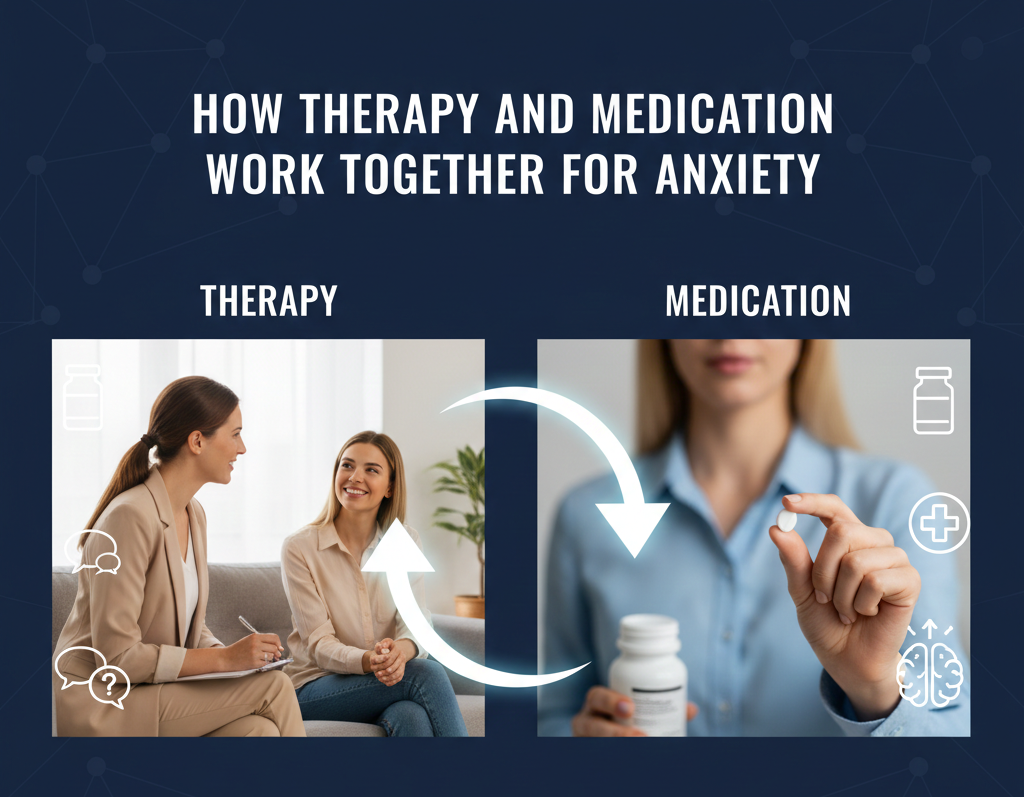
Anxiety disorders are among the most common mental health conditions, affecting millions of people worldwide. While occasional anxiety is a normal response to stress, persistent or overwhelming anxiety can interfere with daily life and well-being.
Treatment for anxiety often involves two primary approaches: therapy and medication. Many people wonder whether they should choose one over the other or if combining both methods is more effective.
Research and clinical experience suggest that therapy and medication can work together to provide comprehensive and long-lasting relief from anxiety. This article explains how these approaches complement each other, their benefits, and how they fit into an effective anxiety treatment plan.
Understanding Anxiety Treatment Approaches
Anxiety is influenced by multiple factors, including brain chemistry, thought patterns, life experiences, and stress levels. Because of this complexity, treatment often requires a multi-dimensional approach.
Broadly, anxiety treatment includes:
-
Psychological therapies
-
Medications
-
Lifestyle changes
-
Support systems
Among these, therapy and medication are the most widely used and evidence-based methods.
How Therapy Helps with Anxiety
What Is Therapy?
Therapy, also known as psychotherapy or counseling, involves working with a trained mental health professional to understand and manage anxiety.
Different types of therapy are used for anxiety, including:
-
Cognitive Behavioral Therapy (CBT)
-
Exposure therapy
-
Mindfulness-based therapy
-
Acceptance and Commitment Therapy (ACT)
How Therapy Works
Therapy helps individuals:
-
Identify negative thought patterns
-
Develop healthier coping strategies
-
Understand triggers of anxiety
-
Build emotional resilience
Unlike medication, therapy focuses on long-term behavioral and cognitive changes.
Benefits of Therapy
Therapy can provide:
-
Long-lasting coping skills
-
Improved self-awareness
-
Better stress management
-
Reduced risk of relapse
Because therapy addresses underlying causes, its benefits often continue even after sessions end.
How Medication Helps with Anxiety
What Are Anxiety Medications?
Medications for anxiety influence brain chemistry to reduce excessive fear and stress responses. They may be used to manage symptoms that are severe, persistent, or disruptive.
Anxiety medications can be broadly categorized into:
-
Short-term medications for rapid symptom relief
-
Long-term medications for ongoing anxiety management
How Medication Works
Anxiety medications may:
-
Regulate neurotransmitters like serotonin and GABA
-
Reduce hyperactivity in the nervous system
-
Stabilize mood and emotional responses
Medication can be especially helpful when anxiety symptoms are intense or overwhelming.
Benefits of Medication
Medication can:
-
Provide faster symptom relief
-
Reduce the severity of anxiety
-
Improve daily functioning
-
Support participation in therapy
For some individuals, medication creates the mental stability needed to engage effectively in therapy.
Why Combining Therapy and Medication Is Effective
1) Addressing Both Symptoms and Causes
Medication primarily reduces symptoms, while therapy addresses underlying psychological patterns. Together, they provide a more comprehensive approach.
2) Faster and More Sustainable Results
-
Medication can offer quick relief
-
Therapy builds long-term skills
This combination often leads to both immediate improvement and lasting change.
3) Reduced Risk of Relapse
Therapy equips individuals with tools to manage future stress, while medication stabilizes symptoms during vulnerable periods. This reduces the likelihood of anxiety returning.
4) Personalized Treatment
Every individual experiences anxiety differently. Combining therapy and medication allows healthcare providers to tailor treatment to specific needs.
Situations Where Combined Treatment May Be Recommended
Healthcare providers may recommend both therapy and medication when:
-
Anxiety symptoms are severe or chronic
-
Panic attacks are frequent
-
Anxiety interferes with work or relationships
-
Therapy alone is insufficient
-
Symptoms prevent daily functioning
However, not everyone requires both approaches. Some individuals benefit from therapy alone, while others may need medication support.
Comparing Therapy and Medication
Therapy Alone
Advantages:
-
No pharmacological side effects
-
Long-term coping skills
-
Personal growth and self-awareness
Limitations:
-
Requires time and effort
-
Results may be gradual
Medication Alone
Advantages:
-
Rapid symptom relief
-
Useful in severe cases
Limitations:
-
Does not address underlying thought patterns
-
Possible side effects
-
Symptoms may return after discontinuation
Combined Approach
Advantages:
-
Balanced symptom control and personal development
-
Higher success rates in many cases
-
Holistic mental health improvement
The Role of Lifestyle Changes
Even when therapy and medication are used, lifestyle factors play a crucial role in anxiety management.
Helpful lifestyle strategies include:
-
Regular exercise
-
Adequate sleep
-
Balanced nutrition
-
Mindfulness practices
-
Healthy social connections
These habits enhance the effectiveness of both therapy and medication.
Common Myths About Anxiety Treatment
Myth 1: Medication Means Weakness
Reality: Taking medication is a medical decision, not a sign of weakness.
Myth 2: Therapy Takes Too Long to Work
Reality: While therapy requires time, it produces lasting benefits.
Myth 3: Combined Treatment Is Only for Severe Cases
Reality: Many people benefit from a combined approach, not just those with severe anxiety.
Choosing the Right Treatment Plan
Selecting the right anxiety treatment depends on several factors:
-
Severity of symptoms
-
Personal preferences
-
Medical history
-
Lifestyle and support systems
A mental health professional can help create a personalized plan that balances therapy, medication, and lifestyle strategies.
When to Seek Professional Help
Professional support may be needed if anxiety:
-
Persists for long periods
-
Interferes with daily life
-
Causes physical symptoms
-
Leads to avoidance behaviors
Early intervention can improve outcomes and quality of life.
Conclusion
Therapy and medication are not opposing approaches—they are complementary tools in anxiety treatment. While medication helps stabilize brain chemistry and reduce symptoms, therapy builds the skills needed for long-term emotional resilience.
Together, they provide a powerful and balanced approach to managing anxiety. With proper guidance, individuals can achieve meaningful improvement and regain control over their mental health.
FAQs
Is guilt a symptom of depression?
Yes, excessive or guilt is listed as a core symptom of Major Depressive Disorder in the DSM-5.
Can guilt cause depression?
While guilt alone doesn’t cause depression, chronic guilt can contribute to its development and worsen existing symptoms.
How do I stop feeling guilty when depressed?
Working with a therapist, practicing self-compassion, and potentially using medication can help manage guilt associated with depression.

Contact us
Have questions? Reach out and we’ll get back to you shortly.
Content
Guilt and Depression at a Glance
How Guilt and Depression Interact
Coping When You’re
Depressed and Feeling Guilty
Evidence-Based Treatments
When to Seek Help
How Loved Ones Can Help
FAQs