
Blog
Difference Between Generalized Anxiety and Panic Disorder

Author:
Medical Writer
Saya Des Marais

Medical Reviewer:
Dr. Russell A. Barkley, Ph.D
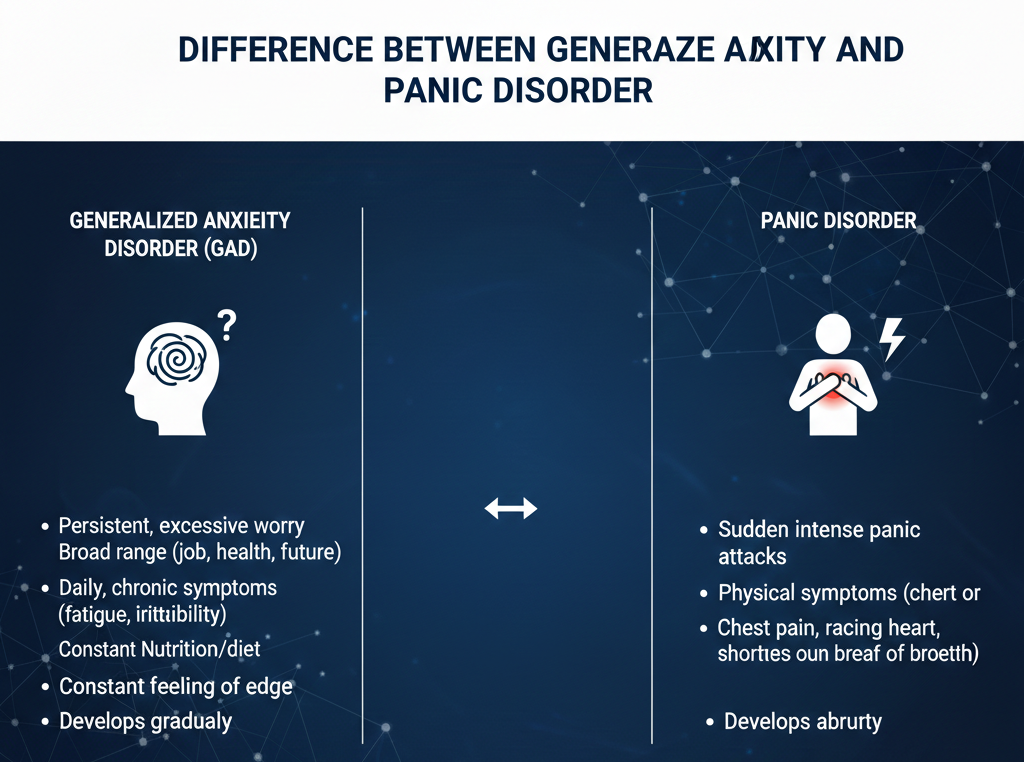
Anxiety disorders are among the most common mental health conditions in adults, yet many people struggle to understand the differences between them. Two conditions that are often confused are Generalized Anxiety Disorder vs Panic Disorder. While both involve anxiety, they differ significantly in symptoms, triggers, duration, and how they affect daily life.
Understanding the distinction between generalized anxiety and panic disorder can help individuals recognize symptoms more accurately and seek appropriate care.
Understanding Anxiety Disorders
Anxiety disorders involve excessive fear or worry that interferes with daily functioning. While occasional anxiety is a normal response to stress, anxiety disorders are persistent, disproportionate, and difficult to control.
Generalized anxiety disorder and panic disorder fall under this broader category but present in distinct ways.
What Is Generalized Anxiety Disorder (GAD)?
Generalized Anxiety Disorder is characterized by chronic, excessive worry about multiple aspects of everyday life. People with GAD often feel anxious most days, even when there is no clear reason for concern.
Common Features of GAD
-
Ongoing worry lasting six months or longer
-
Anxiety about work, health, finances, or family
-
Difficulty controlling anxious thoughts
-
Feeling constantly on edge
The anxiety in GAD tends to be continuous and persistent, rather than sudden or episodic.
Symptoms of Generalized Anxiety Disorder
Symptoms of GAD often develop gradually and may fluctuate in intensity over time.
Emotional and Cognitive Symptoms
-
Excessive worry
-
Overthinking everyday situations
-
Difficulty concentrating
-
Irritability
Physical Symptoms
-
Muscle tension
-
Fatigue
-
Restlessness
-
Sleep disturbances
Because symptoms are ongoing, individuals with GAD may not realize that their anxiety is a medical condition rather than a personality trait.
What Is Panic Disorder?
Panic disorder is defined by recurrent, unexpected panic attacks. A panic attack is a sudden surge of intense fear or discomfort that reaches its peak within minutes.
Characteristics of Panic Disorder
-
Sudden onset of panic attacks
-
Episodes occur without obvious warning
-
Fear of future attacks
-
Avoidance of places or situations
Unlike GAD, panic disorder involves acute episodes of intense anxiety rather than constant worry.
Symptoms of Panic Disorder
During a panic attack, individuals may experience severe physical and emotional symptoms.
Common Panic Attack Symptoms
-
Rapid or pounding heartbeat
-
Shortness of breath
-
Chest pain or tightness
-
Dizziness or lightheadedness
-
Sweating or trembling
-
Fear of losing control or dying
Because these symptoms can resemble serious medical conditions, many people seek emergency care during their first panic attack.
Key Differences Between GAD and Panic Disorder
Although both conditions involve anxiety, several important differences set them apart.
1. Nature of Anxiety
-
GAD: Persistent, ongoing worry
-
Panic Disorder: Sudden, intense panic episodes
2. Duration of Symptoms
-
GAD: Anxiety is present most days
-
Panic Disorder: Panic attacks are brief but intense
3. Triggers
-
GAD: Often linked to everyday stressors
-
Panic Disorder: Attacks may occur unexpectedly
4. Physical Sensations
-
GAD: Muscle tension, fatigue, restlessness
-
Panic Disorder: Chest pain, breathlessness, rapid heartbeat
5. Fear Pattern
-
GAD: Fear revolves around future possibilities
-
Panic Disorder: Fear centers on immediate physical sensations
Can Someone Have Both Conditions?
Yes. It is possible for an individual to experience both generalized anxiety disorder and panic disorder. Chronic worry may coexist with panic attacks, making diagnosis more complex.
In such cases, healthcare professionals carefully assess symptom patterns, frequency, and severity to determine an appropriate treatment plan.
Causes and Risk Factors
Both GAD and panic disorder share similar risk factors, although their manifestations differ.
Common Risk Factors
-
Family history of anxiety disorders
-
Chronic stress
-
Traumatic experiences
-
Brain chemistry imbalances
-
Personality traits such as perfectionism
The interaction of genetic, environmental, and psychological factors contributes to both conditions.
Treatment Approaches for GAD and Panic Disorder
Both disorders are highly treatable, though treatment approaches may vary depending on symptom patterns.
Psychotherapy
Cognitive Behavioral Therapy (CBT) is widely used for both conditions. CBT helps individuals:
-
Identify unhelpful thought patterns
-
Develop coping strategies
-
Gradually face anxiety-provoking situations
Medications
Healthcare providers may prescribe medications to help manage symptoms. The choice depends on symptom severity, frequency, and individual medical history.
Lifestyle and Self-Care Strategies
-
Regular physical activity
-
Adequate sleep
-
Stress management techniques
-
Limiting caffeine and alcohol
These approaches support nervous system balance and reduce anxiety sensitivity.
When to Seek Professional Help
Professional support is recommended if:
-
Anxiety interferes with daily activities
-
Panic attacks occur repeatedly
-
Fear leads to avoidance behaviors
-
Physical symptoms cause significant distress
Early diagnosis improves treatment outcomes and quality of life.
Final Thoughts
Generalized anxiety disorder and panic disorder are distinct conditions with different symptom patterns and experiences. While GAD involves persistent worry, panic disorder is marked by sudden, intense panic attacks. Understanding these differences helps individuals recognize symptoms more accurately and seek appropriate care.
With proper treatment and support, many people successfully manage both conditions and regain control over their lives.
⚠️ Medical Disclaimer
This content is for informational purposes only and does not replace professional medical advice, diagnosis, or treatment. Always consult a qualified healthcare provider regarding mental health concerns.
FAQs
Is guilt a symptom of depression?
Yes, excessive or guilt is listed as a core symptom of Major Depressive Disorder in the DSM-5.
Can guilt cause depression?
While guilt alone doesn’t cause depression, chronic guilt can contribute to its development and worsen existing symptoms.
How do I stop feeling guilty when depressed?
Working with a therapist, practicing self-compassion, and potentially using medication can help manage guilt associated with depression.

Contact us
Have questions? Reach out and we’ll get back to you shortly.
Content
Guilt and Depression at a Glance
How Guilt and Depression Interact
Coping When You’re
Depressed and Feeling Guilty
Evidence-Based Treatments
When to Seek Help
How Loved Ones Can Help
FAQs