
Blog
Common Triggers of Anxiety in Adults

Author:
Medical Writer
Saya Des Marais

Medical Reviewer:
Dr. Russell A. Barkley, Ph.D
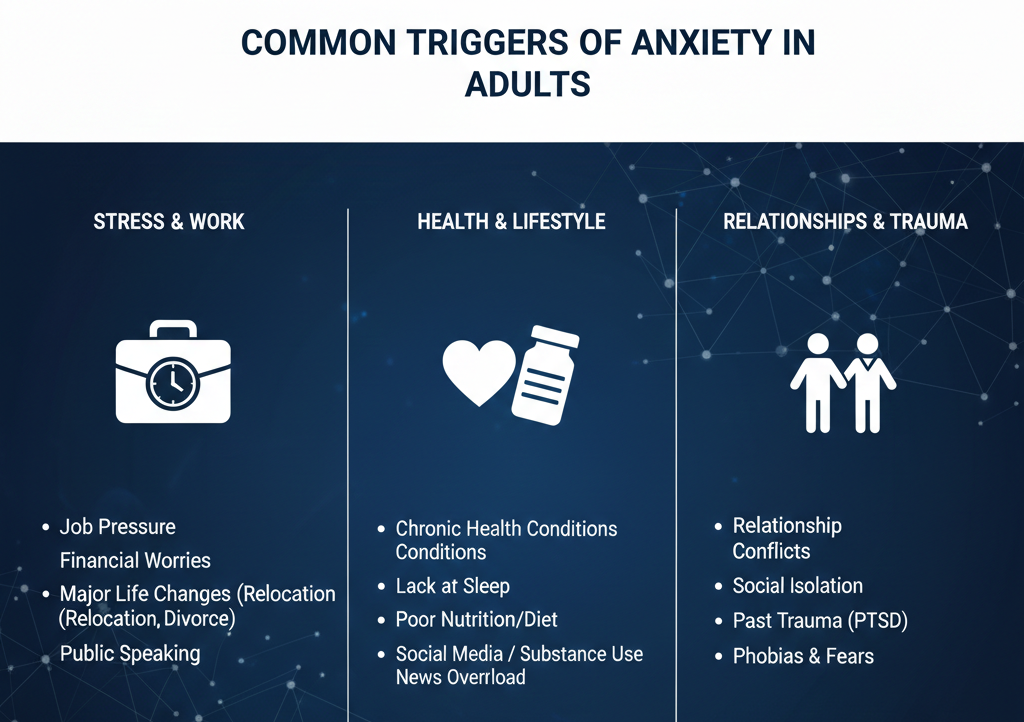
Anxiety is a normal emotional response to stress or perceived danger. However, for many adults, anxiety can become frequent, intense, or persistent, interfering with daily life, work, and relationships. While anxiety disorders have multiple underlying causes, specific triggers often play a key role in activating or worsening anxiety symptoms.
Understanding common anxiety triggers in adults can help individuals recognize patterns, manage symptoms more effectively, and seek appropriate support when needed. This article explores the most frequent emotional, physical, lifestyle, and environmental factors that contribute to anxiety.
What Are Anxiety Triggers?
Anxiety triggers are situations, thoughts, physical sensations, or experiences that activate the body’s stress response. These triggers vary widely from person to person. What causes anxiety in one individual may have little effect on another.
Triggers can be:
-
External (work stress, social situations)
-
Internal (thought patterns, physical sensations)
-
Situational (life changes, health concerns)
Identifying triggers is an important step toward managing anxiety.
1. Chronic Stress and Work Pressure
Ongoing stress is one of the most common contributors to anxiety in adults. Work-related pressures, financial concerns, and family responsibilities can keep the nervous system in a constant state of alert.
Common Stress-Related Triggers
-
Heavy workload or job insecurity
-
Long working hours
-
Lack of work-life balance
-
Financial instability or debt
When stress becomes chronic, the brain may struggle to return to a calm state, increasing vulnerability to anxiety symptoms.
2. Health-Related Concerns
Physical health issues can significantly influence anxiety levels. Even minor symptoms may trigger worry, especially in individuals prone to health anxiety.
Examples Include:
-
Chronic pain conditions
-
Heart-related symptoms such as palpitations
-
Gastrointestinal problems
-
Hormonal changes
The uncertainty surrounding health symptoms often leads to increased vigilance and fear, amplifying anxiety responses.
3. Sleep Deprivation and Fatigue
Lack of sleep affects both emotional regulation and stress tolerance. Adults who experience poor sleep quality are more likely to feel overwhelmed and anxious.
How Sleep Impacts Anxiety
-
Reduces the brain’s ability to regulate emotions
-
Increases sensitivity to stress
-
Impairs concentration and decision-making
Over time, sleep deprivation can create a cycle where anxiety disrupts sleep, and poor sleep worsens anxiety.
4. Caffeine, Alcohol, and Substance Use
Certain substances can trigger or intensify anxiety symptoms by stimulating the nervous system.
Common Triggers Include:
-
Excessive caffeine intake
-
Alcohol withdrawal or overuse
-
Nicotine
-
Certain medications
Caffeine, in particular, can mimic anxiety symptoms such as rapid heartbeat and restlessness, making anxiety feel more intense.
5. Major Life Changes and Transitions
Significant life events—whether positive or negative—can trigger anxiety due to uncertainty and adjustment demands.
Examples include:
-
Marriage or divorce
-
Career changes
-
Relocation
-
Becoming a parent
-
Loss of a loved one
Even positive changes can create stress when routines are disrupted or expectations feel overwhelming.
6. Social Situations and Performance Pressure
Many adults experience anxiety related to social interactions or performance-based scenarios.
Common Social Triggers
-
Public speaking
-
Job interviews
-
Social gatherings
-
Fear of judgment or criticism
Social anxiety may cause individuals to avoid situations that feel threatening, reinforcing anxiety over time.
7. Traumatic Experiences
Past trauma can have long-lasting effects on the nervous system. Even after the event has passed, reminders or stressors may trigger anxiety responses.
Examples include:
-
Accidents or injuries
-
Emotional or physical abuse
-
Witnessing distressing events
Trauma-related anxiety may surface unexpectedly, even years later.
8. Negative Thought Patterns
Internal dialogue plays a major role in anxiety. Certain thought patterns can act as powerful triggers.
Common Cognitive Triggers
-
Catastrophic thinking
-
Perfectionism
-
Excessive self-criticism
-
Fear of losing control
These patterns can create a constant sense of threat, keeping anxiety active even in safe situations.
9. Environmental and Sensory Factors
Certain environments can overstimulate the nervous system and trigger anxiety symptoms.
Examples include:
-
Crowded spaces
-
Loud noises
-
Bright lights
-
Chaotic or unpredictable environments
Individuals with heightened sensory sensitivity may be more affected by these triggers.
10. Hormonal Changes
Hormonal fluctuations can influence mood and anxiety levels, especially in adults.
Common periods include:
-
Menstrual cycle changes
-
Pregnancy and postpartum period
-
Menopause
-
Thyroid imbalances
Hormones affect neurotransmitters involved in emotional regulation, making anxiety symptoms more likely during certain times.
How to Identify Personal Anxiety Triggers
Recognizing personal triggers can help reduce anxiety intensity. Helpful strategies include:
-
Keeping a symptom journal
-
Noting situations before anxiety occurs
-
Observing physical and emotional patterns
-
Discussing triggers with a healthcare professional
Awareness allows individuals to develop coping strategies and avoid unnecessary stress when possible.
When to Seek Professional Support
Professional help should be considered if:
-
Anxiety is frequent or persistent
-
Triggers are difficult to identify or avoid
-
Symptoms interfere with work, sleep, or relationships
-
Physical symptoms are severe or concerning
Early intervention can improve symptom management and prevent anxiety from becoming chronic.
Final Thoughts
Anxiety in adults is often influenced by a combination of internal and external triggers. Stress, health concerns, lifestyle habits, and emotional patterns all play a role in activating anxiety responses. Understanding these triggers empowers individuals to take proactive steps toward managing anxiety and improving overall well-being.
With proper awareness, support, and coping strategies, many adults successfully reduce anxiety and regain a sense of balance in their daily lives.
⚠️ Medical Disclaimer
This content is for educational purposes only and is not a substitute for professional medical advice, diagnosis, or treatment. Always consult a qualified healthcare provider regarding mental health concerns.
FAQs
Is guilt a symptom of depression?
Yes, excessive or guilt is listed as a core symptom of Major Depressive Disorder in the DSM-5.
Can guilt cause depression?
While guilt alone doesn’t cause depression, chronic guilt can contribute to its development and worsen existing symptoms.
How do I stop feeling guilty when depressed?
Working with a therapist, practicing self-compassion, and potentially using medication can help manage guilt associated with depression.

Contact us
Have questions? Reach out and we’ll get back to you shortly.
Content
Guilt and Depression at a Glance
How Guilt and Depression Interact
Coping When You’re
Depressed and Feeling Guilty
Evidence-Based Treatments
When to Seek Help
How Loved Ones Can Help
FAQs