
Blog
Evening Habits That Promote Calm and Better Sleep

Author:
Medical Writer
Saya Des Marais

Medical Reviewer:
Dr. Russell A. Barkley, Ph.D
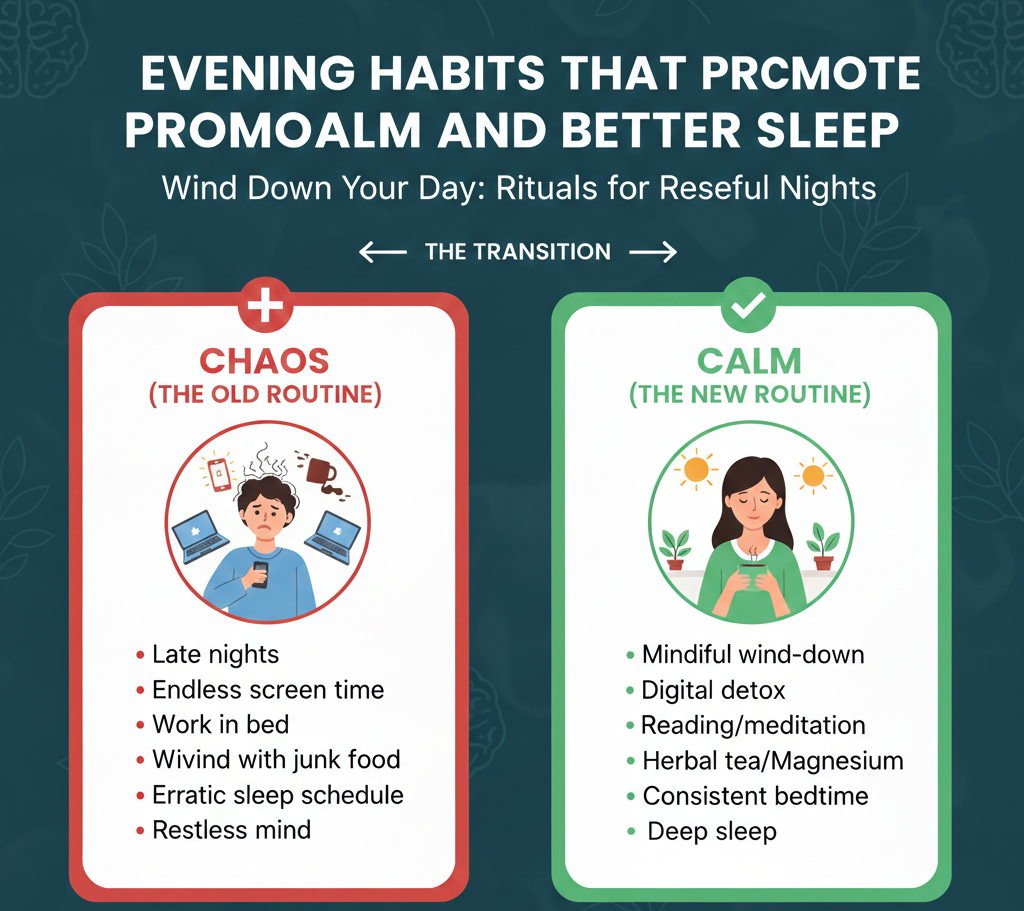
In today’s fast-paced digital world, stress doesn’t switch off when the sun goes down. For many people, nighttime becomes the loudest time of day — racing thoughts, anxiety, scrolling on phones, and difficulty falling asleep. Over time, poor sleep affects mental clarity, mood stability, immune function, and overall health.
Creating intentional evening habits can dramatically improve your sleep quality and emotional well-being. Small, consistent actions signal to your brain that it’s safe to relax. This article explores science-backed evening routines that promote calm, reduce anxiety, and support deep, restorative sleep.
Why Evening Habits Matter
Your brain follows a circadian rhythm — a natural internal clock that regulates sleep and wake cycles. However, artificial light, stress, caffeine, and digital stimulation can disrupt this rhythm. When your nervous system stays in “fight or flight” mode at night, falling asleep becomes difficult.
Healthy evening habits activate the parasympathetic nervous system — the body’s “rest and digest” mode. This lowers heart rate, reduces cortisol (the stress hormone), and prepares your body for rest.
Consistency is key. When you repeat calming habits nightly, your brain begins to associate them with sleep.
1. Create a Wind-Down Routine (Start 60–90 Minutes Before Bed)
Sleep doesn’t happen instantly. Just as you warm up before exercise, you need to “cool down” before sleep.
Start by:
-
Dimming lights
-
Lowering noise levels
-
Turning off stimulating devices
-
Switching to relaxing activities
Your wind-down routine might include reading, stretching, journaling, or light breathing exercises. Avoid intense work tasks, heated discussions, or high-adrenaline content before bed.
The goal is gradual transition — not an abrupt shutdown.
2. Reduce Screen Exposure
Blue light from phones, tablets, and televisions suppresses melatonin production — the hormone responsible for sleep.
Try these strategies:
-
Stop screen use at least 45–60 minutes before bed
-
Use night mode or blue-light filters in the evening
-
Avoid doom-scrolling or emotionally triggering content
If you must use devices, keep brightness low and avoid engaging content. Replacing screen time with a book or calming audio can significantly improve sleep quality.
3. Practice Gentle Breathing Techniques
Breathing exercises are powerful tools to calm the nervous system. Slow, controlled breathing reduces heart rate and lowers stress hormones.
Try the 4-6 breathing method:
-
Inhale through your nose for 4 seconds
-
Exhale slowly through your mouth for 6 seconds
-
Repeat for 3–5 minutes
Longer exhalations signal safety to your brain, helping you transition into relaxation.
Another option is box breathing (4-4-4-4 count), which is especially helpful if nighttime anxiety is present.
4. Journal to Release Mental Clutter
Many people struggle with sleep because their mind becomes active the moment their head hits the pillow.
Journaling helps “download” thoughts before bed.
You can:
-
Write tomorrow’s to-do list
-
Express worries or concerns
-
List three things you’re grateful for
-
Reflect on positive moments from the day
This clears mental clutter and reduces rumination. Gratitude journaling, in particular, has been shown to improve sleep satisfaction and reduce stress.
5. Take a Warm Shower or Bath
A warm shower or bath about 60–90 minutes before bed can improve sleep quality. When you step out of warm water, your body temperature gradually drops — signaling to your brain that it’s time to sleep.
Add calming elements like:
-
Lavender essential oil
-
Soft music
-
Low lighting
This creates a sensory cue that reinforces relaxation.
6. Avoid Late-Night Stimulants
Caffeine can remain in your system for 6–8 hours (sometimes longer). If you’re sensitive, avoid caffeine after early afternoon.
Also be mindful of:
-
Nicotine
-
Heavy meals close to bedtime
-
Excess sugar at night
-
Alcohol (which disrupts deep sleep stages)
While alcohol may make you feel sleepy initially, it interferes with REM sleep and often causes nighttime awakenings.
7. Keep a Consistent Sleep Schedule
Going to bed and waking up at the same time every day — even on weekends — strengthens your circadian rhythm.
Irregular sleep patterns confuse your internal clock, leading to insomnia symptoms.
Consistency helps:
-
Faster sleep onset
-
Better sleep depth
-
Improved daytime energy
-
Reduced anxiety
Over time, your body will naturally begin to feel sleepy at your set bedtime.
8. Create a Sleep-Friendly Environment
Your bedroom should signal calm, not stimulation.
Optimize your space:
-
Keep the room cool (around 60–67°F or 16–19°C)
-
Use blackout curtains
-
Reduce noise (white noise machines can help)
-
Keep clutter minimal
Investing in comfortable bedding and a supportive mattress also makes a difference.
Your bed should primarily be used for sleep — not work or long screen sessions.
9. Gentle Stretching or Light Yoga
Physical tension often mirrors mental tension. Light stretching helps release muscle tightness and promotes relaxation.
Simple evening stretches:
-
Neck rolls
-
Shoulder shrugs
-
Forward fold stretch
-
Seated spinal twist
-
Child’s pose
Slow, mindful movement paired with deep breathing helps your body shift into a relaxed state.
10. Try Herbal Teas or Natural Relaxation Aids
Certain herbal teas are known for their calming properties, such as:
-
Chamomile
-
Lemon balm
-
Valerian root
-
Passionflower
These may promote mild relaxation and help reduce sleep latency (the time it takes to fall asleep).
However, if sleep difficulties persist or anxiety significantly interferes with daily life, professional evaluation may be beneficial.
11. Limit Late-Night News and Stressful Conversations
Emotional stimulation at night can trigger adrenaline and cortisol spikes.
Avoid:
-
Heated debates
-
Distressing news cycles
-
Work emails
-
Financial discussions
Protecting your mental state before bed is just as important as protecting your physical environment.
12. Practice Mindfulness or Body Scan Meditation
Mindfulness helps bring attention to the present moment instead of worrying about the past or future.
Try a simple body scan:
-
Lie comfortably in bed
-
Focus on your toes
-
Gradually move your awareness upward
-
Notice tension without judgment
-
Gently release each area
This practice quiets mental noise and supports sleep onset.
When Sleep Problems May Need Professional Support
Occasional poor sleep is normal. However, if you experience:
-
Difficulty sleeping more than 3 nights per week
-
Ongoing anxiety at bedtime
-
Frequent nighttime awakenings
-
Daytime fatigue affecting work or relationships
-
Panic symptoms at night
It may be helpful to consult a healthcare provider. Chronic sleep deprivation can worsen anxiety, depression, and overall health.
Professional guidance can help identify underlying causes and recommend appropriate treatment strategies.
Building Your Personalized Evening Routine
Not every habit works for everyone. The key is consistency and simplicity.
Start small:
-
Choose 2–3 habits
-
Practice them nightly for 2–3 weeks
-
Observe improvements
-
Adjust gradually
An example routine might look like:
8:30 PM – Dim lights, stop screens
8:45 PM – Warm shower
9:00 PM – Journal and herbal tea
9:15 PM – Light stretching and breathing
9:30 PM – In bed, lights off
When repeated consistently, your brain begins to associate these cues with safety and rest.
The Long-Term Benefits of Healthy Evening Habits
Prioritizing your evenings can improve:
-
Emotional stability
-
Memory and concentration
-
Immune function
-
Stress resilience
-
Hormonal balance
-
Overall life satisfaction
Sleep is not a luxury — it is foundational to mental and physical wellness.
Even in a busy world, protecting your nighttime routine is one of the most powerful forms of self-care.
Final Thoughts
Calm evenings don’t happen by accident — they are built intentionally. By reducing stimulation, managing stress, and creating consistent habits, you give your mind and body permission to rest.
Better sleep starts before your head hits the pillow.
Start tonight. Small changes lead to meaningful transformation.
FAQs
Is guilt a symptom of depression?
Yes, excessive or guilt is listed as a core symptom of Major Depressive Disorder in the DSM-5.
Can guilt cause depression?
While guilt alone doesn’t cause depression, chronic guilt can contribute to its development and worsen existing symptoms.
How do I stop feeling guilty when depressed?
Working with a therapist, practicing self-compassion, and potentially using medication can help manage guilt associated with depression.

Contact us
Have questions? Reach out and we’ll get back to you shortly.
Content
Guilt and Depression at a Glance
How Guilt and Depression Interact
Coping When You’re
Depressed and Feeling Guilty
Evidence-Based Treatments
When to Seek Help
How Loved Ones Can Help
FAQs