
Blog
How Antidepressants Work in the Brain

Author:
Medical Writer
Saya Des Marais

Medical Reviewer:
Dr. Russell A. Barkley, Ph.D
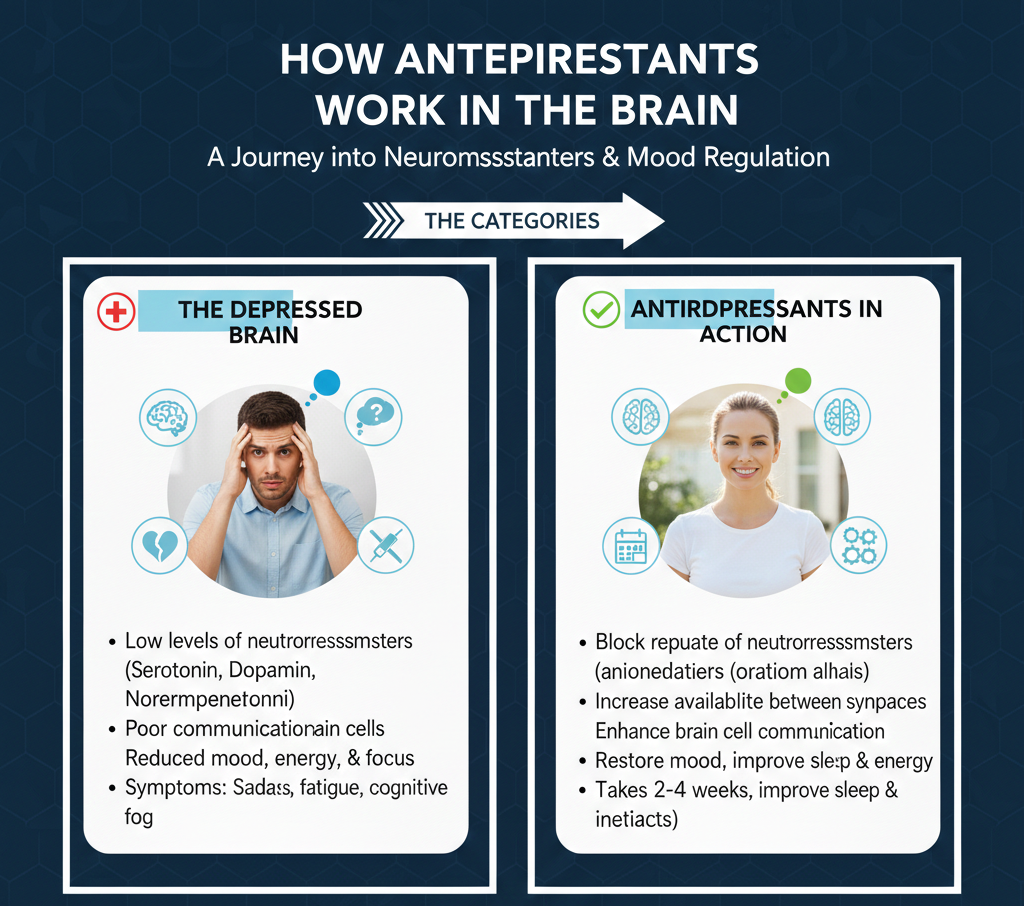
Antidepressants are among the most commonly prescribed medications for depression and certain anxiety disorders. Many people take these medications to help manage persistent sadness, low energy, and emotional distress. Despite their widespread use, there is often confusion about how antidepressants actually affect the brain and improve mental health symptoms.
Understanding how antidepressants work can help patients feel more informed, reduce stigma around treatment, and support better conversations with healthcare providers. This guide explains how antidepressants interact with brain chemistry, the different types available, their benefits, potential side effects, and what to expect during treatment.
Understanding Brain Chemistry and Mood Regulation
The brain communicates using chemical messengers called neurotransmitters. These chemicals send signals between nerve cells and play a key role in regulating mood, emotions, sleep, and stress responses.
Some of the main neurotransmitters involved in depression and anxiety include:
-
Serotonin: Influences mood, sleep, and emotional stability
-
Norepinephrine: Affects alertness, energy, and stress response
-
Dopamine: Associated with motivation, pleasure, and reward
In many cases of depression, these neurotransmitters may be imbalanced or not functioning efficiently. Antidepressants aim to improve how these chemicals work, helping restore emotional balance over time.
How Antidepressants Affect the Brain
Antidepressants do not create artificial happiness or instantly change personality. Instead, they help regulate neurotransmitter activity so the brain can process emotions more effectively.
Most antidepressants work by:
-
Increasing the availability of certain neurotransmitters
-
Improving communication between brain cells
-
Supporting healthier neural pathways
-
Reducing excessive stress responses
Over time, these changes can lead to improved mood, reduced anxiety, and better emotional regulation.
Types of Antidepressants and Their Mechanisms
There are several classes of antidepressants, each affecting brain chemistry in different ways.
1. Selective Serotonin Reuptake Inhibitors (SSRIs)
SSRIs are commonly prescribed as a first-line treatment for depression and anxiety. They work by preventing serotonin from being reabsorbed too quickly by nerve cells, allowing more of it to remain active in the brain.
Benefits:
-
Widely studied and commonly used
-
Often well tolerated
-
Effective for long-term symptom management
Considerations:
-
May take a few weeks to show full effects
-
Possible side effects include nausea or sleep changes
2. Serotonin-Norepinephrine Reuptake Inhibitors (SNRIs)
SNRIs increase levels of both serotonin and norepinephrine, supporting mood stability and energy levels.
Benefits:
-
Helpful for depression combined with fatigue or chronic pain
-
May improve focus and motivation
Considerations:
-
Similar side effects to SSRIs
-
May require gradual dose adjustments
3. Tricyclic Antidepressants (TCAs)
TCAs are older medications that affect multiple neurotransmitters. They are usually prescribed when newer medications are not effective.
Benefits:
-
Useful in treatment-resistant depression
-
May help with certain sleep issues or chronic pain
Considerations:
-
Higher risk of side effects
-
Require close medical monitoring
4. Monoamine Oxidase Inhibitors (MAOIs)
MAOIs work by blocking an enzyme that breaks down neurotransmitters, increasing their availability in the brain.
Benefits:
-
May help severe or resistant depression
Considerations:
-
Dietary restrictions may be required
-
Less commonly used today due to safety concerns
5. Atypical Antidepressants
This group includes medications that work through unique mechanisms affecting dopamine, norepinephrine, or other brain chemicals.
Benefits:
-
May be suitable when other medications are ineffective
-
Can target specific symptoms such as low energy or sleep disturbances
Considerations:
-
Effects vary depending on the medication
-
Monitoring for side effects is important
Why Antidepressants Take Time to Work
Many people expect immediate results, but antidepressants usually take several weeks to produce noticeable improvements. This delay happens because:
-
Brain chemistry gradually adjusts
-
Neural pathways strengthen over time
-
The nervous system adapts to new neurotransmitter levels
Early side effects may appear before mood improvement, which is why consistent use and medical supervision are important.
Benefits Beyond Mood Improvement
Antidepressants may provide several additional benefits, including:
-
Reduced anxiety and panic symptoms
-
Improved sleep patterns
-
Better concentration and decision-making
-
Increased motivation and daily functioning
These changes often occur gradually and become more noticeable over weeks or months.
Possible Side Effects
While many people tolerate antidepressants well, some may experience side effects such as:
-
Digestive discomfort
-
Headaches or dizziness
-
Changes in appetite or weight
-
Sleep disturbances
Serious side effects are uncommon but should be reported to a healthcare provider immediately. Regular follow-up appointments help monitor progress and ensure safety.
Medication Combined With Therapy
Antidepressants are often most effective when combined with therapy, particularly cognitive behavioral therapy (CBT). Therapy helps individuals:
-
Understand thought patterns
-
Develop coping strategies
-
Address emotional triggers
-
Build long-term resilience
Lifestyle factors like exercise, balanced nutrition, and stress management also support recovery and improve treatment outcomes.
Safety Tips for Using Antidepressants
To ensure safe and effective treatment:
-
Follow your healthcare provider’s instructions carefully
-
Avoid stopping medication suddenly without medical guidance
-
Inform your doctor about all other medications or supplements
-
Monitor changes in mood or behavior
Open communication with healthcare professionals helps prevent complications and improves results.
When to Talk to a Doctor
Seek medical advice if:
-
Symptoms worsen or do not improve
-
Side effects become difficult to manage
-
You experience significant mood changes
-
You have questions about adjusting medication
Timely medical guidance ensures that treatment remains safe and effective.
Final Thoughts
Antidepressants work by influencing neurotransmitters and strengthening communication between brain cells, helping restore emotional balance over time. While they are not a quick fix, these medications can significantly improve mood, reduce anxiety, and enhance daily functioning when used appropriately.
Every person’s brain chemistry is unique, which is why treatment plans are individualized. A combination of medication, therapy, and healthy lifestyle habits often provides the best results.
If you are considering antidepressant treatment, consult a qualified healthcare provider to determine the safest and most effective approach tailored to your needs.
FAQs
Is guilt a symptom of depression?
Yes, excessive or guilt is listed as a core symptom of Major Depressive Disorder in the DSM-5.
Can guilt cause depression?
While guilt alone doesn’t cause depression, chronic guilt can contribute to its development and worsen existing symptoms.
How do I stop feeling guilty when depressed?
Working with a therapist, practicing self-compassion, and potentially using medication can help manage guilt associated with depression.

Contact us
Have questions? Reach out and we’ll get back to you shortly.
Content
Guilt and Depression at a Glance
How Guilt and Depression Interact
Coping When You’re
Depressed and Feeling Guilty
Evidence-Based Treatments
When to Seek Help
How Loved Ones Can Help
FAQs