
Blog
Signs You May Need a Pain Management Specialist

Author:
Medical Writer
Saya Des Marais

Medical Reviewer:
Dr. Russell A. Barkley, Ph.D
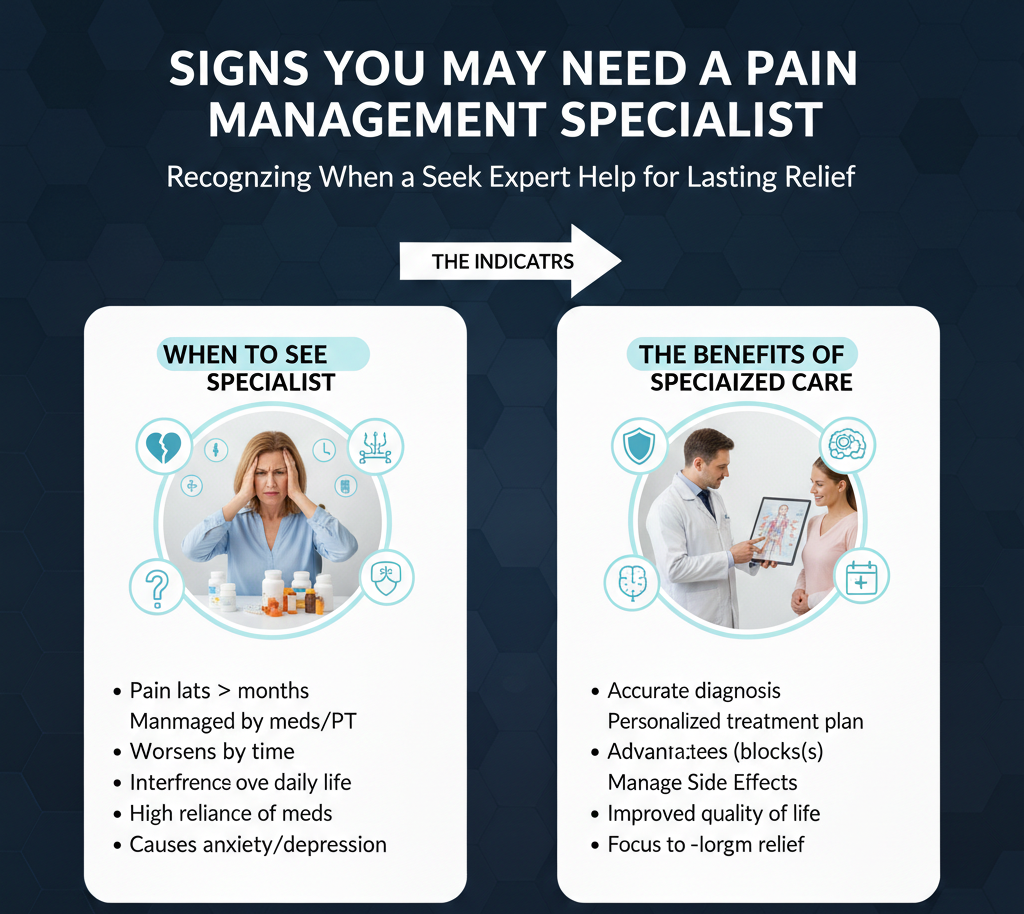
Pain is one of the most common reasons people seek medical care. While many types of pain improve with rest, medication, or standard treatment from a primary care physician, some conditions require more specialized attention. Persistent or complex pain can affect your ability to work, sleep, and enjoy everyday activities, making it essential to get the right help at the right time.
Pain management specialists are medical professionals trained to diagnose, treat, and manage various types of acute and chronic pain using advanced techniques and personalized care plans. Understanding when to seek specialized treatment can make a significant difference in your recovery and overall well-being.
In this article, we’ll explore the most common signs that indicate you may benefit from seeing a pain management specialist and how expert care can help improve your quality of life.
What Does a Pain Management Specialist Do?
A pain management specialist is a physician who focuses on diagnosing and treating different forms of pain, including chronic pain conditions, nerve disorders, and complex injuries. These specialists often have training in anesthesiology, neurology, physical medicine, or rehabilitation.
Their approach usually involves a combination of treatments such as:
-
Medication management
-
Physical therapy recommendations
-
Nerve blocks or injections
-
Lifestyle and behavioral strategies
-
Minimally invasive procedures
-
Rehabilitation programs
The goal is not only to reduce pain but also to improve function, mobility, and overall health.
1. Your Pain Lasts Longer Than Expected
One of the clearest signs you may need a pain specialist is pain that persists beyond the normal healing period. Acute pain typically resolves within a few weeks, but chronic pain lasts for three months or longer.
Examples include:
-
Ongoing back or neck pain
-
Chronic joint pain
-
Long-term headaches or migraines
-
Nerve pain or tingling sensations
Persistent discomfort can indicate an underlying condition that requires specialized evaluation and treatment.
2. Standard Treatments Aren’t Working
If over-the-counter medications, physical therapy, or basic treatment plans have not improved your symptoms, it may be time to consult a specialist.
Signs include:
-
Pain remains unchanged despite treatment
-
Frequent need for stronger medications
-
Limited improvement after multiple therapies
Pain specialists can offer advanced options that may not be available through general medical care.
3. Pain Is Affecting Your Daily Life
When pain interferes with normal activities, professional help becomes essential. You may notice:
-
Difficulty working or concentrating
-
Trouble sleeping due to discomfort
-
Reduced ability to exercise or move
-
Loss of independence in daily tasks
Chronic pain can also lead to emotional stress, anxiety, and depression. Specialists often use multidisciplinary approaches to address both physical and psychological aspects of pain.
4. You Experience Nerve-Related Symptoms
Pain that involves nerves can be particularly complex and may require specialized diagnosis.
Common nerve-related symptoms include:
-
Burning or shooting sensations
-
Numbness or tingling
-
Electric-like pain
-
Muscle weakness
Conditions such as sciatica, neuropathy, or post-surgical nerve damage often benefit from targeted treatments provided by pain management experts.
5. You’ve Had Surgery but Still Feel Pain
Post-surgical pain usually improves as healing progresses. However, some individuals develop persistent discomfort after surgery.
A pain management specialist can help if:
-
Pain continues months after surgery
-
Medication alone is not effective
-
Scar tissue or nerve injury is suspected
Specialists can design rehabilitation plans and recommend procedures to address lingering symptoms.
6. You Want to Reduce Dependence on Medications
Many people seek pain specialists to explore alternatives to long-term medication use. While medications can be helpful, overreliance may lead to side effects or tolerance over time.
Pain specialists may recommend:
-
Non-drug therapies
-
Interventional procedures
-
Lifestyle adjustments
-
Behavioral therapy
These approaches aim to provide sustainable pain relief without excessive medication use.
7. Your Condition Is Complex or Difficult to Diagnose
Some pain conditions do not have a clear cause or involve multiple body systems. If you have seen multiple doctors without answers, a pain management specialist can provide comprehensive evaluation and advanced diagnostic tools.
Examples of complex pain conditions include:
-
Fibromyalgia
-
Complex regional pain syndrome (CRPS)
-
Chronic migraines
-
Persistent musculoskeletal pain
Specialists often collaborate with other healthcare providers to create a holistic treatment plan.
8. You Experience Severe Pain Episodes
Sudden or intense pain that disrupts your routine may require specialized care. Pain management doctors can assess triggers, develop preventive strategies, and provide treatments designed to reduce the frequency and intensity of flare-ups.
Benefits of Seeing a Pain Management Specialist
Seeking specialized care offers several advantages:
-
Personalized treatment plans
-
Access to advanced therapies
-
Improved pain control and mobility
-
Reduced risk of medication misuse
-
Better long-term outcomes
A multidisciplinary approach often leads to more effective and sustainable pain relief.
What to Expect During Your First Appointment
During your initial visit, a pain management specialist will typically:
-
Review your medical history and symptoms
-
Conduct a physical examination
-
Order imaging or diagnostic tests if needed
-
Discuss treatment goals and expectations
-
Create a personalized care plan
Being honest about your symptoms, lifestyle, and previous treatments helps your doctor develop the most effective strategy.
How to Prepare for a Pain Specialist Visit
To make the most of your appointment:
-
Bring a list of current medications
-
Document your pain levels and triggers
-
Gather previous medical records or imaging reports
-
Write down questions or concerns
Clear communication ensures your treatment plan aligns with your needs and goals.
When to Seek Immediate Medical Attention
While chronic pain usually requires scheduled care, certain symptoms demand urgent evaluation:
-
Sudden loss of sensation or movement
-
Severe chest or abdominal pain
-
Difficulty breathing
-
High fever with intense pain
-
Signs of allergic reaction to medication
If you experience any of these symptoms, seek emergency medical care immediately.
Lifestyle Strategies That Support Pain Management
Even with specialized treatment, lifestyle habits play a key role in managing pain:
-
Regular gentle exercise
-
Balanced nutrition
-
Stress reduction techniques
-
Proper sleep habits
-
Maintaining a healthy weight
Combining medical treatment with healthy daily routines often produces the best results.
Final Thoughts
Living with ongoing pain can be physically exhausting and emotionally draining. Recognizing when your condition requires specialized attention is an important step toward recovery and improved quality of life. If your pain persists, worsens, or interferes with daily activities despite standard treatment, consulting a pain management specialist may provide the relief and support you need.
With the right combination of medical expertise, personalized care, and lifestyle adjustments, many people find effective ways to manage pain and regain control of their lives.
FAQs
Is guilt a symptom of depression?
Yes, excessive or guilt is listed as a core symptom of Major Depressive Disorder in the DSM-5.
Can guilt cause depression?
While guilt alone doesn’t cause depression, chronic guilt can contribute to its development and worsen existing symptoms.
How do I stop feeling guilty when depressed?
Working with a therapist, practicing self-compassion, and potentially using medication can help manage guilt associated with depression.

Contact us
Have questions? Reach out and we’ll get back to you shortly.
Content
Guilt and Depression at a Glance
How Guilt and Depression Interact
Coping When You’re
Depressed and Feeling Guilty
Evidence-Based Treatments
When to Seek Help
How Loved Ones Can Help
FAQs