
Blog
Muscle Relaxants – When Are They Prescribed?

Author:
Medical Writer
Saya Des Marais

Medical Reviewer:
Dr. Russell A. Barkley, Ph.D
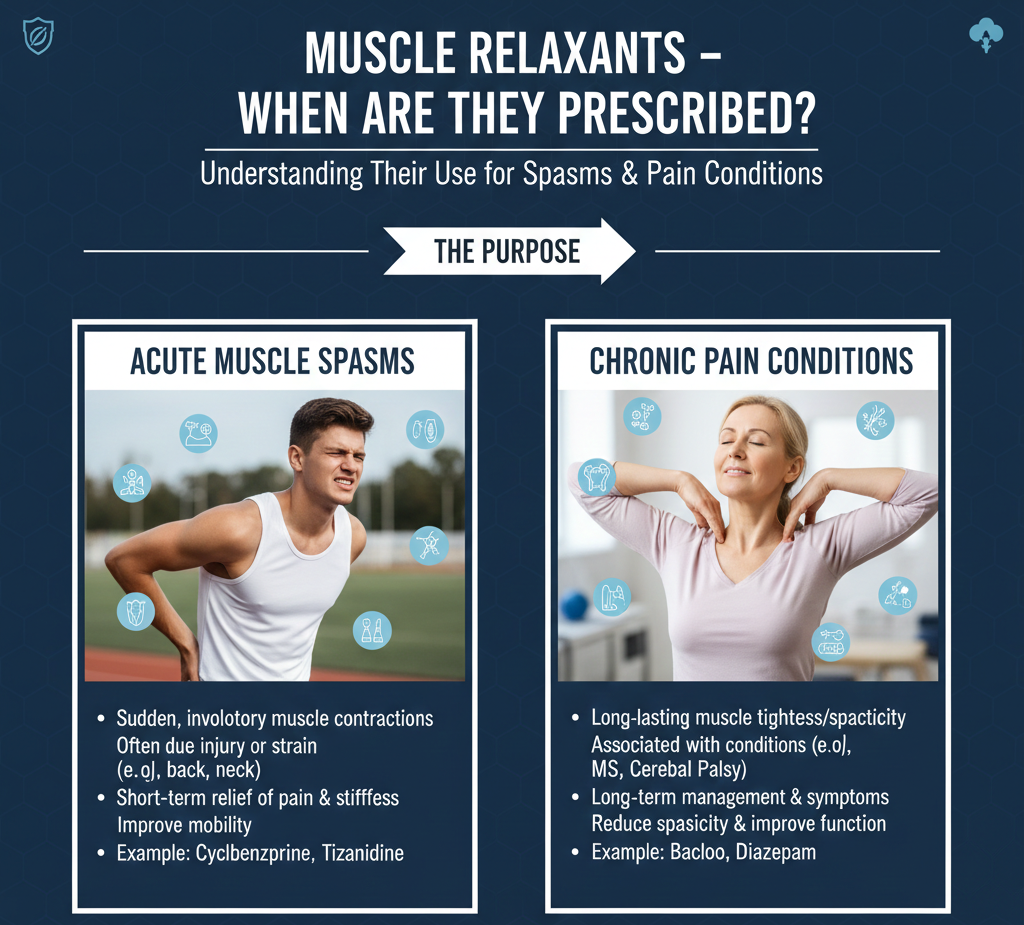
Muscle pain and spasms are among the most common reasons people seek medical care. Whether caused by an injury, chronic condition, or nerve disorder, muscle discomfort can significantly interfere with daily activities and overall quality of life. In certain situations, healthcare providers may prescribe muscle relaxants to help relieve symptoms and improve mobility.
However, muscle relaxants are not always the first treatment option, and they are typically recommended only under specific circumstances. Understanding when these medications are prescribed, how they work, and how to use them safely can help patients make informed decisions about their care.
This guide explains the role of muscle relaxants in medical treatment, their benefits and risks, and what patients should know before starting therapy.
What Are Muscle Relaxants?
Muscle relaxants are medications designed to reduce muscle spasms, stiffness, and pain. They generally work by affecting the central nervous system rather than directly targeting the muscles themselves. By calming nerve signals that trigger muscle contractions, these medications help relieve discomfort and improve flexibility.
There are two main categories of muscle relaxants:
1. Skeletal Muscle Relaxants
These are commonly prescribed for acute muscle pain or injury. They help reduce muscle spasms associated with conditions like back pain or strains.
2. Antispasticity Medications
These are used to treat muscle stiffness caused by neurological conditions such as multiple sclerosis or spinal cord injuries.
Each category serves a different purpose, and doctors choose a medication based on the patient’s specific diagnosis and medical history.
Common Conditions That May Require Muscle Relaxants
Doctors typically prescribe muscle relaxants when muscle spasms cause significant pain or limit movement. Some of the most common situations include:
Acute Back or Neck Pain
Sudden muscle injuries from lifting heavy objects, poor posture, or minor accidents can cause severe spasms. Muscle relaxants may be used alongside physical therapy and pain relievers.
Sports Injuries
Strains, sprains, or muscle tears often result in tightness and pain. Short-term medication use can help reduce discomfort during recovery.
Muscle Spasms From Overuse
Repetitive movements or prolonged physical activity can lead to muscle fatigue and spasms.
Neurological Disorders
Conditions such as cerebral palsy, multiple sclerosis, or spinal cord injuries can cause persistent muscle stiffness. Specialized muscle relaxants may help manage symptoms.
Fibromyalgia and Chronic Pain Syndromes
Some patients with chronic pain may benefit from certain muscle relaxants that improve sleep and reduce muscle tension.
How Muscle Relaxants Work
Most skeletal muscle relaxants act on the brain and spinal cord rather than the muscles themselves. They slow down nerve signals that cause muscles to contract excessively, which reduces spasms and discomfort.
Antispasticity medications may work differently by targeting specific nerve pathways that control muscle tone. Because these medications affect the nervous system, they can also cause sedation or drowsiness.
This is one reason doctors carefully assess whether the benefits outweigh potential side effects before prescribing them.
When Doctors Decide to Prescribe Muscle Relaxants
Muscle relaxants are typically considered after evaluating several factors, including:
-
Severity of muscle pain or spasms
-
Underlying medical conditions
-
Response to non-drug treatments
-
Patient age and overall health
-
Risk of medication interactions
In many cases, doctors recommend starting with conservative treatments such as rest, heat therapy, stretching, or over-the-counter pain relievers. Muscle relaxants are often added when these methods do not provide sufficient relief.
Common Types of Muscle Relaxants
Several medications fall under the muscle relaxant category. While specific prescriptions vary by country and healthcare system, common examples include:
-
Cyclobenzaprine
-
Methocarbamol
-
Tizanidine
-
Baclofen
-
Carisoprodol
Each medication has unique effects, dosing requirements, and safety considerations. Some are more sedating than others, while some are better suited for neurological conditions rather than acute injuries.
Patients should always follow their doctor’s instructions and avoid switching medications without medical guidance.
Benefits of Muscle Relaxants
When prescribed appropriately, muscle relaxants can provide several advantages:
Pain Relief
They reduce muscle tension, which can decrease pain levels and improve comfort.
Improved Mobility
By relaxing tight muscles, these medications can help patients move more freely and participate in physical therapy.
Better Sleep
Muscle spasms often worsen at night. Sedating effects may help some patients rest more comfortably.
Enhanced Recovery
Short-term use may speed recovery by allowing muscles to relax and heal.
Despite these benefits, muscle relaxants are usually intended for temporary use rather than long-term therapy.
Potential Side Effects and Risks
Like all medications, muscle relaxants come with possible side effects. Common ones include:
-
Drowsiness
-
Dizziness
-
Dry mouth
-
Fatigue
-
Blurred vision
More serious risks may include:
-
Confusion or impaired coordination
-
Dependence with certain medications
-
Breathing difficulties when combined with other sedatives
Because of these risks, patients should avoid driving or operating heavy machinery until they understand how the medication affects them.
Who Should Use Extra Caution?
Some individuals may face higher risks when taking muscle relaxants:
-
Older adults, who may be more sensitive to sedation
-
People with liver or kidney disease
-
Patients taking opioids, sleep medications, or alcohol
-
Individuals with a history of substance misuse
Healthcare providers carefully evaluate these factors before prescribing and may choose alternative treatments if necessary.
Safe Use Tips for Patients
To reduce risks and maximize benefits, patients should follow safe medication practices:
Follow Prescribed Dosage
Never take more than recommended, even if pain persists.
Avoid Alcohol
Combining alcohol with muscle relaxants can increase drowsiness and breathing risks.
Take Only as Directed
Some medications are meant for short-term use only.
Inform Your Doctor About Other Medications
Drug interactions are common with central nervous system depressants.
Report Side Effects Promptly
If unusual symptoms occur, contact a healthcare provider.
Alternatives to Muscle Relaxants
In many cases, non-drug therapies can provide relief without medication risks. These may include:
-
Physical therapy
-
Stretching and strengthening exercises
-
Heat or cold therapy
-
Massage therapy
-
Over-the-counter pain relievers
-
Lifestyle changes such as improved posture and ergonomic adjustments
Doctors often recommend combining these approaches with medication for better long-term results.
When to Seek Medical Attention
Patients should contact a healthcare professional if they experience:
-
Severe dizziness or confusion
-
Difficulty breathing
-
Allergic reactions such as swelling or rash
-
Persistent weakness or unusual fatigue
Prompt medical evaluation ensures complications are addressed quickly.
Conclusion
Muscle relaxants can be valuable tools for managing muscle spasms, injuries, and certain neurological conditions. However, they are not appropriate for every type of pain and are usually prescribed for short-term relief rather than long-term use.
Healthcare providers carefully consider each patient’s symptoms, medical history, and risk factors before recommending these medications. When used responsibly and alongside supportive therapies like physical therapy and lifestyle changes, muscle relaxants can help reduce discomfort and improve recovery.
Patients should always follow medical advice, stay informed about potential side effects, and communicate openly with their healthcare team. By understanding when muscle relaxants are prescribed and how to use them safely, individuals can make confident decisions about their treatment and overall well-being.
FAQs
Is guilt a symptom of depression?
Yes, excessive or guilt is listed as a core symptom of Major Depressive Disorder in the DSM-5.
Can guilt cause depression?
While guilt alone doesn’t cause depression, chronic guilt can contribute to its development and worsen existing symptoms.
How do I stop feeling guilty when depressed?
Working with a therapist, practicing self-compassion, and potentially using medication can help manage guilt associated with depression.

Contact us
Have questions? Reach out and we’ll get back to you shortly.
Content
Guilt and Depression at a Glance
How Guilt and Depression Interact
Coping When You’re
Depressed and Feeling Guilty
Evidence-Based Treatments
When to Seek Help
How Loved Ones Can Help
FAQs