
Blog
Why Medication Instructions Matter

Author:
Medical Writer
Saya Des Marais

Medical Reviewer:
Dr. Russell A. Barkley, Ph.D
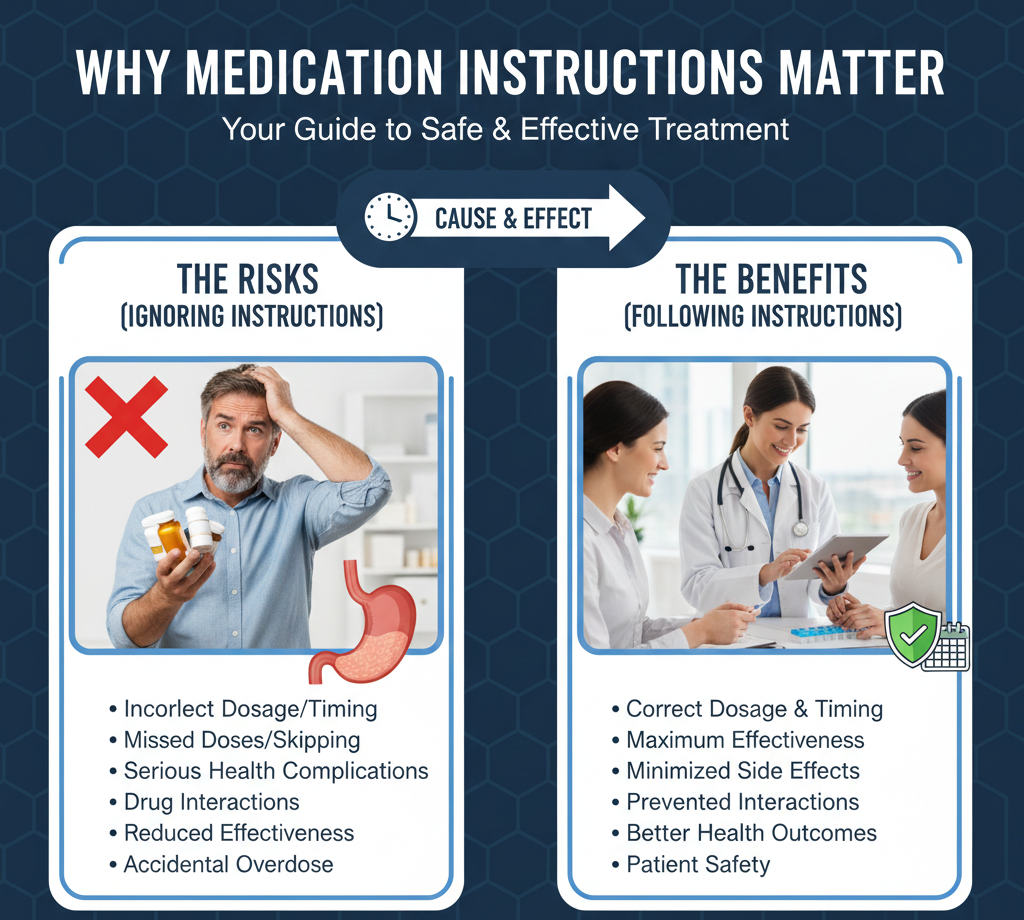
Prescription and over-the-counter medications are designed to improve health, relieve symptoms, and manage medical conditions. However, medications only work as intended when they are used correctly. One of the most important aspects of safe and effective treatment is carefully following medication instructions provided by healthcare professionals and pharmacists.
Many patients unintentionally misuse medications by skipping doses, taking incorrect amounts, or misunderstanding directions. These mistakes may reduce treatment effectiveness or lead to serious side effects. Understanding why medication instructions matter—and how to follow them properly—can help patients achieve better health outcomes and avoid preventable complications.
This article explores the importance of medication instructions, common errors people make, and practical strategies for ensuring safe and effective use.
What Are Medication Instructions?
Medication instructions are detailed guidelines explaining how a medicine should be taken. They are typically included on prescription labels, medication packaging, and informational leaflets.
Common Elements of Medication Instructions
-
Dosage amount and frequency
-
Timing of doses (morning, evening, or specific intervals)
-
Whether to take with food or on an empty stomach
-
Storage recommendations
-
Possible side effects and warnings
-
Duration of treatment
These instructions are based on scientific research, clinical trials, and individualized medical assessments. Following them closely ensures the medication works as intended.
Why Correct Dosage Is Essential
One of the most critical aspects of medication use is taking the correct dose. Too little medication may fail to treat the condition effectively, while too much can lead to toxicity or harmful side effects.
Risks of Incorrect Dosage
-
Worsening symptoms
-
Increased risk of adverse reactions
-
Medication resistance in some treatments
-
Emergency medical situations
Healthcare providers carefully calculate doses based on factors such as age, weight, medical history, and other medications. Altering dosage without professional guidance can be dangerous.
Timing and Consistency Matter
Medications often need to be taken at specific times or intervals to maintain stable levels in the body. Irregular dosing schedules can disrupt treatment and reduce effectiveness.
Examples of Timing Importance
-
Antibiotics require consistent intervals to combat infections effectively
-
Mental health medications may need steady levels for symptom control
-
Pain medications may be scheduled to maintain relief
Setting reminders, alarms, or using medication organizers can help maintain consistent dosing routines.
Food and Drink Instructions Are Not Optional
Some medications work best when taken with food, while others require an empty stomach for proper absorption. Ignoring these guidelines can reduce effectiveness or increase side effects.
Examples
-
Certain medications may irritate the stomach if taken without food
-
Others may not absorb properly when combined with dairy or caffeine
-
Alcohol can interact with many medications, causing dangerous effects
Always read labels carefully and ask a pharmacist if you are unsure about food or drink restrictions.
Preventing Dangerous Drug Interactions
Medication instructions often include warnings about combining drugs with other medications, supplements, or substances. Ignoring these warnings can lead to harmful interactions.
Potential Risks
-
Increased side effects
-
Reduced effectiveness
-
Severe reactions requiring medical attention
Keeping an updated list of all medications—including over-the-counter products and supplements—helps healthcare providers prevent dangerous combinations.
Reducing Side Effects and Complications
Medication instructions are designed to minimize side effects and maximize benefits. Taking medications incorrectly may increase the likelihood of unwanted symptoms.
Examples of Preventable Issues
-
Dizziness from taking medications at the wrong time
-
Stomach upset from incorrect food intake
-
Sleep disturbances from evening doses of stimulating medicines
Following instructions carefully helps reduce discomfort and improve overall treatment success.
Avoiding Medication Misuse and Dependence
Some medications carry risks of misuse or dependence if not taken exactly as prescribed. Instructions help ensure responsible use and prevent potential problems.
Key Safety Measures
-
Avoid increasing doses without medical advice
-
Do not share prescriptions with others
-
Follow recommended treatment duration
-
Store medications securely
Responsible adherence protects both individual health and community safety.
Special Considerations for Certain Groups
Older Adults
Seniors may take multiple medications simultaneously, increasing the risk of confusion or errors. Clear instructions and pill organizers can help manage complex treatment plans.
Children
Pediatric medications require precise measurements. Parents should use approved measuring tools rather than household spoons.
People With Chronic Conditions
Long-term treatments often require strict adherence to maintain stable health and prevent complications.
Common Mistakes Patients Make
Despite good intentions, many people misunderstand medication instructions.
-
Skipping doses when symptoms improve
-
Doubling doses after missing one
-
Crushing pills that should be swallowed whole
-
Stopping medication without consulting a doctor
-
Misreading labels or instructions
Recognizing these common errors helps patients take proactive steps toward safer medication use.
How to Understand Prescription Labels Better
Prescription labels can sometimes seem confusing. Learning to read them carefully is an important part of medication safety.
Key Label Information
-
Medication name and strength
-
Dosage instructions
-
Warning labels
-
Expiration dates
-
Pharmacy contact details
If any information is unclear, ask your pharmacist for clarification before taking the medication.
Practical Tips for Following Medication Instructions
-
Use daily pill organizers
-
Set phone reminders for dosing times
-
Keep medications in original packaging
-
Maintain a written medication list
-
Schedule regular medication reviews with healthcare providers
These simple habits help prevent mistakes and ensure consistency.
The Role of Healthcare Providers and Pharmacists
Doctors and pharmacists are valuable resources for understanding medication instructions. They can explain proper usage, adjust dosages when needed, and help manage side effects.
Patients should feel comfortable asking questions such as:
-
What should I do if I miss a dose?
-
Can I take this medication with my other prescriptions?
-
Are there foods or activities I should avoid?
-
How long should I continue this medication?
Open communication improves safety and treatment outcomes.
What Happens If Instructions Are Not Followed?
Ignoring medication instructions can lead to several negative consequences:
-
Treatment failure or worsening symptoms
-
Increased risk of hospitalization
-
Development of medication resistance
-
Unnecessary side effects or complications
Even minor deviations from instructions can have significant effects, especially for long-term or high-risk medications.
Building Safe Medication Habits
Creating consistent routines makes it easier to follow instructions accurately.
-
Take medications at the same time each day
-
Store medicines in a visible but secure location
-
Review instructions periodically
-
Educate family members about your medication schedule
Developing strong habits reduces stress and increases confidence in managing treatments.
Conclusion
Medication instructions are not merely suggestions—they are essential guidelines designed to ensure safety, effectiveness, and positive health outcomes. From correct dosing and timing to food restrictions and interaction warnings, each instruction plays a crucial role in helping medications work properly.
By carefully reading labels, asking healthcare providers questions, and building consistent medication routines, patients can reduce risks and maximize the benefits of their treatments. Responsible adherence to medication instructions not only protects individual health but also contributes to safer communities and better overall healthcare experiences.
FAQs
Is guilt a symptom of depression?
Yes, excessive or guilt is listed as a core symptom of Major Depressive Disorder in the DSM-5.
Can guilt cause depression?
While guilt alone doesn’t cause depression, chronic guilt can contribute to its development and worsen existing symptoms.
How do I stop feeling guilty when depressed?
Working with a therapist, practicing self-compassion, and potentially using medication can help manage guilt associated with depression.

Contact us
Have questions? Reach out and we’ll get back to you shortly.
Content
Guilt and Depression at a Glance
How Guilt and Depression Interact
Coping When You’re
Depressed and Feeling Guilty
Evidence-Based Treatments
When to Seek Help
How Loved Ones Can Help
FAQs