
Blog
Generic vs Brand Name Drugs – Are They the Same?

Author:
Medical Writer
Saya Des Marais

Medical Reviewer:
Dr. Russell A. Barkley, Ph.D
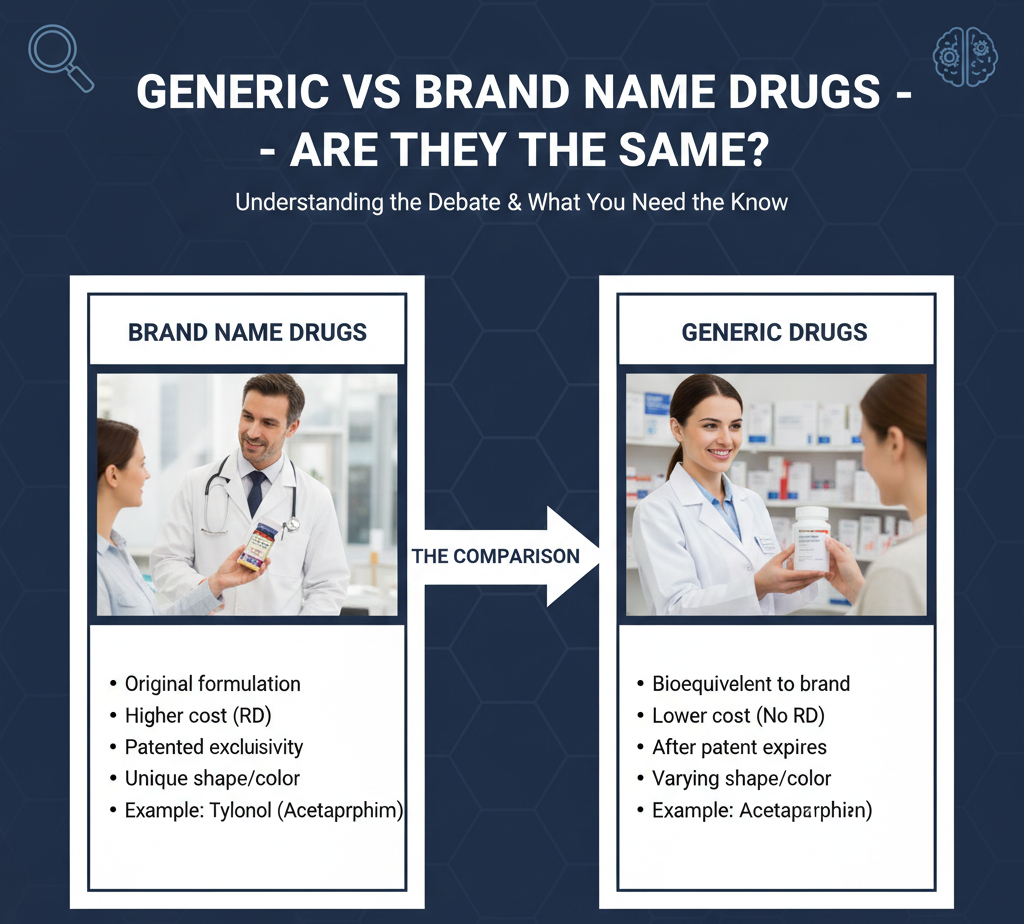
When picking up a prescription, many patients notice that pharmacists sometimes offer a generic version instead of a brand-name medication. This often raises an important question: are generic and brand name drugs really the same? Some people worry that lower cost means lower quality, while others wonder whether switching versions could affect their treatment.
Understanding how medications are developed, approved, and regulated can help clear up confusion. In reality, generic drugs are carefully reviewed to ensure they meet strict standards for safety, effectiveness, and quality. However, there are also some differences between generic and brand-name medications that patients should understand.
This guide explains how both types of drugs compare, how they are approved, and how to decide what is right for you with the help of your healthcare provider.
What Are Brand Name Drugs?
Brand name drugs are medications developed and marketed by pharmaceutical companies after years of research and clinical trials. These medications receive patent protection, allowing the manufacturer exclusive rights to sell the drug for a certain period.
During this time, the company markets the medication under a specific brand name. Brand-name drugs are often the first versions available when a new treatment is introduced.
Brand-name medications:
-
Are tested through extensive research and clinical trials
-
Receive approval from regulatory agencies such as the FDA in the United States
-
Are sold under a unique brand name chosen by the manufacturer
-
Tend to be more expensive during the patent period
After patent protection expires, other manufacturers can produce generic versions of the same medication.
What Are Generic Drugs?
Generic drugs contain the same active ingredients as brand-name medications and are designed to work in the same way. Once a drug’s patent expires, generic manufacturers can produce and sell equivalent versions.
Generic drugs must meet strict regulatory standards. In the United States, the Food and Drug Administration (FDA) requires generics to demonstrate that they are bioequivalent to the brand-name drug. This means they deliver the same amount of active ingredient into the bloodstream within a similar timeframe.
Generic medications typically:
-
Have the same active ingredients
-
Match the strength and dosage form
-
Provide similar safety and effectiveness
-
Cost less than brand-name versions
Because generic companies do not need to repeat expensive clinical trials already completed by the original manufacturer, they can offer medications at lower prices.
Are Generic Drugs as Effective as Brand Name Drugs?
A common concern among patients is whether generic drugs work as well as brand-name medications. Regulatory agencies require generics to demonstrate bioequivalence, meaning they perform in the body in nearly the same way.
Studies have shown that generic medications are generally just as effective for most patients. Doctors and pharmacists routinely prescribe and recommend generics as safe and reliable alternatives.
However, individual responses can vary. In certain cases, such as medications with a narrow therapeutic range, healthcare providers may prefer one specific version for consistency. If you notice any differences after switching medications, speak with your doctor or pharmacist.
Key Differences Between Generic and Brand Name Drugs
Although generic and brand-name medications share many similarities, some differences do exist.
Appearance
Generic drugs may differ in color, shape, or packaging due to trademark laws. These visual differences do not affect how the medication works.
Inactive Ingredients
Generic versions may contain different inactive ingredients such as fillers or dyes. While these ingredients do not change the drug’s effectiveness, some patients with allergies or sensitivities should review labels carefully.
Cost
Generic drugs are usually less expensive because manufacturers do not bear the initial research and development costs.
Brand Recognition
Brand-name drugs often have more marketing and public awareness, which can influence patient perception.
Why Generic Drugs Cost Less
Generic medications are often significantly more affordable than brand-name drugs. This cost difference is primarily due to reduced development expenses. Generic manufacturers rely on existing research that proves the drug’s safety and effectiveness, allowing them to focus on production and distribution.
Increased competition among generic manufacturers also helps drive down prices. Lower costs can improve medication access and encourage patients to stay consistent with treatment.
Safety and Quality Standards
Generic drugs must meet strict manufacturing standards set by regulatory authorities. Facilities producing generic medications are regularly inspected to ensure quality control and safety.
Regulators evaluate:
-
Active ingredient consistency
-
Manufacturing processes
-
Labeling accuracy
-
Packaging and storage conditions
-
Bioequivalence data
These requirements help ensure that patients receive medications that are safe and reliable.
When Brand Name Drugs May Be Preferred
While generic medications are suitable for most patients, there are situations where a brand-name drug might be recommended.
Examples include:
-
Patients with allergies to certain inactive ingredients
-
Medications with very specific dosing requirements
-
Cases where patients respond differently to generic formulations
-
Situations where consistency in appearance helps prevent confusion
Healthcare providers consider individual patient needs when deciding which version to prescribe.
Talking to Your Healthcare Provider About Medication Choices
If you are unsure whether to choose a generic or brand-name drug, open communication with your healthcare provider is essential. Discuss your medical history, previous medication experiences, and any concerns you may have.
Questions you might ask include:
-
Is a generic option available?
-
Will the generic version work the same for my condition?
-
Are there any differences I should watch for?
-
Should I stay consistent with one version?
Your pharmacist can also provide valuable information and answer questions about medication substitutions.
Common Myths About Generic Drugs
Many misconceptions exist about generic medications. Addressing these myths can help patients make informed decisions.
Myth: Generic drugs are lower quality
Fact: They must meet strict regulatory standards.
Myth: Generics are less effective
Fact: Bioequivalence testing ensures similar effectiveness.
Myth: Lower cost means lower safety
Fact: Reduced cost is due to lower development expenses, not reduced safety requirements.
Tips for Patients Switching Between Versions
If your pharmacy provides a generic version instead of a brand-name medication, consider these tips:
-
Compare the medication name and dosage
-
Ask your pharmacist to explain any differences
-
Monitor how you feel after switching
-
Keep a medication list for reference
-
Contact your healthcare provider if you notice unusual side effects
Being proactive helps ensure a smooth transition.
Conclusion
Generic and brand-name drugs are more alike than many people realize. Both must meet strict safety, quality, and effectiveness standards to be approved for patient use. For most individuals, generic medications offer a safe, reliable, and cost-effective alternative to brand-name drugs.
While minor differences such as appearance or inactive ingredients may exist, these variations rarely affect how the medication works. The best choice depends on your medical needs, personal preferences, and guidance from healthcare professionals.
Understanding the similarities and differences between generic and brand-name medications empowers you to make informed decisions about your treatment. When in doubt, consult your doctor or pharmacist—they are your best resources for ensuring safe and effective medication use.
FAQs
Is guilt a symptom of depression?
Yes, excessive or guilt is listed as a core symptom of Major Depressive Disorder in the DSM-5.
Can guilt cause depression?
While guilt alone doesn’t cause depression, chronic guilt can contribute to its development and worsen existing symptoms.
How do I stop feeling guilty when depressed?
Working with a therapist, practicing self-compassion, and potentially using medication can help manage guilt associated with depression.

Contact us
Have questions? Reach out and we’ll get back to you shortly.
Content
Guilt and Depression at a Glance
How Guilt and Depression Interact
Coping When You’re
Depressed and Feeling Guilty
Evidence-Based Treatments
When to Seek Help
How Loved Ones Can Help
FAQs