
Blog
How Weight and Age Affect Medication Response

Author:
Medical Writer
Saya Des Marais

Medical Reviewer:
Dr. Russell A. Barkley, Ph.D
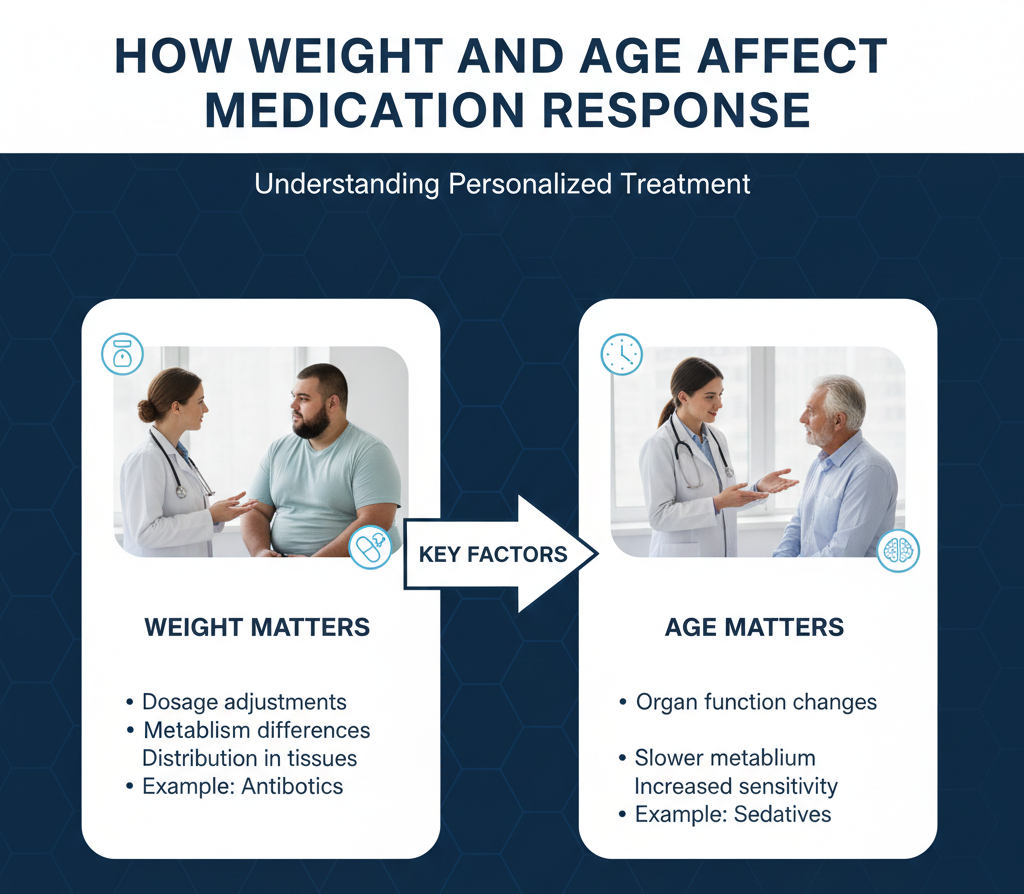
Medications are an essential part of managing health conditions, from chronic illnesses to acute infections. However, one-size-fits-all dosing does not apply to everyone. Two critical factors that significantly affect how medications work in the body are weight and age.
Understanding how these factors influence drug absorption, distribution, metabolism, and elimination helps explain why doctors often adjust dosages and closely monitor patients. This knowledge is especially important for older adults, children, and individuals with extreme body weight.
This article explores how weight and age affect medication response, why dosage adjustments are necessary, and what patients can do to ensure safe and effective treatment.
How Weight Affects Medication Response
Weight plays a key role in pharmacokinetics, which refers to how the body absorbs, distributes, metabolizes, and eliminates a drug.
1. Medication Dosage and Body Mass
-
Heavier individuals may require higher doses for the medication to reach therapeutic levels in the bloodstream.
-
Lower body weight can make standard doses too strong, increasing the risk of side effects or toxicity.
2. Distribution of Medications
-
Fat-soluble medications (e.g., certain anesthetics or anti-anxiety drugs) may accumulate in fatty tissues, affecting duration and intensity.
-
Water-soluble medications may distribute differently in patients with low body fat, leading to higher plasma concentrations.
3. Impact on Drug Metabolism
-
Enzymes that break down medications may function differently depending on body composition.
-
Obesity or very low weight can affect liver metabolism, altering how quickly medications are processed.
4. Special Considerations
-
Pediatric dosing often relies on weight-based calculations (mg/kg) to ensure safety.
-
Obese patients may need careful monitoring for medications that accumulate in fat or have narrow therapeutic windows (e.g., anticoagulants, chemotherapeutics).
How Age Affects Medication Response
Age affects medication response primarily due to changes in organ function, metabolism, and sensitivity.
1. Pediatric Patients
-
Children’s liver enzymes and kidney function are still developing, affecting drug metabolism and elimination.
-
Pediatric dosing is usually weight-based to ensure safety.
-
Children may be more sensitive to side effects or underdosed if adult dosages are incorrectly applied.
2. Older Adults
-
Age-related decline in kidney and liver function slows drug metabolism and excretion.
-
Older adults may experience increased sensitivity to medications, especially sedatives, painkillers, and blood pressure medications.
-
Polypharmacy (taking multiple medications) increases the risk of drug interactions and side effects.
3. Changes in Body Composition
-
Aging often results in increased fat and decreased muscle mass, affecting drug distribution.
-
Fat-soluble medications may linger longer, increasing risk of prolonged effects.
-
Water-soluble drugs may have higher blood concentrations, increasing the risk of toxicity.
4. Altered Pharmacodynamics
-
Age can change how medications affect the receptors in the body, altering their effectiveness.
-
Older adults may respond differently to pain medications, blood pressure drugs, and sedatives, requiring dose adjustments.
Combining Weight and Age Factors
Weight and age often interact, creating additional considerations:
-
A low-weight older adult may require much lower doses to avoid side effects.
-
An obese older adult may need careful monitoring to avoid overaccumulation of fat-soluble medications.
-
Pediatric patients with higher body weight may need higher doses, but dosing must be carefully calculated to avoid toxicity.
Doctors must consider both factors along with overall health, kidney and liver function, and other medications to determine the safest dose.
Why Individualized Prescriptions Are Important
-
Standard dosages listed on medication labels are usually based on average adult populations.
-
Individual factors like weight, age, sex, organ function, and genetics can significantly alter how a drug works.
-
Personalized dosing reduces the risk of side effects, overdose, and ineffective treatment.
Practical Tips for Patients
1. Provide Accurate Information
-
Tell your doctor your current weight and age
-
Share any changes in weight since your last appointment
2. Keep Track of Organ Function
-
Monitor kidney and liver health, especially if taking medications long-term
-
Blood tests may be necessary to adjust dosage safely
3. Follow Prescribed Dosages Closely
-
Do not self-adjust doses based on weight or age assumptions
-
Always discuss concerns with your healthcare provider
4. Report Side Effects Promptly
-
Note any unusual reactions and inform your doctor
-
Dose adjustments or alternative medications may be needed
5. Be Mindful of Lifestyle Changes
-
Weight gain, loss, or dietary changes can affect medication effectiveness
-
Regular follow-ups ensure dosing remains appropriate over time
Common Medications Affected by Weight and Age
| Medication Type | Weight Considerations | Age Considerations |
|---|---|---|
| Painkillers (opioids, NSAIDs) | Higher weight may require higher doses | Older adults may be more sensitive; risk of sedation and falls |
| Blood pressure medications | Obese patients may require adjustments | Older adults prone to hypotension; monitor closely |
| Antidepressants | Body composition affects metabolism | Age-related changes in liver function impact dosage |
| Diabetes medications | Weight affects insulin sensitivity | Kidney function declines with age; risk of hypoglycemia |
| Sedatives (benzodiazepines) | Fat-soluble drugs linger in obese patients | Older adults more sensitive; risk of drowsiness and falls |
Key Takeaways
-
Weight and age are critical factors influencing medication response
-
Both affect absorption, distribution, metabolism, and elimination
-
Pediatric and elderly patients are particularly vulnerable to incorrect dosing and side effects
-
Personalized prescriptions help maximize effectiveness and minimize risks
-
Patients should provide accurate weight, age, and health information, follow dosing instructions, and report side effects promptly
Conclusion
Medications are most effective and safe when dosing is individualized, taking into account weight, age, organ function, and lifestyle. Understanding how your body may respond allows doctors to make informed decisions, optimizing treatment while reducing the risk of side effects or overdose.
Whether you are a parent managing your child’s medications, an adult adjusting to body weight changes, or a senior with multiple prescriptions, open communication with your healthcare provider and careful adherence to prescribed doses are essential. Weight and age matter—and so does sharing this information with your doctor.
FAQs
Is guilt a symptom of depression?
Yes, excessive or guilt is listed as a core symptom of Major Depressive Disorder in the DSM-5.
Can guilt cause depression?
While guilt alone doesn’t cause depression, chronic guilt can contribute to its development and worsen existing symptoms.
How do I stop feeling guilty when depressed?
Working with a therapist, practicing self-compassion, and potentially using medication can help manage guilt associated with depression.

Contact us
Have questions? Reach out and we’ll get back to you shortly.
Content
Guilt and Depression at a Glance
How Guilt and Depression Interact
Coping When You’re
Depressed and Feeling Guilty
Evidence-Based Treatments
When to Seek Help
How Loved Ones Can Help
FAQs