
Blog
Why Sharing Prescription Medications Is Dangerous

Author:
Medical Writer
Saya Des Marais

Medical Reviewer:
Dr. Russell A. Barkley, Ph.D
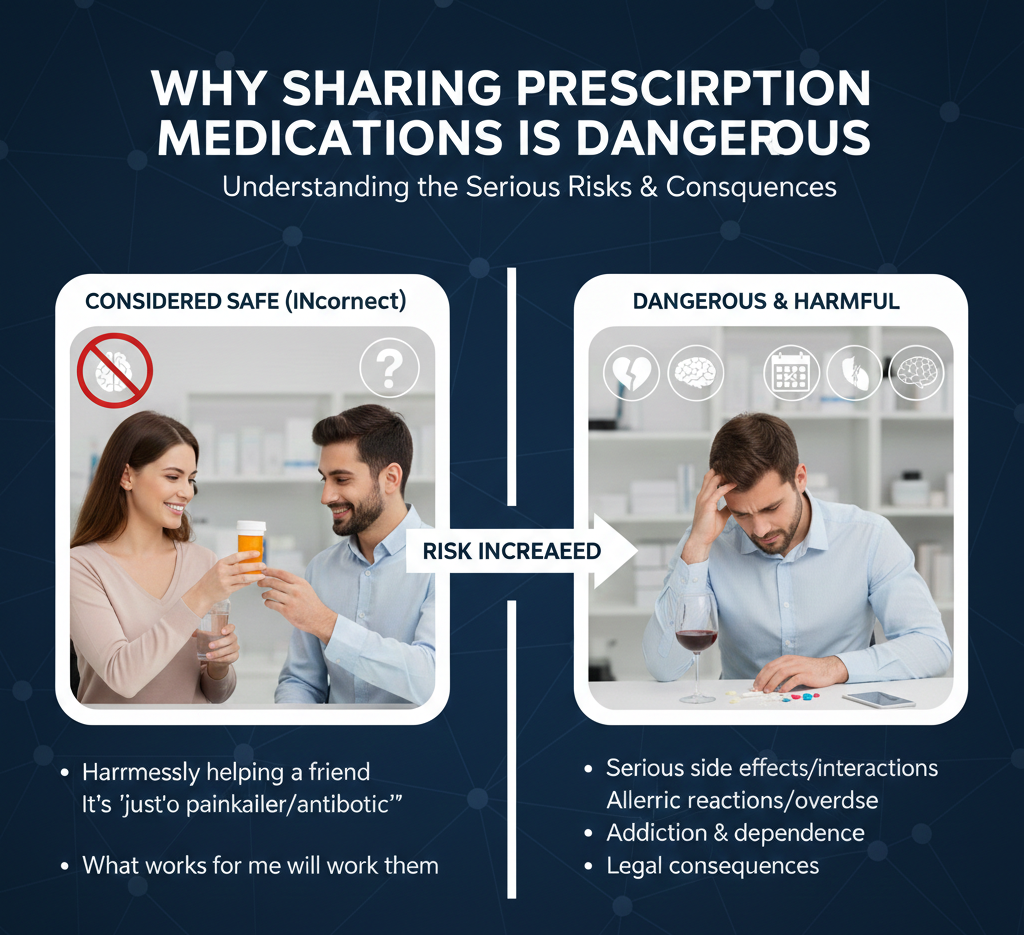
Prescription medications are prescribed by healthcare professionals to treat specific conditions for individual patients. However, sharing these medications with friends, family, or others is a common but dangerous practice. Many people believe sharing a few pills won’t cause harm, but in reality, it poses serious health, legal, and safety risks.
Whether it’s painkillers, antibiotics, anxiety medications, or stimulants, sharing prescription drugs can lead to unexpected side effects, interactions, addiction, and even legal consequences. Understanding the dangers of medication sharing helps prevent harm and promotes responsible drug use.
This article explores why sharing prescription medications is dangerous, the associated risks, and strategies to safely manage medications.
How Prescription Medications Are Individualized
Every prescription is tailored to an individual’s:
-
Medical condition: Medications are chosen based on diagnosis and severity
-
Age and weight: Dosages often vary depending on body size
-
Medical history: Past illnesses, allergies, or pre-existing conditions impact drug selection
-
Other medications: Prescription decisions consider potential drug interactions
-
Lifestyle and habits: Diet, alcohol use, and exercise can affect how medications work
Sharing medications bypasses these critical factors, which can lead to dangerous consequences.
Health Risks of Sharing Medications
1. Adverse Reactions and Side Effects
-
Medications that are safe for one person may cause serious reactions in another
-
Common side effects from shared medications include:
-
Nausea, vomiting, or diarrhea
-
Dizziness, fatigue, or confusion
-
Allergic reactions, including rashes, swelling, or anaphylaxis
-
2. Drug Interactions
-
Combining medications without professional guidance can be life-threatening
-
For example:
-
Painkillers and alcohol can depress the respiratory system
-
Certain antidepressants with painkillers or sedatives can trigger dangerous blood pressure changes
-
3. Overdose Risk
-
Taking medication without knowing the proper dosage increases the risk of overdose
-
Prescription opioids, sedatives, and stimulants are particularly dangerous when shared
4. Ineffectiveness of Treatment
-
Medications shared with others may not be taken as prescribed, reducing their effectiveness
-
Skipping doses or taking the wrong dose can worsen the original patient’s condition
5. Addiction and Dependence
-
Sharing medications like opioids, benzodiazepines, or stimulants increases the risk of dependence or addiction
-
Unmonitored use can lead to tolerance, withdrawal, or compulsive use
Legal Consequences of Sharing Prescription Drugs
Sharing prescription medications is not only dangerous medically but also illegal in the United States:
-
Federal law prohibits distributing or selling prescription drugs to anyone for whom they were not prescribed
-
Violations can result in:
-
Fines
-
Criminal charges
-
Jail time
-
-
Certain medications, like controlled substances (opioids, benzodiazepines, stimulants), carry stricter penalties
Healthcare providers and patients must understand that even a single shared dose can have legal consequences.
Common Medications Often Shared
While all medications should be used only by the person for whom they are prescribed, some are frequently shared:
-
Painkillers
-
Opioids (oxycodone, hydrocodone, morphine)
-
Non-opioids (acetaminophen, NSAIDs)
-
-
Anti-Anxiety Medications
-
Benzodiazepines (Xanax, Valium, Ativan)
-
-
Stimulants
-
ADHD medications like Adderall or Ritalin
-
-
Antibiotics
-
Amoxicillin, doxycycline, etc.
-
-
Sleep Medications
-
Zolpidem (Ambien), eszopiclone (Lunesta)
-
Even occasional sharing can result in serious health consequences or ineffective treatment.
Why People Share Medications
Understanding why people share medications helps address the behavior:
-
Perceived harmlessness: People assume a small dose won’t harm
-
Accessibility: Medications are often available at home
-
Desire to help: Sharing painkillers or anti-anxiety meds seems compassionate
-
Peer pressure or social norms: Especially among teens and young adults
While intentions may be good, the risks far outweigh the benefits.
Safe Practices for Managing Prescription Medications
1. Take Medications Only as Prescribed
-
Follow dose, timing, and duration recommendations
-
Do not self-adjust or share medications with others
2. Educate Family and Friends
-
Explain the dangers of sharing medications
-
Encourage others to see a healthcare provider for their own prescriptions
3. Store Medications Safely
-
Keep medications in a locked cabinet or secure storage
-
Use childproof containers
-
Avoid leaving medications in plain sight
4. Dispose of Unused Medications Properly
-
Use take-back programs or authorized disposal sites
-
Never give leftover medications to others
-
Follow local regulations for safe disposal
5. Maintain Open Communication With Healthcare Providers
-
Discuss side effects, missed doses, or concerns instead of seeking medications from others
-
Providers can suggest safe alternatives or adjustments
The Role of Awareness and Education
-
Many cases of medication sharing can be prevented through awareness campaigns
-
Schools, workplaces, and community centers can educate about risks of prescription drug misuse
-
Social support networks can encourage responsible medication use
Key Takeaways
-
Prescription medications are individualized for specific patients
-
Sharing medications is dangerous and illegal
-
Risks include:
-
Adverse reactions
-
Drug interactions
-
Overdose
-
Ineffectiveness of treatment
-
Addiction and dependence
-
-
Safe practices include:
-
Taking medications as prescribed
-
Proper storage and disposal
-
Educating others about the risks
-
Communicating openly with healthcare providers
-
Conclusion
Sharing prescription medications may seem harmless or even helpful, but the risks far outweigh any potential benefit. Medications are prescribed based on individual health conditions, age, medical history, and other medications—factors that make sharing dangerous.
By avoiding medication sharing, storing prescriptions safely, disposing of unused drugs responsibly, and following healthcare guidance, patients can protect themselves and others from harm. Awareness, education, and responsible practices are key to preventing medication misuse and ensuring safe, effective treatment for all.
FAQs
Is guilt a symptom of depression?
Yes, excessive or guilt is listed as a core symptom of Major Depressive Disorder in the DSM-5.
Can guilt cause depression?
While guilt alone doesn’t cause depression, chronic guilt can contribute to its development and worsen existing symptoms.
How do I stop feeling guilty when depressed?
Working with a therapist, practicing self-compassion, and potentially using medication can help manage guilt associated with depression.

Contact us
Have questions? Reach out and we’ll get back to you shortly.
Content
Guilt and Depression at a Glance
How Guilt and Depression Interact
Coping When You’re
Depressed and Feeling Guilty
Evidence-Based Treatments
When to Seek Help
How Loved Ones Can Help
FAQs