Blog
What Is Controlled Substance Classification?

Author:
Medical Writer
Saya Des Marais

Medical Reviewer:
Dr. Russell A. Barkley, Ph.D
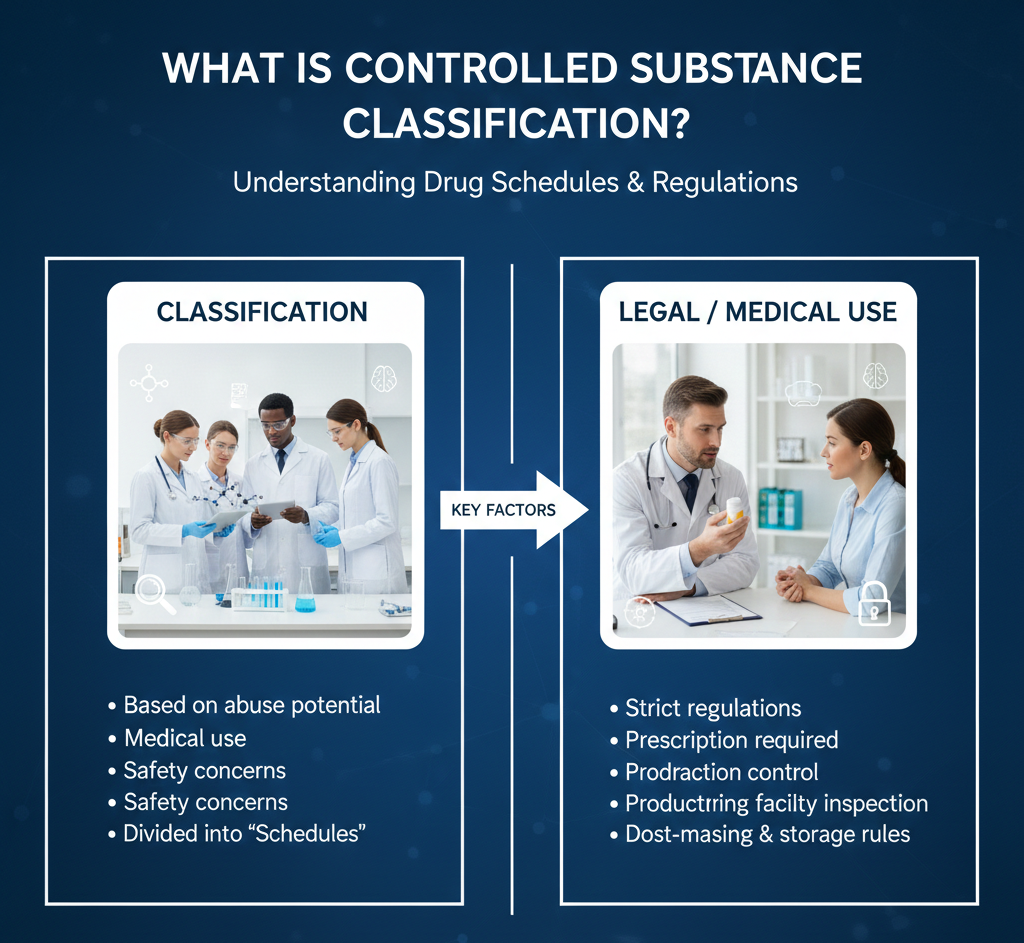
Prescription medications save lives, relieve pain, and manage chronic conditions. However, certain medications carry a higher risk of misuse, dependence, or addiction. To manage these risks, the United States uses a controlled substance classification system, which categorizes drugs based on their potential for abuse and accepted medical use.
Understanding controlled substance classification is critical for patients, healthcare providers, and anyone who handles or prescribes medications. It helps ensure safe use, legal compliance, and responsible prescribing.
This article explains what controlled substance classification is, the different schedules, examples of medications in each category, and why these regulations exist.
What Is a Controlled Substance?
A controlled substance is a drug or chemical regulated by the Drug Enforcement Administration (DEA) because of its potential for abuse or addiction.
Controlled substances include:
-
Prescription pain relievers (opioids)
-
Certain sedatives and tranquilizers
-
Stimulants used for ADHD
-
Some cough medications containing codeine
The DEA oversees their classification, prescribing, storage, and distribution to protect public health.
Why Controlled Substances Are Classified
Controlled substance classification exists to:
-
Minimize Abuse and Addiction
Drugs with high abuse potential can lead to dependence, overdose, or illegal use. -
Ensure Safe Medical Use
Classification helps healthcare providers prescribe drugs appropriately and monitor patients. -
Provide Legal Framework
Regulations ensure legal compliance for prescribing, dispensing, and storing medications. -
Guide Public Health Policy
Classification informs education campaigns, treatment programs, and enforcement strategies.
Controlled Substance Schedules
The DEA classifies controlled substances into five schedules (Schedule I–V) based on:
-
Potential for abuse
-
Medical use in the United States
-
Risk of dependence
Schedule I: No Accepted Medical Use, High Abuse Potential
-
Examples: Heroin, LSD, MDMA (Ecstasy), Marijuana (federally)
-
Key Points:
-
Not legally prescribed in the US
-
High potential for abuse
-
Used only in limited research settings
-
Schedule II: High Abuse Potential, Accepted Medical Use
-
Examples: Oxycodone, Hydrocodone, Morphine, Amphetamine (Adderall), Methadone
-
Key Points:
-
High risk of dependence or addiction
-
Prescriptions cannot be refilled; a new prescription is required for each supply
-
Strict prescribing and record-keeping rules
-
Schedule III: Moderate Abuse Potential
-
Examples: Buprenorphine, Ketamine, Certain combination pain medications (e.g., acetaminophen with codeine)
-
Key Points:
-
Less potential for abuse than Schedule II
-
Can lead to moderate or low physical dependence, or high psychological dependence
-
Prescriptions may allow limited refills
-
Schedule IV: Low Abuse Potential
-
Examples: Diazepam (Valium), Alprazolam (Xanax), Lorazepam (Ativan), Tramadol
-
Key Points:
-
Lower risk of abuse and dependence
-
Often prescribed for anxiety, sleep disorders, or pain
-
Refills permitted but regulated
-
Schedule V: Lowest Abuse Potential
-
Examples: Cough preparations with small amounts of codeine, Certain anti-diarrheal medications containing opioids
-
Key Points:
-
Lowest risk of dependence
-
Often available in smaller doses
-
May be available OTC in some cases, but often requires a prescription
-
How Controlled Substance Classification Affects Prescribing
Healthcare providers must follow strict rules when prescribing controlled substances:
-
Verify medical necessity
-
Limit prescription quantity and duration
-
Monitor for signs of misuse or addiction
-
Keep accurate records for DEA compliance
Pharmacists also follow strict dispensing protocols to prevent diversion or illegal use.
Risks Associated with Controlled Substances
Controlled substances can provide significant medical benefits, but misuse or improper use carries risks:
-
Addiction or dependence
-
Overdose
-
Legal consequences for misuse or diversion
-
Interactions with other medications or alcohol
Education, monitoring, and responsible prescribing reduce these risks.
Storage and Legal Compliance
Controlled substances must be stored securely to prevent theft or misuse. Guidelines include:
-
Locked cabinets or safes in clinics and pharmacies
-
Limited access to authorized personnel
-
Accurate record-keeping for inventory and prescriptions
Violating DEA storage or record-keeping regulations can result in fines, loss of license, or criminal charges.
Misconceptions About Controlled Substances
1. Prescription Means Safe
Even prescribed controlled substances can be dangerous if used incorrectly. Proper dosage, timing, and monitoring are essential.
2. Only Opioids Are Controlled Substances
Controlled substances include sedatives, stimulants, and even some cough medicines, not just pain relievers.
3. Schedule IV or V Drugs Are Risk-Free
Lower schedules indicate lower abuse potential, not zero risk. Dependence or misuse can still occur.
Patient Safety Tips for Controlled Substances
Patients prescribed controlled substances should:
-
Follow the prescription exactly
-
Avoid sharing medications
-
Store drugs securely
-
Dispose of unused medication safely
-
Report side effects or concerns to a healthcare provider
Being informed about the classification and risks ensures safe use.
The Role of Education in Controlled Substance Safety
Education is key for patients, caregivers, and healthcare providers:
-
Patients learn about proper use and risks
-
Providers stay informed about regulatory updates and safe prescribing
-
Pharmacists help prevent diversion and misuse
Public awareness reduces misuse and improves patient outcomes.
Conclusion
Controlled substance classification is a critical component of drug safety and public health in the United States. By categorizing medications based on their abuse potential and medical utility, the DEA ensures that prescription drugs provide benefits while minimizing risks.
Patients and healthcare providers both play essential roles in maintaining safe use. When controlled substances are prescribed, stored, and monitored responsibly, they can improve health outcomes safely and legally.
Understanding the classification system empowers patients to use medications responsibly, comply with regulations, and reduce the risk of addiction or misuse.
FAQs
Is guilt a symptom of depression?
Yes, excessive or guilt is listed as a core symptom of Major Depressive Disorder in the DSM-5.
Can guilt cause depression?
While guilt alone doesn’t cause depression, chronic guilt can contribute to its development and worsen existing symptoms.
How do I stop feeling guilty when depressed?
Working with a therapist, practicing self-compassion, and potentially using medication can help manage guilt associated with depression.

Contact us
Have questions? Reach out and we’ll get back to you shortly.
Content
Guilt and Depression at a Glance
How Guilt and Depression Interact
Coping When You’re
Depressed and Feeling Guilty
Evidence-Based Treatments
When to Seek Help
How Loved Ones Can Help
FAQs