
Blog
Opioids vs Non-Opioid Pain Management Options

Author:
Medical Writer
Saya Des Marais

Medical Reviewer:
Dr. Russell A. Barkley, Ph.D
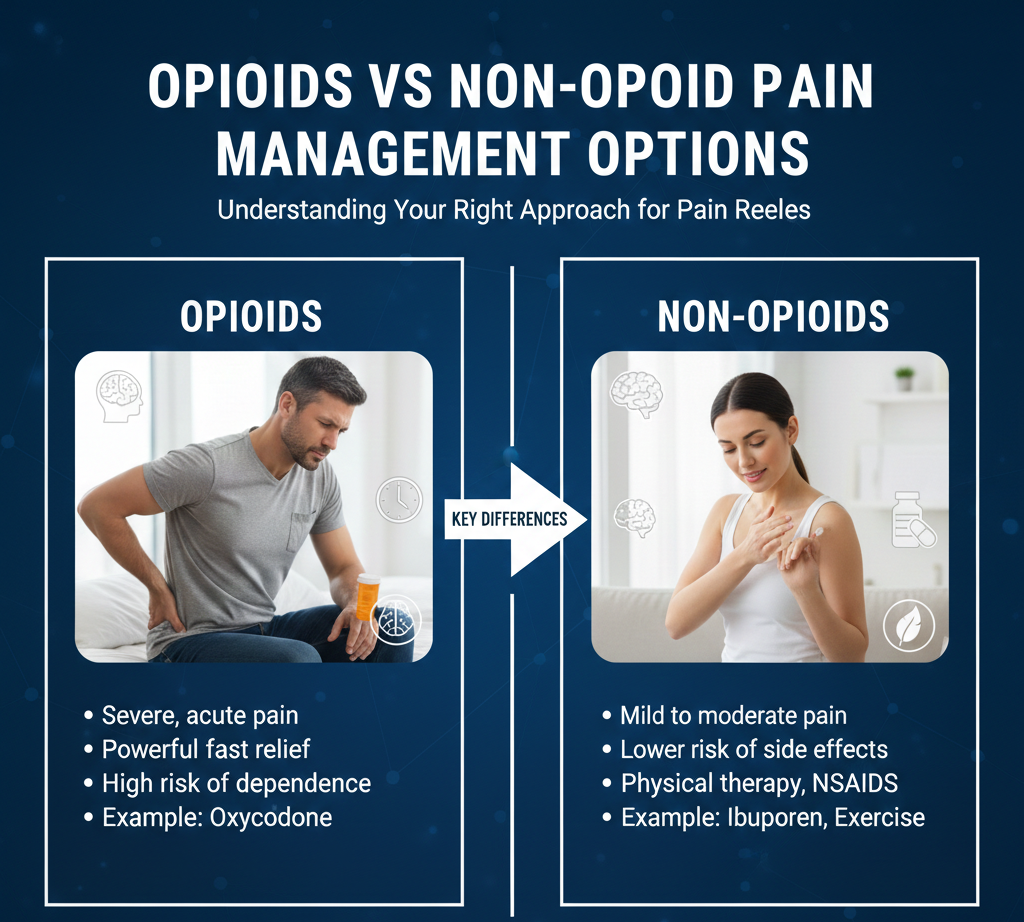
Pain is a complex medical condition that affects millions of people in the United States each year. Whether caused by injury, surgery, chronic illness, or nerve damage, pain can significantly interfere with daily life and overall well-being. Over the years, pain management has relied heavily on opioid medications, but growing awareness of their risks has increased interest in non-opioid pain management options.
Understanding the differences between opioids and non-opioid treatments is essential for making informed decisions about pain care. Each approach has specific uses, benefits, and risks, and the most effective treatment often depends on the type and severity of pain.
This article explores how opioids and non-opioid pain management options compare, when each is used, and how healthcare providers decide on the best approach.
Understanding Pain and Its Treatment
Pain can be categorized in several ways:
-
Acute pain: Short-term pain caused by injury, surgery, or illness
-
Chronic pain: Pain lasting longer than three months
-
Nociceptive pain: Pain from tissue damage or inflammation
-
Neuropathic pain: Pain caused by nerve damage
-
Localized vs widespread pain
The underlying cause and duration of pain strongly influence treatment decisions.
What Are Opioids?
Opioids are a class of prescription medications derived from natural or synthetic compounds that act on opioid receptors in the brain and spinal cord. They are commonly used for moderate to severe pain, especially when other treatments are insufficient.
Common Examples of Opioids
-
Oxycodone
-
Hydrocodone
-
Morphine
-
Fentanyl
-
Codeine
Opioids are typically prescribed for short-term use after surgery, serious injury, or for certain chronic pain conditions under close supervision.
How Opioids Work
Opioids reduce pain by binding to opioid receptors in the nervous system. This interaction:
-
Blocks pain signals from reaching the brain
-
Alters the brain’s perception of pain
-
Produces feelings of relaxation or euphoria
While effective, these effects also contribute to the risk of misuse and dependence.
Benefits of Opioid Pain Management
Strong Pain Relief
Opioids are among the most powerful pain relievers available, making them useful for severe or acute pain.
Rapid Onset
Many opioids work quickly, providing relief when pain needs immediate control.
Short-Term Effectiveness
When used as prescribed for short durations, opioids can be effective and appropriate.
Risks and Limitations of Opioids
Despite their effectiveness, opioids carry significant risks.
Dependence and Addiction
Long-term use can lead to physical dependence and opioid use disorder.
Tolerance
Over time, higher doses may be required to achieve the same level of pain relief.
Side Effects
Common side effects include:
-
Drowsiness
-
Constipation
-
Nausea
-
Respiratory depression
Overdose Risk
High doses or misuse can suppress breathing and become life-threatening.
What Are Non-Opioid Pain Management Options?
Non-opioid pain management includes medications and therapies that relieve pain without activating opioid receptors. These options are often recommended as first-line treatments.
Types of Non-Opioid Pain Management
-
Nonsteroidal anti-inflammatory drugs (NSAIDs)
-
Acetaminophen
-
Antidepressants for nerve pain
-
Anticonvulsants
-
Muscle relaxants
-
Topical pain treatments
-
Physical therapy
-
Behavioral and lifestyle interventions
How Non-Opioid Treatments Work
Non-opioid treatments address pain through various mechanisms, such as:
-
Reducing inflammation
-
Blocking pain signal transmission
-
Relaxing muscles
-
Modulating nerve activity
-
Improving physical function
Unlike opioids, many non-opioid options focus on treating the underlying cause of pain.
Benefits of Non-Opioid Pain Management
Lower Risk of Addiction
Non-opioid treatments do not carry the same risk of dependence as opioids.
Suitable for Long-Term Use
Many non-opioid options are safer for chronic pain management.
Treats Underlying Conditions
Some therapies target inflammation, muscle tension, or nerve dysfunction directly.
Combination-Friendly
Non-opioid treatments can often be combined for better results.
Limitations of Non-Opioid Options
Slower Onset
Some treatments take time to show benefits.
Variable Effectiveness
Not all non-opioid options work for every type of pain.
Requires Consistency
Lifestyle and physical therapies require ongoing commitment.
Opioids vs Non-Opioid Pain Management: Key Differences
Strength of Pain Relief
-
Opioids: Strong, immediate relief
-
Non-opioids: Mild to moderate relief, often gradual
Safety Profile
-
Opioids: Higher risk of dependence and overdose
-
Non-opioids: Generally safer with fewer severe risks
Long-Term Use
-
Opioids: Limited by tolerance and dependence
-
Non-opioids: Better suited for long-term management
Best Use Cases
-
Opioids: Severe acute pain, cancer pain, end-of-life care
-
Non-opioids: Chronic pain, mild to moderate pain, inflammation
When Doctors Choose Opioids
Healthcare providers may consider opioids when:
-
Pain is severe and acute
-
Other treatments have failed
-
Pain significantly limits function
-
Short-term pain control is required
Prescriptions are typically accompanied by strict monitoring and clear usage guidelines.
When Non-Opioid Options Are Preferred
Non-opioid pain management is often recommended when:
-
Pain is chronic or recurring
-
Risk factors for addiction exist
-
Inflammation or nerve pain is present
-
Long-term treatment is required
Guidelines increasingly emphasize non-opioid approaches as first-line therapy.
Combination Pain Management Approaches
In many cases, the most effective strategy involves combining multiple non-opioid treatments or using non-opioids alongside short-term opioid therapy.
Benefits of combination approaches include:
-
Lower opioid doses
-
Improved pain control
-
Reduced side effects
-
Better functional outcomes
Role of Lifestyle and Behavioral Therapies
Non-medication approaches play a crucial role in pain management, including:
-
Exercise and physical therapy
-
Cognitive behavioral therapy
-
Stress management
-
Sleep improvement
-
Weight management
These strategies can significantly reduce pain intensity and improve quality of life.
Safety Considerations
To manage pain safely:
-
Use medications only as prescribed
-
Avoid mixing medications without guidance
-
Report side effects promptly
-
Reassess pain regularly with a healthcare provider
Responsible pain management prioritizes safety alongside relief.
Conclusion
Both opioids and non-opioid pain management options have important roles in modern pain care. Opioids provide powerful relief for severe, short-term pain but carry significant risks, especially with long-term use. Non-opioid options offer safer, more sustainable solutions for many types of pain, particularly chronic conditions.
The best pain management plan is individualized, balancing effectiveness, safety, and quality of life. With careful evaluation and professional guidance, patients can achieve meaningful pain relief while minimizing risks.
FAQs
Is guilt a symptom of depression?
Yes, excessive or guilt is listed as a core symptom of Major Depressive Disorder in the DSM-5.
Can guilt cause depression?
While guilt alone doesn’t cause depression, chronic guilt can contribute to its development and worsen existing symptoms.
How do I stop feeling guilty when depressed?
Working with a therapist, practicing self-compassion, and potentially using medication can help manage guilt associated with depression.

Contact us
Have questions? Reach out and we’ll get back to you shortly.
Content
Guilt and Depression at a Glance
How Guilt and Depression Interact
Coping When You’re
Depressed and Feeling Guilty
Evidence-Based Treatments
When to Seek Help
How Loved Ones Can Help
FAQs