
Blog
Short-Acting vs Long-Acting Anxiety Medications

Author:
Medical Writer
Saya Des Marais

Medical Reviewer:
Dr. Russell A. Barkley, Ph.D
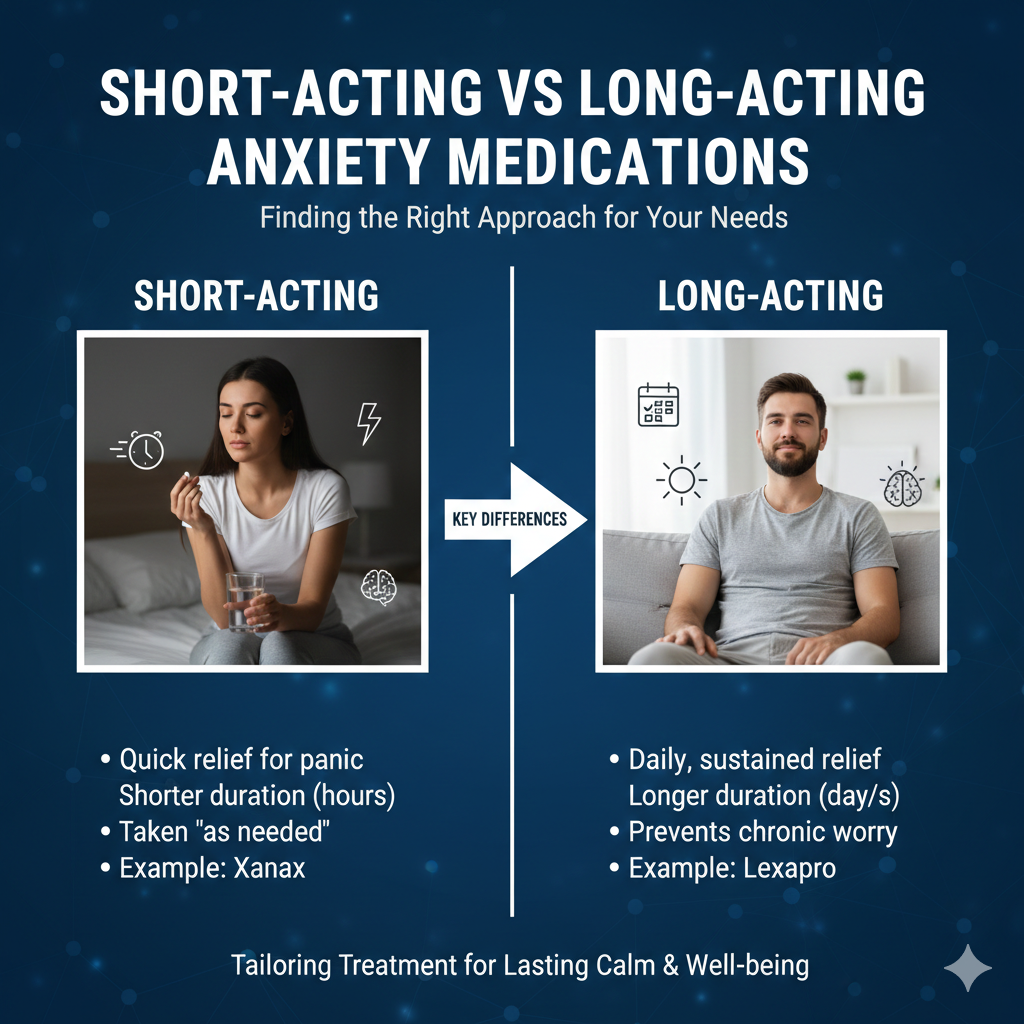
Anxiety disorders affect millions of adults in the United States and can range from occasional panic attacks to persistent, daily anxiety that interferes with work, relationships, and overall quality of life. Medication is often part of an effective treatment plan, especially when symptoms are severe or resistant to non-drug approaches.
Anxiety medications are commonly described as short-acting or long-acting, referring to how quickly they work and how long their effects last in the body. Understanding this distinction is important because it influences symptom relief, side effects, safety, and long-term treatment outcomes.
This article explains the differences between short-acting and long-acting anxiety medications, how they work, when each type is prescribed, and what doctors consider when choosing the most appropriate option.
Understanding Anxiety Treatment Goals
The primary goals of anxiety treatment are to:
-
Reduce the intensity and frequency of symptoms
-
Improve daily functioning
-
Prevent relapse or worsening of anxiety
-
Minimize medication side effects and risks
Because anxiety can be episodic or chronic, treatment strategies are tailored to symptom patterns rather than using a one-size-fits-all approach.
What Are Short-Acting Anxiety Medications?
Short-acting anxiety medications provide rapid relief of anxiety symptoms but remain in the body for a relatively short time.
Common Short-Acting Anxiety Medications
-
Alprazolam
-
Lorazepam
-
Certain immediate-release formulations of anxiety medications
Most short-acting anxiety medications belong to the benzodiazepine class.
How Short-Acting Medications Work
Short-acting anxiety medications enhance the activity of gamma-aminobutyric acid (GABA), a neurotransmitter that slows brain activity and promotes calmness.
Key characteristics include:
-
Rapid onset of action
-
Strong anxiolytic (anti-anxiety) effects
-
Short duration of symptom relief
They are especially effective for acute anxiety episodes and panic attacks.
Benefits of Short-Acting Anxiety Medications
Short-acting medications offer several advantages:
-
Fast relief during panic or intense anxiety
-
Useful for situational anxiety (e.g., flying, medical procedures)
-
Can be taken on an as-needed basis
-
Helpful while longer-term treatments take effect
Because they work quickly, they are often used during anxiety emergencies.
Limitations and Risks of Short-Acting Medications
Despite their effectiveness, short-acting anxiety medications have important drawbacks.
Rebound Anxiety
As the medication wears off, anxiety symptoms may return quickly, sometimes more intensely.
Dependence and Tolerance
-
The brain may adapt to frequent use
-
Higher doses may be needed over time
-
Risk of withdrawal symptoms if stopped abruptly
Sedation and Cognitive Effects
-
Drowsiness
-
Impaired concentration
-
Slower reaction times
Due to these risks, short-acting medications are generally prescribed for short-term or occasional use.
What Are Long-Acting Anxiety Medications?
Long-acting anxiety medications provide sustained symptom control over a longer period, reducing fluctuations in anxiety levels.
Common Long-Acting Anxiety Medications
-
Clonazepam
-
Diazepam
-
Selective serotonin reuptake inhibitors (SSRIs)
-
Serotonin-norepinephrine reuptake inhibitors (SNRIs)
These medications are often used for ongoing anxiety management.
How Long-Acting Medications Work
Long-acting medications may work in different ways:
-
Long-acting benzodiazepines provide extended GABA enhancement
-
SSRIs and SNRIs regulate neurotransmitters involved in mood and anxiety over time
Their effects build gradually or remain steady, helping prevent anxiety spikes.
Benefits of Long-Acting Anxiety Medications
Long-acting medications offer several advantages:
-
More consistent symptom control
-
Reduced need for frequent dosing
-
Lower risk of rebound anxiety
-
Better suited for chronic anxiety disorders
SSRIs and SNRIs, in particular, are considered first-line treatments for long-term anxiety.
Limitations and Risks of Long-Acting Medications
Delayed Onset
-
SSRIs and SNRIs may take weeks to become fully effective
Side Effects
-
Gastrointestinal upset
-
Sleep disturbances
-
Sexual dysfunction
-
Initial increase in anxiety (temporary)
Benzodiazepine Risks
Long-acting benzodiazepines still carry risks of dependence and sedation, especially with prolonged use.
Short-Acting vs Long-Acting: Key Differences
Speed of Relief
-
Short-acting: Rapid symptom relief
-
Long-acting: Gradual or sustained control
Duration of Effect
-
Short-acting: Hours
-
Long-acting: Many hours to days
Use Case
-
Short-acting: Panic attacks, acute anxiety
-
Long-acting: Chronic anxiety disorders
Risk Profile
-
Short-acting: Higher rebound and misuse risk
-
Long-acting: Better stability but slower onset
How Doctors Choose Between Short- and Long-Acting Medications
Healthcare providers consider several factors:
Type of Anxiety
-
Panic disorder may benefit from short-acting medications initially
-
Generalized anxiety disorder often requires long-acting treatment
Frequency of Symptoms
-
Occasional symptoms may warrant as-needed medication
-
Daily symptoms usually require maintenance therapy
Patient History
-
Past medication response
-
Substance use history
-
Age and medical conditions
Safety Considerations
Doctors aim to minimize dependence while providing effective relief.
Combined Treatment Strategies
In many cases, doctors use both medication types strategically.
-
Short-acting medications manage acute symptoms
-
Long-acting medications provide baseline control
As long-acting medications become effective, short-acting medications are often tapered.
Role of Therapy and Lifestyle Changes
Medication works best when combined with non-drug treatments:
-
Cognitive behavioral therapy (CBT)
-
Stress management techniques
-
Regular physical activity
-
Sleep improvement strategies
These approaches reduce reliance on medication and improve long-term outcomes.
When to Reevaluate Anxiety Treatment
Patients should consult their healthcare provider if:
-
Anxiety remains uncontrolled
-
Side effects interfere with daily life
-
Medication effectiveness decreases
-
There is concern about dependence
Treatment plans should evolve as symptoms change.
Conclusion
Short-acting and long-acting anxiety medications serve different but complementary roles in anxiety treatment. Short-acting medications provide quick relief, while long-acting medications offer steady, long-term control.
Understanding these differences helps patients and healthcare providers choose safer, more effective treatment strategies. With appropriate medical supervision and a comprehensive care plan, anxiety can be managed in a way that supports long-term well-being.
FAQs
Is guilt a symptom of depression?
Yes, excessive or guilt is listed as a core symptom of Major Depressive Disorder in the DSM-5.
Can guilt cause depression?
While guilt alone doesn’t cause depression, chronic guilt can contribute to its development and worsen existing symptoms.
How do I stop feeling guilty when depressed?
Working with a therapist, practicing self-compassion, and potentially using medication can help manage guilt associated with depression.

Contact us
Have questions? Reach out and we’ll get back to you shortly.
Content
Guilt and Depression at a Glance
How Guilt and Depression Interact
Coping When You’re
Depressed and Feeling Guilty
Evidence-Based Treatments
When to Seek Help
How Loved Ones Can Help
FAQs