
Blog
Muscle Relaxants vs Painkillers: What’s the Difference?

Author:
Medical Writer
Saya Des Marais

Medical Reviewer:
Dr. Russell A. Barkley, Ph.D
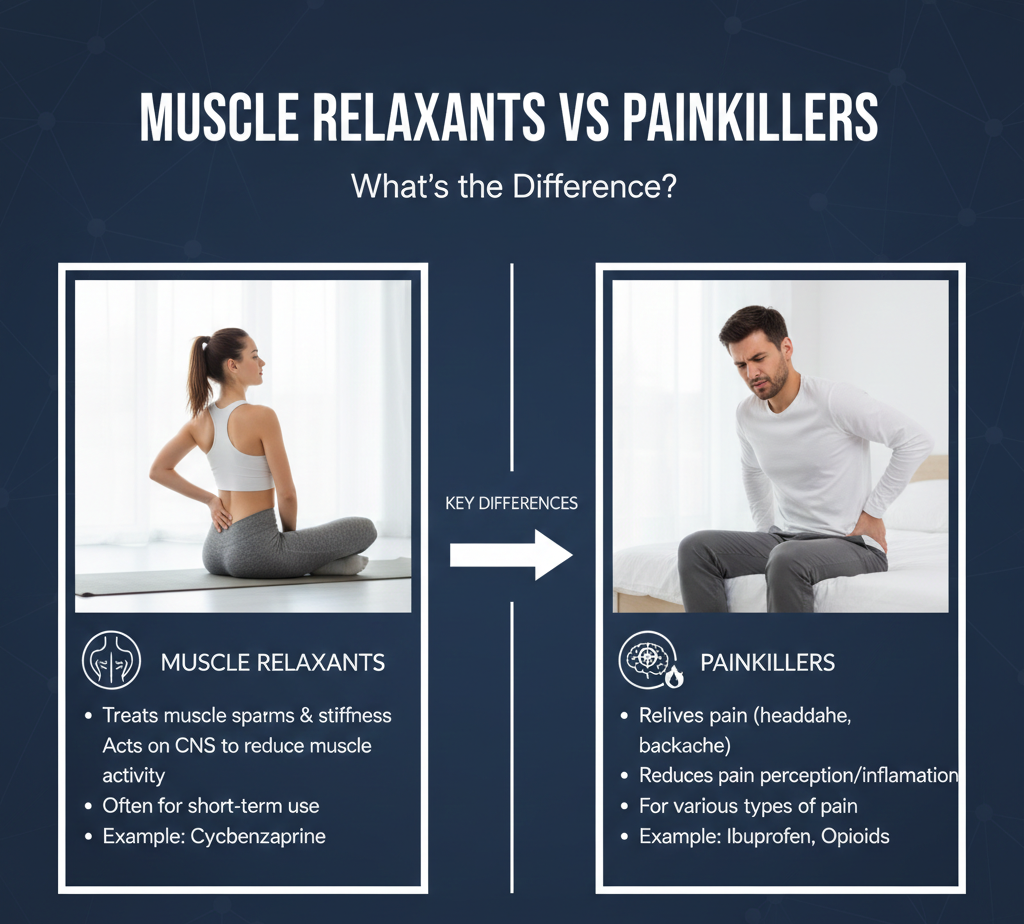
Pain and muscle discomfort are among the most common health complaints worldwide. Whether caused by injury, overuse, surgery, or chronic conditions, these symptoms often lead people to seek medication for relief. Two commonly discussed options are muscle relaxants and painkillers.
Although they are sometimes used together, muscle relaxants and painkillers are not the same. They target different causes of discomfort, work in different ways, and are prescribed for different clinical situations. Understanding these differences helps patients use medications more safely and have informed conversations with healthcare providers.
This article explains how muscle relaxants and painkillers work, when each is prescribed, and what doctors consider when choosing between them.
Understanding Pain vs Muscle Spasms
Before comparing medications, it’s important to distinguish between pain and muscle spasms.
-
Pain is a sensory experience caused by injury, inflammation, nerve irritation, or disease.
-
Muscle spasms are involuntary muscle contractions that can cause stiffness, tightness, and pain.
While muscle spasms can cause pain, not all pain comes from muscle tension. The underlying cause determines which medication may be most effective.
What Are Painkillers?
Painkillers, also known as analgesics, are medications designed to reduce or eliminate pain. They work by altering how the body perceives pain or by reducing inflammation.
Common Types of Painkillers
-
Acetaminophen
-
Nonsteroidal anti-inflammatory drugs (NSAIDs)
-
Opioids (prescription only)
Painkillers are widely used for many types of pain, from mild headaches to severe post-surgical pain.
How Painkillers Work
Acetaminophen
Acetaminophen reduces pain and fever but does not significantly affect inflammation. It is commonly used for mild to moderate pain.
NSAIDs
NSAIDs reduce pain by decreasing inflammation and blocking pain-producing chemicals in the body. They are effective for conditions such as arthritis, muscle injuries, and joint pain.
Opioids
Opioids work by binding to receptors in the brain and spinal cord, reducing the perception of pain. They are reserved for moderate to severe pain when other treatments are ineffective.
Benefits and Limitations of Painkillers
Benefits
-
Effective for many types of pain
-
Available in OTC and prescription forms
-
Useful for acute and chronic pain
Limitations
-
Do not directly treat muscle spasms
-
Opioids carry a risk of dependence
-
NSAIDs may cause stomach, kidney, or heart issues with long-term use
Painkillers address pain symptoms but may not resolve muscle tightness or spasms.
What Are Muscle Relaxants?
Muscle relaxants are medications used to reduce muscle spasms, stiffness, and tightness. They are commonly prescribed for short-term relief of musculoskeletal conditions.
Common Muscle Relaxants
-
Cyclobenzaprine
-
Methocarbamol
-
Baclofen
-
Carisoprodol
-
Tizanidine
Most muscle relaxants are available only by prescription.
How Muscle Relaxants Work
Unlike painkillers, most muscle relaxants do not act directly on muscles. Instead, they work through the central nervous system to reduce signals that cause muscles to tighten or spasm.
Their effects include:
-
Reduced muscle tension
-
Decreased spasm frequency
-
Improved mobility
-
Sedation and relaxation
Because of their sedating effects, muscle relaxants are often taken in the evening.
Benefits and Limitations of Muscle Relaxants
Benefits
-
Effective for muscle spasms and stiffness
-
Helpful after injuries or acute muscle strain
-
Improve movement and comfort
Limitations
-
Limited effectiveness for non-muscle pain
-
Can cause drowsiness or dizziness
-
Generally recommended for short-term use
Muscle relaxants are not intended as general pain relievers.
Muscle Relaxants vs Painkillers: Key Differences
Primary Purpose
-
Painkillers: Reduce pain perception and inflammation
-
Muscle relaxants: Reduce muscle spasms and tightness
Conditions Treated
-
Painkillers: Headaches, arthritis, injuries, post-surgical pain
-
Muscle relaxants: Muscle strains, spasms, back or neck stiffness
Mechanism of Action
-
Painkillers: Act on pain pathways or inflammation
-
Muscle relaxants: Act on the central nervous system to reduce muscle activity
Sedation Effects
-
Muscle relaxants are more likely to cause sedation
-
Painkillers vary depending on type
When Doctors Prescribe Painkillers
Doctors typically recommend painkillers when:
-
Pain is the primary symptom
-
Inflammation contributes to discomfort
-
Muscle spasms are not the main issue
-
OTC options are insufficient
Painkillers are often first-line treatment for many pain conditions.
When Doctors Prescribe Muscle Relaxants
Muscle relaxants are prescribed when:
-
Muscle spasms are causing pain or limited movement
-
Pain is related to acute muscle injury
-
Back or neck spasms interfere with daily activity
They are usually used short-term and alongside other therapies.
Can Muscle Relaxants and Painkillers Be Used Together?
In some cases, doctors prescribe both medications together.
For example:
-
An NSAID reduces inflammation
-
A muscle relaxant reduces spasms
This combination may provide better relief than either medication alone. However, combining medications increases the risk of side effects and must be done under medical supervision.
Safety Considerations and Side Effects
Muscle Relaxant Side Effects
-
Drowsiness
-
Dizziness
-
Dry mouth
-
Reduced alertness
Some muscle relaxants carry a risk of dependence or misuse.
Painkiller Side Effects
-
Acetaminophen: Liver damage with excessive doses
-
NSAIDs: Stomach irritation, kidney strain
-
Opioids: Dependence, respiratory depression
Patients should always follow prescribed dosages.
Non-Medication Alternatives
Medication is often most effective when combined with non-drug treatments, such as:
-
Physical therapy
-
Stretching and strengthening exercises
-
Heat or cold therapy
-
Massage therapy
-
Posture correction
These approaches address the root cause of muscle pain and reduce reliance on medication.
When to See a Doctor
Medical evaluation is recommended if:
-
Pain or muscle spasms persist beyond a few days
-
Symptoms worsen or spread
-
There is weakness, numbness, or tingling
-
Medications cause troubling side effects
Early evaluation helps prevent chronic issues.
Conclusion
Muscle relaxants and painkillers serve different but sometimes complementary roles in pain management. Painkillers focus on reducing pain and inflammation, while muscle relaxants target muscle spasms and stiffness.
Choosing the right treatment depends on the underlying cause of discomfort, symptom severity, and patient-specific factors. With proper medical guidance, both medication types can be used safely and effectively as part of a comprehensive pain management plan.
FAQs
Is guilt a symptom of depression?
Yes, excessive or guilt is listed as a core symptom of Major Depressive Disorder in the DSM-5.
Can guilt cause depression?
While guilt alone doesn’t cause depression, chronic guilt can contribute to its development and worsen existing symptoms.
How do I stop feeling guilty when depressed?
Working with a therapist, practicing self-compassion, and potentially using medication can help manage guilt associated with depression.

Contact us
Have questions? Reach out and we’ll get back to you shortly.
Content
Guilt and Depression at a Glance
How Guilt and Depression Interact
Coping When You’re
Depressed and Feeling Guilty
Evidence-Based Treatments
When to Seek Help
How Loved Ones Can Help
FAQs