
Blog
Anxiety vs Stress: Key Differences Explained

Author:
Medical Writer
Saya Des Marais

Medical Reviewer:
Dr. Russell A. Barkley, Ph.D
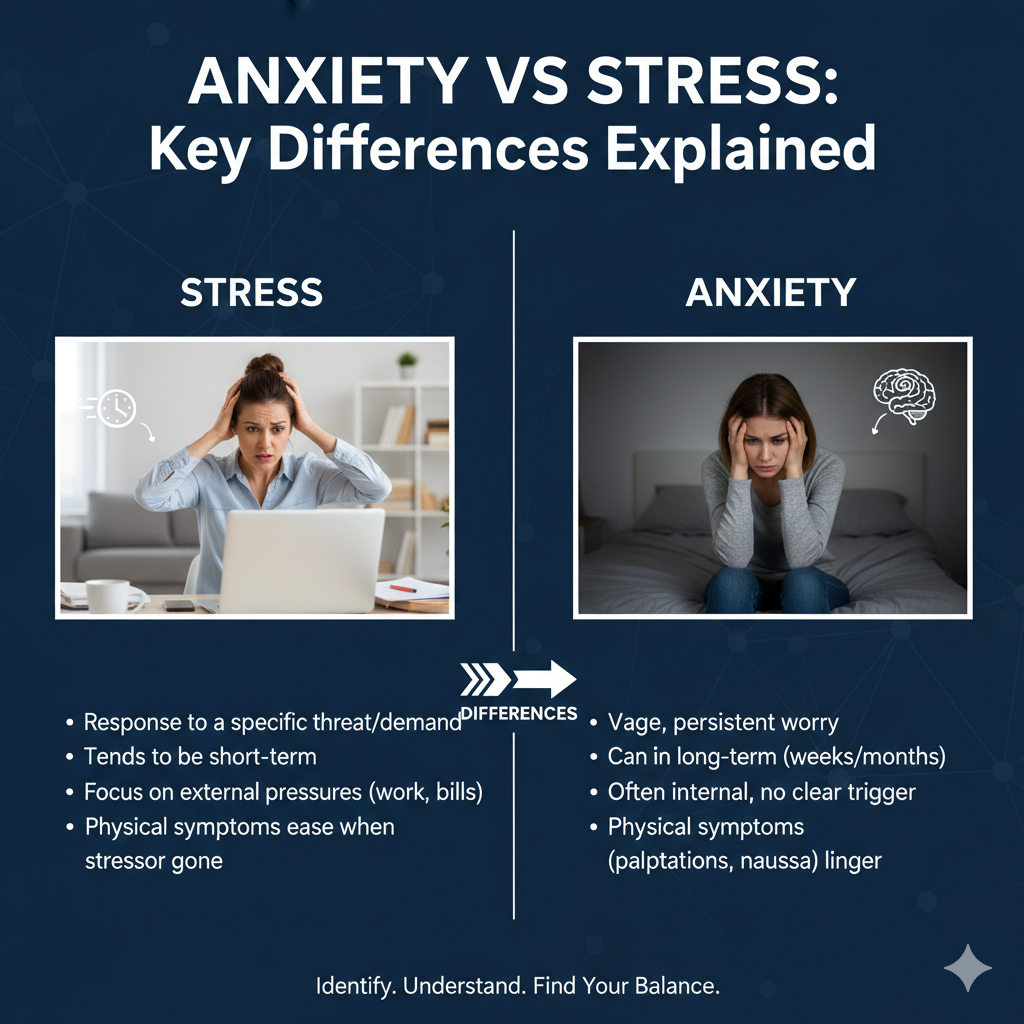
Stress and anxiety are often used interchangeably in everyday conversations, but they are not the same. Both are natural responses to challenges and uncertainty, yet they differ in their causes, duration, intensity, and impact on mental and physical health.
Understanding the differences between anxiety and stress is essential for recognizing symptoms, choosing appropriate coping strategies, and seeking help when needed. While stress usually arises from external pressures, anxiety tends to persist even in the absence of immediate threats.
This article explains the key differences between anxiety and stress, how they affect the mind and body, and practical ways to manage both effectively.
What Is Stress?
Stress is a natural response to external demands or pressures. It occurs when individuals feel overwhelmed by responsibilities, deadlines, or life events.
Common Causes of Stress
-
Work or academic pressure
-
Financial concerns
-
Family or relationship conflicts
-
Major life changes
-
Health-related challenges
Stress is usually linked to specific situations and tends to subside once the stressor is resolved.
Symptoms of Stress
Stress can manifest in various ways:
Emotional symptoms:
-
Irritability
-
Frustration
-
Mood swings
Physical symptoms:
-
Headaches
-
Muscle tension
-
Fatigue
Behavioral symptoms:
-
Changes in appetite
-
Sleep disturbances
-
Reduced productivity
While stress can be uncomfortable, it can also motivate individuals to solve problems and meet challenges.
What Is Anxiety?
Anxiety is a feeling of persistent worry, fear, or unease that may occur even without an identifiable external threat. Unlike stress, anxiety often continues long after the stressor has passed.
Common Causes of Anxiety
-
Genetic predisposition
-
Past trauma or negative experiences
-
Chronic stress
-
Brain chemistry imbalances
-
Personality traits
Anxiety can become a disorder when symptoms are intense, long-lasting, and interfere with daily functioning.
Symptoms of Anxiety
Emotional symptoms:
-
Excessive worry
-
Fear of worst-case scenarios
-
Restlessness
Physical symptoms:
-
Rapid heartbeat
-
Shortness of breath
-
Sweating
Cognitive symptoms:
-
Difficulty concentrating
-
Racing thoughts
Key Differences Between Anxiety and Stress
1) Source of Symptoms
-
Stress: Usually triggered by external situations or pressures
-
Anxiety: Often internal and persistent, even without a clear cause
2) Duration
-
Stress: Temporary and situation-specific
-
Anxiety: Long-lasting and may persist without resolution
3) Intensity
-
Stress: Often proportional to the situation
-
Anxiety: Can be disproportionate or irrational
4) Physical and Emotional Impact
-
Stress: Often resolves once the stressor is removed
-
Anxiety: May continue and intensify over time
5) Potential for Disorders
-
Stress: Rarely leads to mental health disorders on its own
-
Anxiety: Can develop into anxiety disorders if untreated
How Stress and Anxiety Affect the Body
Both stress and anxiety activate the body’s stress response system.
The Fight-or-Flight Response
When faced with a perceived threat, the body releases stress hormones like cortisol and adrenaline. This response prepares the body to react quickly.
Chronic activation of this system can lead to:
-
Weakened immune function
-
Digestive problems
-
Sleep disturbances
While stress and anxiety share physiological pathways, anxiety tends to keep the body in a prolonged state of alertness.
When Stress Becomes Anxiety
Stress and anxiety are closely connected. Chronic stress can increase the risk of developing anxiety disorders.
For example:
-
Ongoing workplace stress may lead to constant worry about performance
-
Financial stress may evolve into persistent fear of insecurity
Recognizing early signs of anxiety can prevent long-term complications.
Managing Stress Effectively
Practical Stress-Management Techniques
-
Time management and prioritization
-
Regular physical activity
-
Relaxation techniques such as deep breathing
-
Social support and communication
Reducing stressors can significantly improve emotional well-being.
Managing Anxiety Effectively
Evidence-Based Anxiety Management
-
Cognitive Behavioral Therapy (CBT)
-
Mindfulness and meditation
-
Healthy sleep routines
-
Lifestyle changes
Professional support may be necessary when anxiety becomes overwhelming.
Lifestyle Factors That Influence Stress and Anxiety
Certain lifestyle habits can worsen stress and anxiety.
Factors That Increase Symptoms
-
Poor sleep
-
Excessive caffeine intake
-
Lack of physical activity
-
Unbalanced diet
Protective Lifestyle Habits
-
Consistent routines
-
Balanced nutrition
-
Regular exercise
-
Mindfulness practices
Healthy habits play a crucial role in emotional resilience.
When to Seek Professional Help
It may be time to seek help if:
-
Anxiety persists for months
-
Stress becomes unmanageable
-
Symptoms interfere with daily life
-
Physical symptoms are severe
Early intervention can prevent escalation and improve outcomes.
Conclusion
Stress and anxiety are related but distinct experiences. Stress is typically a response to external pressures and often resolves once the situation changes. Anxiety, on the other hand, is more persistent and can exist without a clear trigger.
Understanding the differences between anxiety and stress helps individuals recognize symptoms, adopt effective coping strategies, and seek appropriate support. With awareness and proactive management, it is possible to reduce the impact of both stress and anxiety and improve overall mental well-being.
FAQs
Is guilt a symptom of depression?
Yes, excessive or guilt is listed as a core symptom of Major Depressive Disorder in the DSM-5.
Can guilt cause depression?
While guilt alone doesn’t cause depression, chronic guilt can contribute to its development and worsen existing symptoms.
How do I stop feeling guilty when depressed?
Working with a therapist, practicing self-compassion, and potentially using medication can help manage guilt associated with depression.

Contact us
Have questions? Reach out and we’ll get back to you shortly.
Content
Guilt and Depression at a Glance
How Guilt and Depression Interact
Coping When You’re
Depressed and Feeling Guilty
Evidence-Based Treatments
When to Seek Help
How Loved Ones Can Help
FAQs